THE ADVENTURE COLLECTIVE® · Independent discovery and booking for outdoor travel

A compact 5-day push up Kilimanjaro via the Marangu (Coca-Cola) route — hut nights, changing ecosystems from rainforest to alpine desert, and a midnight summit bid to Uhuru Peak. Practical tips on acclimatization, terrain, and logistics to help you prepare.
A compact 5-day push up Kilimanjaro via the Marangu (Coca-Cola) route — hut nights, changing ecosystems from rainforest to alpine desert, and a midnight summit bid to Uhuru Peak. Practical tips on acclimatization, terrain, and logistics to help you prepare.
You stand at the Marangu gate just after dawn and the mountain is already working on you — cloud wraps around Mawenzi while the lower forest exhales steam. Guides check gear, porters shoulder duffels, and the trail slips into the wet green of montane forest. For five days you move through ecosystems that change as quickly as your breath: forest, heather moor, alpine desert, and the fossilized rim of Kibo’s crater.
Verified experiences and guided adventures in the surrounding area.
Operated by Afrishare Trekking and Safaris · Moshi, Kilimanjaro Region
You stand at the Marangu gate just after dawn and the mountain is already working on you — cloud wraps around Mawenzi while the lower forest exhales steam. Guides check gear, porters shoulder duffels, and the trail slips into the wet green of montane forest. For five days you move through ecosystems that change as quickly as your breath: forest, heather moor, alpine desert, and the fossilized rim of Kibo’s crater.
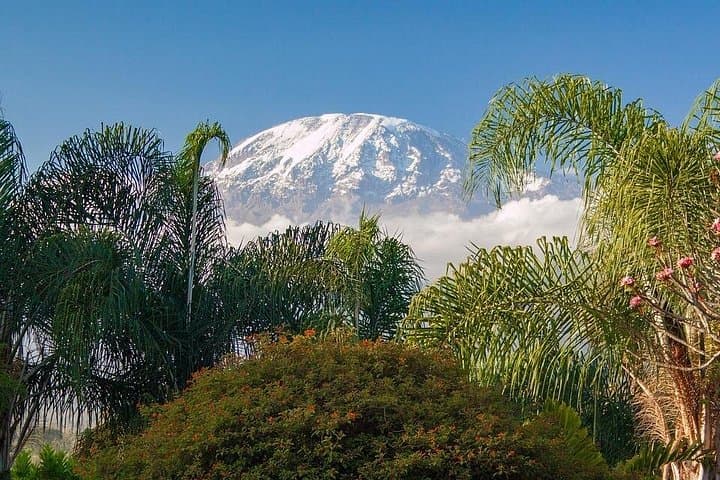
Marangu is the oldest and most direct road to Uhuru Peak, Africa’s highest point at 5,895 m. It’s sometimes called the Coca-Cola route for its relatively gentle gradients and hut-based nights, but “gentle” belies the altitude. Geologically Kilimanjaro is three volcanic cones — Shira, Mawenzi and the snow-capped Kibo — a layered record of eruptions and glacial retreat. Locally the Chagga people have farmed the lower slopes for centuries; you’ll pass cultivated banana terraces and may hear Swahili calls at the huts.
The trek begins at ~1,830 m and moves to Mandara Hut (~2,700 m) through thick rainforest where giant lobelias and senecios loom like otherworldly sentries. Day two climbs to Horombo Hut (~3,700 m) across moorland with panoramic views of Mawenzi. A critical acclimatization day gives you the option to trek to Zebra Rocks (4,200 m) or Mawenzi Tarn (4,300 m) before returning to Horombo.
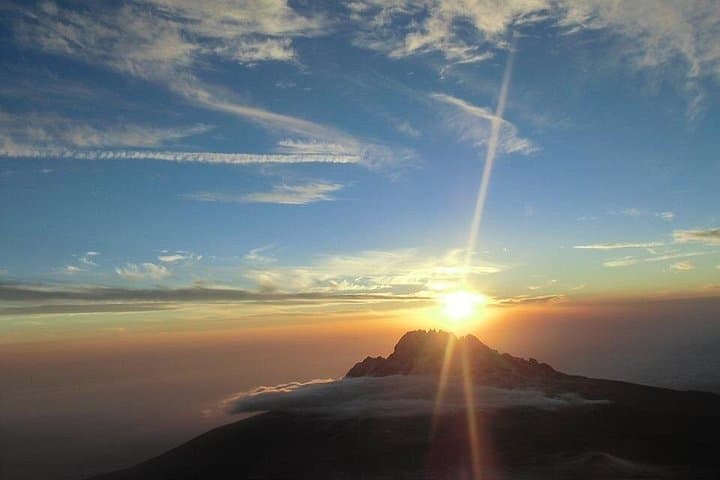
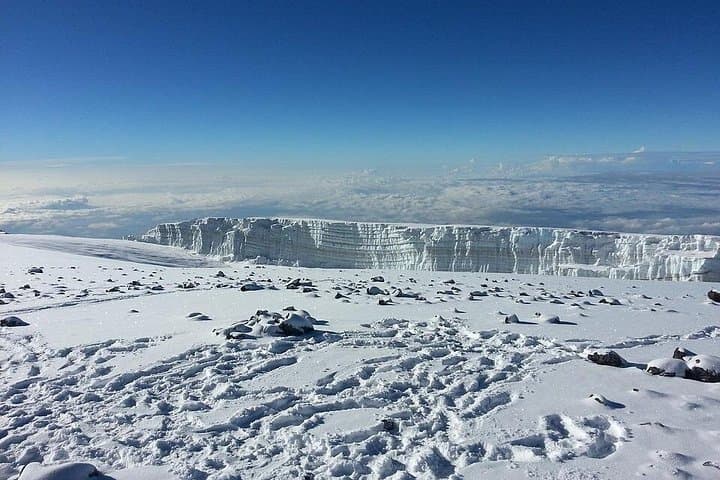
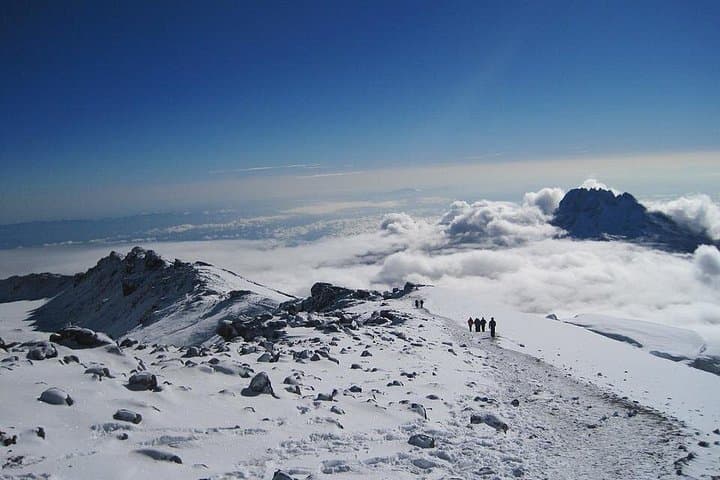
The summit bid starts around midnight: a steady, rhythm-driven push on loose scree and, depending on season, patches of snow to Gilman’s Point on the rim (~5,861 m), then a short, icy ridge to Uhuru Peak. Expect 7–12 hours for ascent and 4–6 hours to descend to Horombo. The descent to Marangu gate is muddy and fast at lower elevations; gaiters and poles are helpful.
Practical edge: acclimatize — the extra day increases summit odds. Hydration, calorie-dense snacks, and pacing (pole-assisted, short-step rhythm) beat speed. While no technical mountaineering skills are required, altitude awareness is essential: headaches, nausea, and shortness of breath are common early warnings.
Logistics are straightforward — hut accommodations with basic sleeping platforms, shared facilities, hot meals provided on the itinerary, and porter support. Weather is changeable; layers, rain protection, and a reliable headlamp for the summit night are non-negotiable.
In five days you’ll trade forest humidity for thin, cold air and stand where the continent’s lines meet the sky. The Marangu route is a compact, cultural and geological primer on Kilimanjaro — demanding, blunt, and utterly specific in the lessons it gives about altitude and persistence.
Marangu is one of the more direct and non-technical routes with hut accommodation, but altitude still makes it challenging; extra acclimatization days improve success rates.
No technical climbing skills are required, but experience with multi-day trekking and high-altitude hiking is highly recommended.
Overnights are in mountain huts with shared dorms and basic facilities; sleeping mats are usually provided but confirm with the operator.
June–October and January–February are the drier windows with clearer summit conditions, though weather can change any month.
Guides monitor symptoms, use descent and oxygen if necessary, and the itinerary includes an acclimatization day to mitigate risk; full refunds are available if evacuated early per operator policy.
Yes — the tour includes hot meals and lunches; operators typically offer vegetarian options if requested at booking.
Afrishare Trekking and Safaris operates guided outdoor trips and adventures with an emphasis on safety, stewardship, and memorable experiences.
You stand at the Marangu gate just after dawn and the mountain is already working on you — cloud wraps around Mawenzi while the lower forest exhales steam. Guides check gear, porters shoulder duffels, and the trail slips into the wet green of montane forest. For five days you move through ecosystems that change as quickly as your breath: forest, heather moor, alpine desert, and the fossilized rim of Kibo’s crater.
You stand at the Marangu gate just after dawn and the mountain is already working on you — cloud wraps around Mawenzi while the lower forest exhales steam. Guides check gear, porters shoulder duffels, and the trail slips into the wet green of montane forest. For five days you move through ecosystems that change as quickly as your breath: forest, heather moor, alpine desert, and the fossilized rim of Kibo’s crater.
Marangu is the oldest and most direct road to Uhuru Peak, Africa’s highest point at 5,895 m. It’s sometimes called the Coca-Cola route for its relatively gentle gradients and hut-based nights, but “gentle” belies the altitude. Geologically Kilimanjaro is three volcanic cones — Shira, Mawenzi and the snow-capped Kibo — a layered record of eruptions and glacial retreat. Locally the Chagga people have farmed the lower slopes for centuries; you’ll pass cultivated banana terraces and may hear Swahili calls at the huts.
The trek begins at ~1,830 m and moves to Mandara Hut (~2,700 m) through thick rainforest where giant lobelias and senecios loom like otherworldly sentries. Day two climbs to Horombo Hut (~3,700 m) across moorland with panoramic views of Mawenzi. A critical acclimatization day gives you the option to trek to Zebra Rocks (4,200 m) or Mawenzi Tarn (4,300 m) before returning to Horombo.
The summit bid starts around midnight: a steady, rhythm-driven push on loose scree and, depending on season, patches of snow to Gilman’s Point on the rim (~5,861 m), then a short, icy ridge to Uhuru Peak. Expect 7–12 hours for ascent and 4–6 hours to descend to Horombo. The descent to Marangu gate is muddy and fast at lower elevations; gaiters and poles are helpful.
Practical edge: acclimatize — the extra day increases summit odds. Hydration, calorie-dense snacks, and pacing (pole-assisted, short-step rhythm) beat speed. While no technical mountaineering skills are required, altitude awareness is essential: headaches, nausea, and shortness of breath are common early warnings.
Logistics are straightforward — hut accommodations with basic sleeping platforms, shared facilities, hot meals provided on the itinerary, and porter support. Weather is changeable; layers, rain protection, and a reliable headlamp for the summit night are non-negotiable.
In five days you’ll trade forest humidity for thin, cold air and stand where the continent’s lines meet the sky. The Marangu route is a compact, cultural and geological primer on Kilimanjaro — demanding, blunt, and utterly specific in the lessons it gives about altitude and persistence.