THE ADVENTURE COLLECTIVE® · Independent discovery and booking for outdoor travel

A five-day hut-to-hut ascent of Mount Kilimanjaro via the Marangu Route — the classic path with dormitory huts, shifting biomes, and a demanding midnight summit push to Uhuru Peak. Read what to expect, how to prepare, and the cultural and geological details that shape this climb.
A five-day hut-to-hut ascent of Mount Kilimanjaro via the Marangu Route — the classic path with dormitory huts, shifting biomes, and a demanding midnight summit push to Uhuru Peak. Read what to expect, how to prepare, and the cultural and geological details that shape this climb.
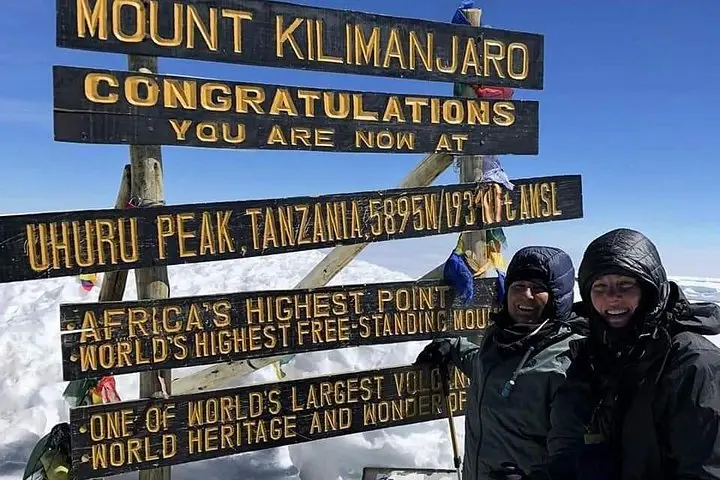
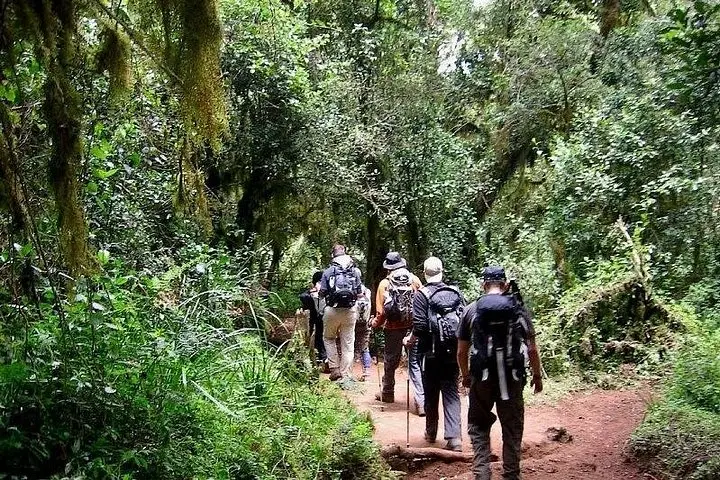
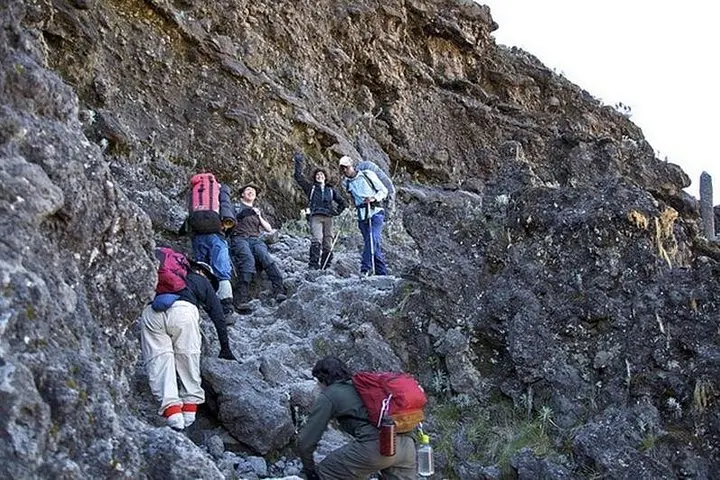
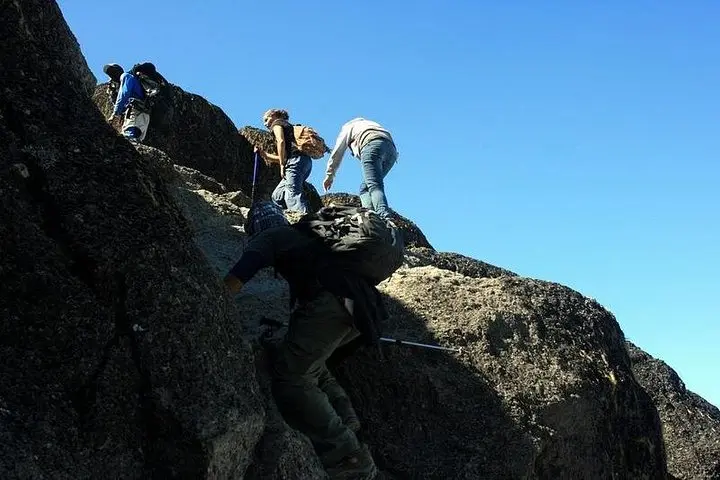
At 1 a.m., a line of headlamps threads through rock and shadow, a low, steady bead of human light climbing toward a rim of ice. On the Marangu Route that ribbon of lamps is the final act of a five-day push to Uhuru Peak — the roof of Africa. The track begins in rainforest, moves through heather and moorland, crosses the wind-scoured Saddle between Mawenzi and Kibo, and finishes on a crater rim where glaciers still cling to the equatorial summit.
Verified experiences and guided adventures in the surrounding area.
Operated by Budget Safaris Tanzania · Moshi, Kilimanjaro Region
At 1 a.m., a line of headlamps threads through rock and shadow, a low, steady bead of human light climbing toward a rim of ice. On the Marangu Route that ribbon of lamps is the final act of a five-day push to Uhuru Peak — the roof of Africa. The track begins in rainforest, moves through heather and moorland, crosses the wind-scoured Saddle between Mawenzi and Kibo, and finishes on a crater rim where glaciers still cling to the equatorial summit.
The Marangu Route is the oldest established path on Kilimanjaro and the only one with hut accommodation, an inheritance of early colonial trekking and later park infrastructure. Hans Meyer and Ludwig Purtscheller made the first recorded ascent of the mountain’s summit in 1889; today the mountain sits inside Kilimanjaro National Park, a UNESCO World Heritage site where glaciers tell a sharper geological story: Kilimanjaro’s ice cap has retreated dramatically over the last century, a visible sign of global climate change.
Culturally the climb threads through Chagga country. On the lower slopes, banana terraces and coffee farms cling to volcanic soils, and porters and guides — often from nearby villages — form the engine of every ascent. The route itself is straightforward but deceptive: its wide, hard-packed trails invite steady progress, yet the rapid altitude gain across a short itinerary makes acclimatization difficult, and the summit success rate on Marangu is lower than on longer routes.
Practically, Marangu is a hut-to-hut march. Expect dormitory bunks, basic facilities and cooked communal meals. Day 1 moves from Marangu Gate (1,860 m) to Mandara Huts through rainforest in 3–5 hours. Day 2 climbs to Horombo Huts across open moor in 5–7 hours. Day 3 reaches Kibo Huts on the Saddle; Day 4 is a midnight summit bid to Uhuru Peak (5,895 m) and a long descent back to Horombo. Day 5 returns to Marangu Gate and transfer to town. The hardest stretch is the summit night: cold, thin air and long hours demand steady pacing, layers, and strict attention to symptoms of altitude sickness.
To prepare, prioritize sleep, hydration and slow hiking — pole use and rhythm-saving steps matter. Hire an experienced guide and ensure your operator provides licensed guides and ethical porter practices. Bring a warm sleeping bag rated to at least -10°C for the high nights, a reliable headlamp, crampon-capable boots if you plan to cross icy sections, and temper your summit ambitions with patience; many successful summits are won by conservative pacing rather than speed.
Marangu offers a compact, culturally rich Kilimanjaro experience: tactile huts, Chagga hospitality, changing biomes underfoot and a summit that rewards persistence. Go prepared, respect the mountain’s pace, and the crater rim sunrise will be as stark and clear as the mountain itself.
Marangu is non-technical but challenging due to rapid altitude gain and a shorter itinerary; success depends on pacing and acclimatization.
Yes — huts provide bunks and blankets but temperatures at higher huts and during the summit night require a warm sleeping bag.
June–October and January–March offer the most stable weather windows, with drier trails and clearer summit visibility.
This itinerary includes a professional driver/guide and porters; confirm porter pay and load limits with the operator for ethical standards.
Marangu has a lower summit success rate than longer routes because of the compressed acclimatization profile; success improves with conservative pacing.
Communicate symptoms immediately, descend if symptoms worsen, hydrate, and rely on your guide’s experience; ask about supplementary oxygen protocols before booking.
Budget Safaris Tanzania operates guided outdoor trips and adventures with an emphasis on safety, stewardship, and memorable experiences.
At 1 a.m., a line of headlamps threads through rock and shadow, a low, steady bead of human light climbing toward a rim of ice. On the Marangu Route that ribbon of lamps is the final act of a five-day push to Uhuru Peak — the roof of Africa. The track begins in rainforest, moves through heather and moorland, crosses the wind-scoured Saddle between Mawenzi and Kibo, and finishes on a crater rim where glaciers still cling to the equatorial summit.
At 1 a.m., a line of headlamps threads through rock and shadow, a low, steady bead of human light climbing toward a rim of ice. On the Marangu Route that ribbon of lamps is the final act of a five-day push to Uhuru Peak — the roof of Africa. The track begins in rainforest, moves through heather and moorland, crosses the wind-scoured Saddle between Mawenzi and Kibo, and finishes on a crater rim where glaciers still cling to the equatorial summit.
The Marangu Route is the oldest established path on Kilimanjaro and the only one with hut accommodation, an inheritance of early colonial trekking and later park infrastructure. Hans Meyer and Ludwig Purtscheller made the first recorded ascent of the mountain’s summit in 1889; today the mountain sits inside Kilimanjaro National Park, a UNESCO World Heritage site where glaciers tell a sharper geological story: Kilimanjaro’s ice cap has retreated dramatically over the last century, a visible sign of global climate change.
Culturally the climb threads through Chagga country. On the lower slopes, banana terraces and coffee farms cling to volcanic soils, and porters and guides — often from nearby villages — form the engine of every ascent. The route itself is straightforward but deceptive: its wide, hard-packed trails invite steady progress, yet the rapid altitude gain across a short itinerary makes acclimatization difficult, and the summit success rate on Marangu is lower than on longer routes.
Practically, Marangu is a hut-to-hut march. Expect dormitory bunks, basic facilities and cooked communal meals. Day 1 moves from Marangu Gate (1,860 m) to Mandara Huts through rainforest in 3–5 hours. Day 2 climbs to Horombo Huts across open moor in 5–7 hours. Day 3 reaches Kibo Huts on the Saddle; Day 4 is a midnight summit bid to Uhuru Peak (5,895 m) and a long descent back to Horombo. Day 5 returns to Marangu Gate and transfer to town. The hardest stretch is the summit night: cold, thin air and long hours demand steady pacing, layers, and strict attention to symptoms of altitude sickness.
To prepare, prioritize sleep, hydration and slow hiking — pole use and rhythm-saving steps matter. Hire an experienced guide and ensure your operator provides licensed guides and ethical porter practices. Bring a warm sleeping bag rated to at least -10°C for the high nights, a reliable headlamp, crampon-capable boots if you plan to cross icy sections, and temper your summit ambitions with patience; many successful summits are won by conservative pacing rather than speed.
Marangu offers a compact, culturally rich Kilimanjaro experience: tactile huts, Chagga hospitality, changing biomes underfoot and a summit that rewards persistence. Go prepared, respect the mountain’s pace, and the crater rim sunrise will be as stark and clear as the mountain itself.