THE ADVENTURE COLLECTIVE® · Independent discovery and booking for outdoor travel

Experience Kilimanjaro’s classic Marangu Route in five days: sleep in communal huts, cross montane forest and lunar desert, and make a midnight push to Uhuru Peak. This guide explains what to expect—terrain, logistics and practical tips for summit day.
Experience Kilimanjaro’s classic Marangu Route in five days: sleep in communal huts, cross montane forest and lunar desert, and make a midnight push to Uhuru Peak. This guide explains what to expect—terrain, logistics and practical tips for summit day.
Dawn pulls the slopes of Kilimanjaro into relief as your van slips out of Moshi and the air thins from humid farmland to cool, moss-draped forest. On the Marangu Route the trail begins as a soft ribbon through giant ferns and emerges into a high moorland that seems to exhale the mountain’s history. You pass porters laughing in Swahili, blue monkeys leaping through canopy light, and, higher up, a lunar plain called the Saddle that asks you to slow down and listen: the mountain is keeping its pace.
Verified experiences and guided adventures in the surrounding area.
Operated by Transkibo Travels Ltd · Moshi, Kilimanjaro Region
Dawn pulls the slopes of Kilimanjaro into relief as your van slips out of Moshi and the air thins from humid farmland to cool, moss-draped forest. On the Marangu Route the trail begins as a soft ribbon through giant ferns and emerges into a high moorland that seems to exhale the mountain’s history. You pass porters laughing in Swahili, blue monkeys leaping through canopy light, and, higher up, a lunar plain called the Saddle that asks you to slow down and listen: the mountain is keeping its pace.
The massif of Kilimanjaro is three volcanic cones—Shira, Mawenzi and Kibo—born of East Africa’s tectonic restlessness. Kibo’s icy crown, Uhuru Peak, sits at 5,895 m, and the Marangu Route—often called the ‘Coca‑Cola’ route—is the most direct line to that summit. It’s equally a cultural corridor: Chagga villages ring the lower slopes, their terraced farms and coffee farms shaped by centuries of local stewardship.
Geologically you climb through distinct zones: humid montane forest up to about 2,700 m, then heath and moorland, then alpine desert across the Saddle to Kibo’s crater wall. The huts—Mandara, Horombo, Kibo—are the route’s practical face, offering communal bunks and solar lights instead of tents, which changes the logistics but not the mountain’s demands.
Practicality is the steady partner to wonder here. The total elevation gain is roughly 4,000 m from Marangu Gate (≈1,830 m) to Uhuru Peak. Expect steep, slow sections—especially the midnight summit push from Kibo Hut, which can last 10–14 hours round trip. Acclimatization is non‑negotiable: hydrate, walk slowly, and use the days on the trail to let your breathing adapt. Porters will carry the bulk of your kit, but pack a small daypack with warm layers, water, snacks and a headlamp.
Medicine and permits are part of the calculus—bring altitude awareness and, if advised by a clinician, acetazolamide. For footwear, choose sturdy boots with good ankle support and bring gaiters for the lower, often muddy, forest sections. Respect local regulations: park fees and rescue levies fund conservation and local livelihoods; tipping guides and porters is customary and meaningful.
Timing matters: the dry seasons (January–March and June–October) give the best odds for a clear summit sunrise, but mountain weather can turn. When you stand on Uhuru, the crater edge opens and the sky feels improbably large; the descent is long but forgiving, a final chance to read the mountain and carry home a steadier, quieter stride.
No—Marangu is a non-technical trekking route; good boots and fitness are sufficient.
Huts are communal with bunk beds and mattress; privacy is limited but it simplifies logistics.
AMS can occur; acclimatize with slow hiking, hydrate, and consult a doctor about prophylactic medication like acetazolamide.
June–October and January–March offer the most stable weather; the rains (April–May, November–December) make trails slippery.
This tour states national park gate fees and rescue fees are included—confirm on booking documentation.
Tipping is customary; plan roughly $15–25/day for guides and less for porters split among the team, adjusted for service and group size.
Transkibo Travels Ltd operates guided outdoor trips and adventures with an emphasis on safety, stewardship, and memorable experiences.
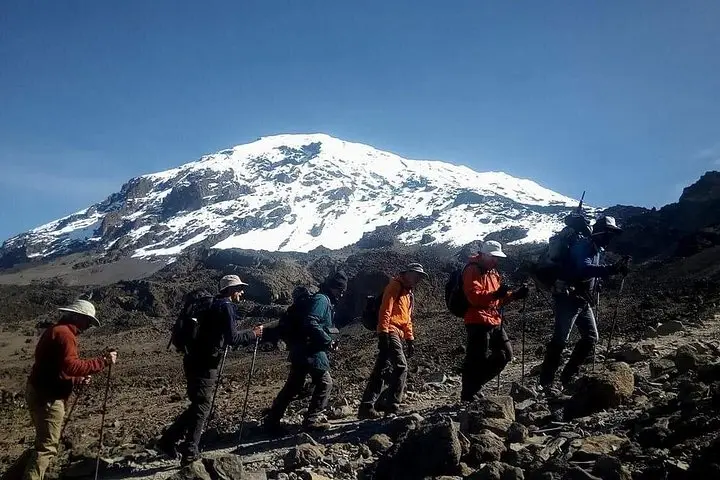
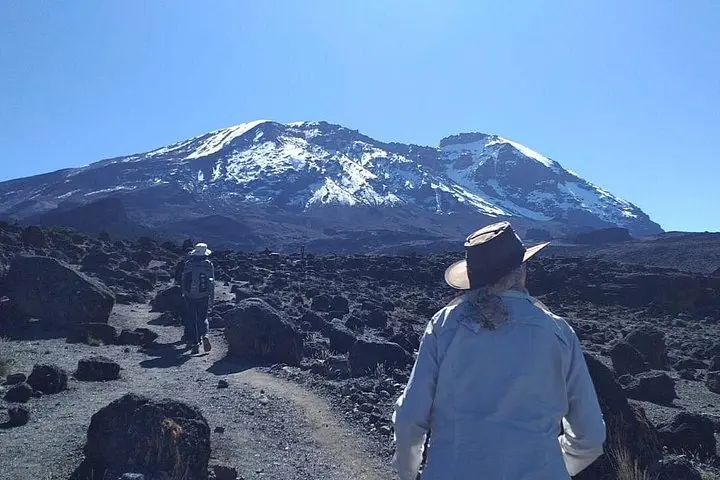
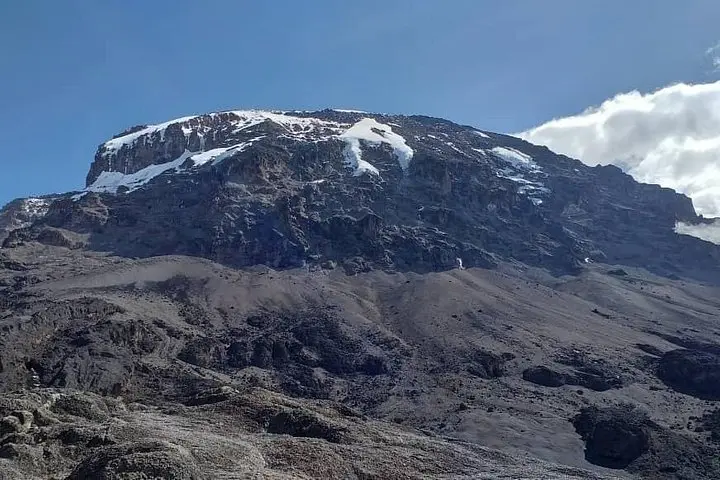
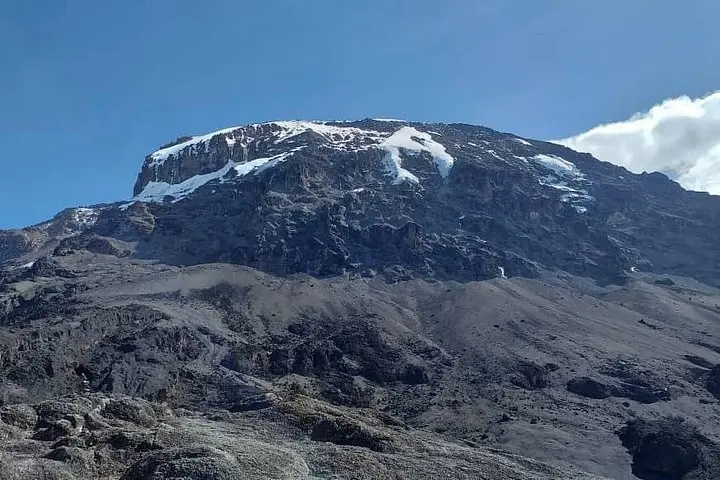
Dawn pulls the slopes of Kilimanjaro into relief as your van slips out of Moshi and the air thins from humid farmland to cool, moss-draped forest. On the Marangu Route the trail begins as a soft ribbon through giant ferns and emerges into a high moorland that seems to exhale the mountain’s history. You pass porters laughing in Swahili, blue monkeys leaping through canopy light, and, higher up, a lunar plain called the Saddle that asks you to slow down and listen: the mountain is keeping its pace.
Dawn pulls the slopes of Kilimanjaro into relief as your van slips out of Moshi and the air thins from humid farmland to cool, moss-draped forest. On the Marangu Route the trail begins as a soft ribbon through giant ferns and emerges into a high moorland that seems to exhale the mountain’s history. You pass porters laughing in Swahili, blue monkeys leaping through canopy light, and, higher up, a lunar plain called the Saddle that asks you to slow down and listen: the mountain is keeping its pace.
The massif of Kilimanjaro is three volcanic cones—Shira, Mawenzi and Kibo—born of East Africa’s tectonic restlessness. Kibo’s icy crown, Uhuru Peak, sits at 5,895 m, and the Marangu Route—often called the ‘Coca‑Cola’ route—is the most direct line to that summit. It’s equally a cultural corridor: Chagga villages ring the lower slopes, their terraced farms and coffee farms shaped by centuries of local stewardship.
Geologically you climb through distinct zones: humid montane forest up to about 2,700 m, then heath and moorland, then alpine desert across the Saddle to Kibo’s crater wall. The huts—Mandara, Horombo, Kibo—are the route’s practical face, offering communal bunks and solar lights instead of tents, which changes the logistics but not the mountain’s demands.
Practicality is the steady partner to wonder here. The total elevation gain is roughly 4,000 m from Marangu Gate (≈1,830 m) to Uhuru Peak. Expect steep, slow sections—especially the midnight summit push from Kibo Hut, which can last 10–14 hours round trip. Acclimatization is non‑negotiable: hydrate, walk slowly, and use the days on the trail to let your breathing adapt. Porters will carry the bulk of your kit, but pack a small daypack with warm layers, water, snacks and a headlamp.
Medicine and permits are part of the calculus—bring altitude awareness and, if advised by a clinician, acetazolamide. For footwear, choose sturdy boots with good ankle support and bring gaiters for the lower, often muddy, forest sections. Respect local regulations: park fees and rescue levies fund conservation and local livelihoods; tipping guides and porters is customary and meaningful.
Timing matters: the dry seasons (January–March and June–October) give the best odds for a clear summit sunrise, but mountain weather can turn. When you stand on Uhuru, the crater edge opens and the sky feels improbably large; the descent is long but forgiving, a final chance to read the mountain and carry home a steadier, quieter stride.