THE ADVENTURE COLLECTIVE® · Independent discovery and booking for outdoor travel

A five-day hut-to-hut ascent along Kilimanjaro’s Marangu Route that moves from rainforest to alpine desert and culminates at Uhuru Peak. Expect hut accommodation, a professional support crew, and a midnight summit push—ideal for hikers who want structured logistics and serious altitude challenge.
A five-day hut-to-hut ascent along Kilimanjaro’s Marangu Route that moves from rainforest to alpine desert and culminates at Uhuru Peak. Expect hut accommodation, a professional support crew, and a midnight summit push—ideal for hikers who want structured logistics and serious altitude challenge.
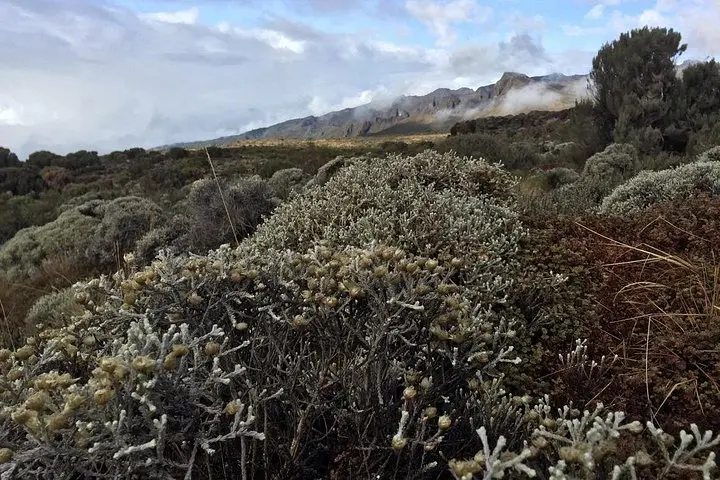
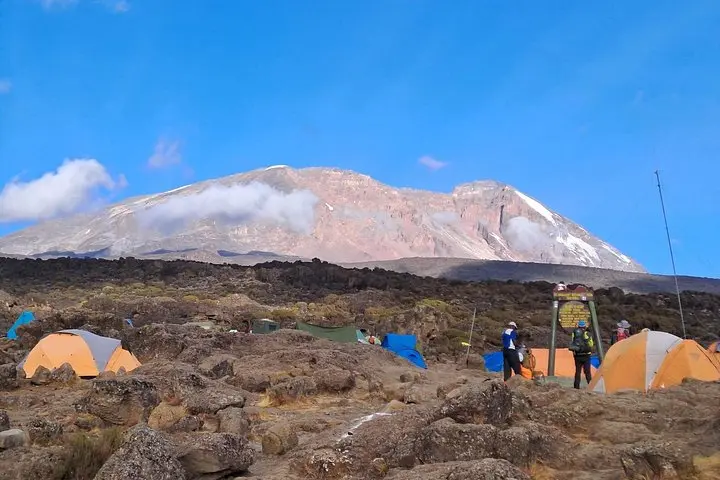
A pre-dawn minivan eases out of Moshi and the road becomes a ribbon of dust and jacaranda shadows. By the time the group laces boots at Marangu Gate the air tastes of wet earth and coffee. The trail dives immediately into tropical rainforest—ferns and giant lobelia leaning into the path—then loosens into moorland where Kibo and Mawenzi begin to loom like patient guards. Over five days the Marangu Route moves climbers from warm, humid forest into thin, arctic desert and finally to Uhuru Peak, where the roof of Africa opens under a hard, cold sky.
Verified experiences and guided adventures in the surrounding area.
Operated by Kilimanjaro Guru Expeditions · Moshi, Kilimanjaro Region
A pre-dawn minivan eases out of Moshi and the road becomes a ribbon of dust and jacaranda shadows. By the time the group laces boots at Marangu Gate the air tastes of wet earth and coffee. The trail dives immediately into tropical rainforest—ferns and giant lobelia leaning into the path—then loosens into moorland where Kibo and Mawenzi begin to loom like patient guards. Over five days the Marangu Route moves climbers from warm, humid forest into thin, arctic desert and finally to Uhuru Peak, where the roof of Africa opens under a hard, cold sky.
Marangu is Kilimanjaro’s oldest and most established path. The route was popularized in the early 20th century by European explorers and later formalized with a hut system that makes a hut-to-hut ascent possible without heavy camping loads. Geologically, Kilimanjaro is a stratovolcano with three cones—Shira, Mawenzi and Kibo—the summit sitting on Kibo’s crater rim. The mountain’s changing bands of vegetation—rainforest, heath, moorland, alpine desert, and arctic summit—are as much a lesson in elevation as in time.
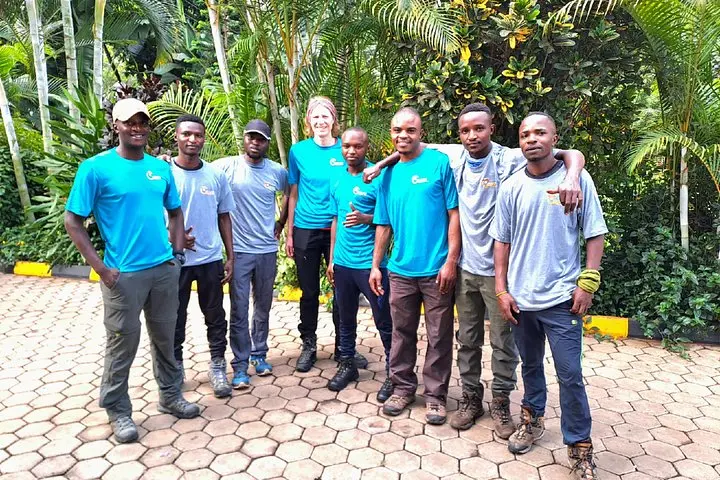
Culturally, the climb begins in Chagga country; the towns around Moshi are working agricultural centers where banana terraces and coffee plots define livelihoods. Porters and cooks from local communities are central to the operation—expect a disciplined, efficient crew that manages camp, meals, and logistics. Conservation is tangible: park fees support trail maintenance and rangers, and the etiquette is strict—stay on trail, pack out waste, and follow guide instructions.
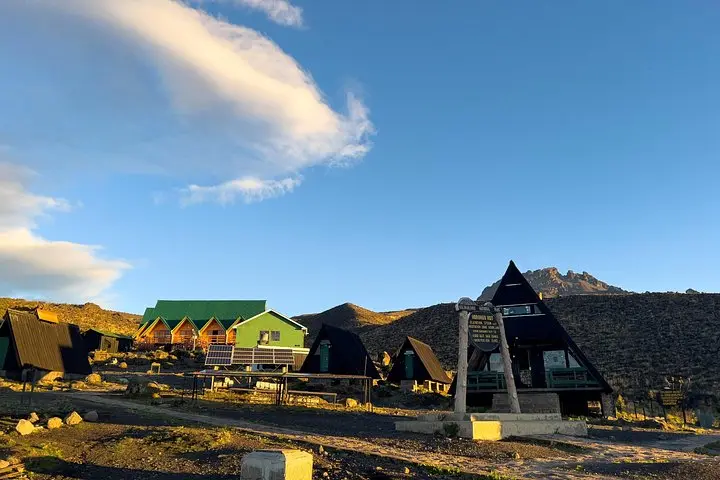
Practical guide: the Marangu itinerary covers roughly 50–65 km round-trip with a cumulative ascent of about 4,000 meters from Marangu Gate (~1,860 m) to Uhuru Peak (5,895 m). Daily walks vary—3–8 hours on approach days, with the summit push beginning around midnight on Day 4 and lasting 6–8 hours up and several hours down. Acclimatization is built into the schedule, but altitude remains the primary risk; pacing, hydration, and listening to guides are essential. Huts are wooden dormitories—warmer than tents but basic—so sleep systems and warm layers matter.
Timing: the climb can be attempted year-round, but the clearest conditions are during the dry months (January–March and June–October). Plan at least one rest day in Moshi before departure, and budget for a day after the trek to recover. Expect early wake-ups, rich stews from the kitchen crew, and the slow, steady rhythm the mountain demands—steps taken one at a time until the summit becomes a line on the horizon and the sunrise breaks over Mawenzi.
Marangu is considered one of the more accessible routes because of hut accommodation and a relatively direct line to the summit, but the night ascent is still physically demanding and altitude is the main challenge.
Huts use dormitory-style rooms with multiple occupants and basic bedding; bring a warm sleeping liner—expect shared facilities and communal dining.
Summit success varies; a 5-day itinerary has a moderate success rate but less acclimatization time than longer itineraries—fitness, pacing and guide decisions strongly affect outcomes.
Acute Mountain Sickness is a real risk; guides monitor symptoms, enforce slow pacing, ensure hydration, and carry oxygen and first-aid kits; descent is the recommended treatment for serious symptoms.
Yes—comprehensive travel insurance that covers high-altitude trekking, helicopter evacuation, and medical repatriation is strongly recommended.
Meals are provided by the kitchen crew; vegetarian, gluten-free, halal and kosher options are available if requested during booking.
Kilimanjaro Guru Expeditions operates guided outdoor trips and adventures with an emphasis on safety, stewardship, and memorable experiences.
A pre-dawn minivan eases out of Moshi and the road becomes a ribbon of dust and jacaranda shadows. By the time the group laces boots at Marangu Gate the air tastes of wet earth and coffee. The trail dives immediately into tropical rainforest—ferns and giant lobelia leaning into the path—then loosens into moorland where Kibo and Mawenzi begin to loom like patient guards. Over five days the Marangu Route moves climbers from warm, humid forest into thin, arctic desert and finally to Uhuru Peak, where the roof of Africa opens under a hard, cold sky.
A pre-dawn minivan eases out of Moshi and the road becomes a ribbon of dust and jacaranda shadows. By the time the group laces boots at Marangu Gate the air tastes of wet earth and coffee. The trail dives immediately into tropical rainforest—ferns and giant lobelia leaning into the path—then loosens into moorland where Kibo and Mawenzi begin to loom like patient guards. Over five days the Marangu Route moves climbers from warm, humid forest into thin, arctic desert and finally to Uhuru Peak, where the roof of Africa opens under a hard, cold sky.
Marangu is Kilimanjaro’s oldest and most established path. The route was popularized in the early 20th century by European explorers and later formalized with a hut system that makes a hut-to-hut ascent possible without heavy camping loads. Geologically, Kilimanjaro is a stratovolcano with three cones—Shira, Mawenzi and Kibo—the summit sitting on Kibo’s crater rim. The mountain’s changing bands of vegetation—rainforest, heath, moorland, alpine desert, and arctic summit—are as much a lesson in elevation as in time.
Culturally, the climb begins in Chagga country; the towns around Moshi are working agricultural centers where banana terraces and coffee plots define livelihoods. Porters and cooks from local communities are central to the operation—expect a disciplined, efficient crew that manages camp, meals, and logistics. Conservation is tangible: park fees support trail maintenance and rangers, and the etiquette is strict—stay on trail, pack out waste, and follow guide instructions.
Practical guide: the Marangu itinerary covers roughly 50–65 km round-trip with a cumulative ascent of about 4,000 meters from Marangu Gate (~1,860 m) to Uhuru Peak (5,895 m). Daily walks vary—3–8 hours on approach days, with the summit push beginning around midnight on Day 4 and lasting 6–8 hours up and several hours down. Acclimatization is built into the schedule, but altitude remains the primary risk; pacing, hydration, and listening to guides are essential. Huts are wooden dormitories—warmer than tents but basic—so sleep systems and warm layers matter.
Timing: the climb can be attempted year-round, but the clearest conditions are during the dry months (January–March and June–October). Plan at least one rest day in Moshi before departure, and budget for a day after the trek to recover. Expect early wake-ups, rich stews from the kitchen crew, and the slow, steady rhythm the mountain demands—steps taken one at a time until the summit becomes a line on the horizon and the sunrise breaks over Mawenzi.