THE ADVENTURE COLLECTIVE® · Independent discovery and booking for outdoor travel

A compact, hut‑to‑hut ascent of Kilimanjaro’s oldest route, the 5‑day Marangu climb trades heavy camping for communal shelters while delivering dramatic altitude gain and diverse terrain. This guide covers what to expect from rainforest to summit rim and the practical steps to prepare for the summit night.
A compact, hut‑to‑hut ascent of Kilimanjaro’s oldest route, the 5‑day Marangu climb trades heavy camping for communal shelters while delivering dramatic altitude gain and diverse terrain. This guide covers what to expect from rainforest to summit rim and the practical steps to prepare for the summit night.
You start before dawn, torchlight cutting a thin ribbon through forest that soon gives way to giant heather and a high, wind-swept saddle. The Marangu Route moves like a living stair—dense rainforest, moorland, lunar desert, then the raw, glaciated rim of Kibo—each zone pressing its own tempo on the climb.
Verified experiences and guided adventures in the surrounding area.
Operated by Mountain Warriors Tours and Safaris · Moshi, Kilimanjaro Region
You start before dawn, torchlight cutting a thin ribbon through forest that soon gives way to giant heather and a high, wind-swept saddle. The Marangu Route moves like a living stair—dense rainforest, moorland, lunar desert, then the raw, glaciated rim of Kibo—each zone pressing its own tempo on the climb.
Marangu is the original “Coca‑Cola” route, and the only one on Kilimanjaro with communal huts at every camp. Geologically Kilimanjaro is a three‑peaked volcanic massif—Mawenzi’s jagged towers and Kibo’s ice‑capped dome—formed by repeated eruptions and now carved by retreating glaciers that still cling to the summit. Culturally the foothills are worked by Chagga coffee farmers; porters and guides from local villages are the backbone of summit logistics.
Expect steady elevation gain: park gate ~1,830 m to Uhuru Peak 5,896 m—about 4,000 m total ascent over five days. Typical stage times run 3–6 hours, with a very early summit push starting around 01:00 from Kibo Hut to reach Gillman’s Point by sunrise; Uhuru is a 1–3 hour rim walk beyond that. Terrain shifts from packed earth to loose volcanic scree—trust your boots and move slowly on the steep sections.
Practical notes: acclimatize by keeping a measured pace, hydrate frequently, and prioritize sleep before summit night. Huts offer bunks and basic facilities but expect communal sleeping and cold nights. Altitude is the main challenge—know symptoms, descend if they worsen, and rely on experienced guides and the park’s rescue protocols.
No technical climbing skills are required—this is a high‑altitude trek—but prior multi‑day trekking experience and good cardiovascular fitness are strongly recommended.
Yes—Marangu uses communal huts with bunk beds, a sponge mattress and pillow, and solar lighting; bring a sleeping liner and expect simple communal facilities.
Altitude is the main risk; symptoms can appear above 3,000 m—monitor closely, maintain slow pacing, hydrate, and descend immediately if symptoms worsen.
Park entry and rescue fees are required and typically included by operators; expect to pay for Tanzanian park permits, ranger escorts and guide/porter services as part of the package.
Mountain Warriors Tours and Safaris operates guided outdoor trips and adventures with an emphasis on safety, stewardship, and memorable experiences.
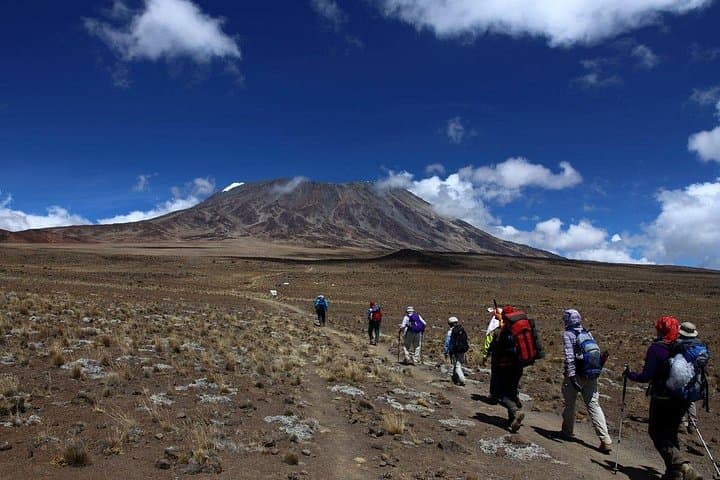
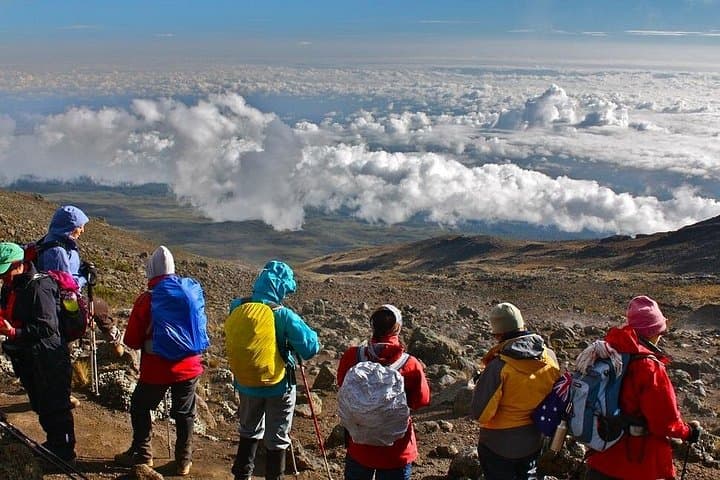
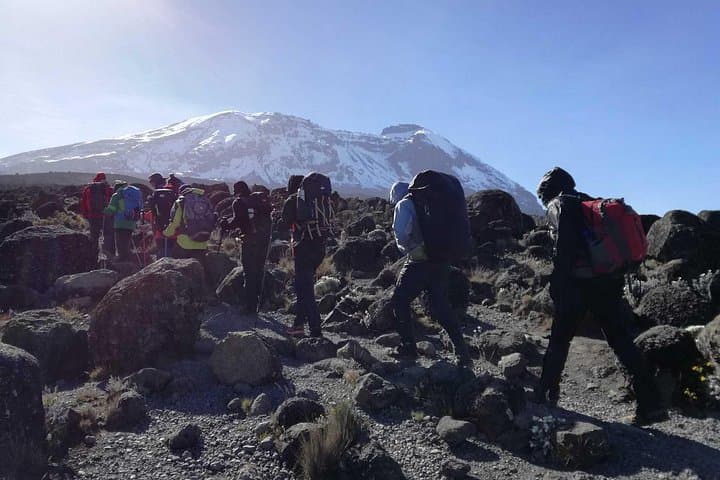
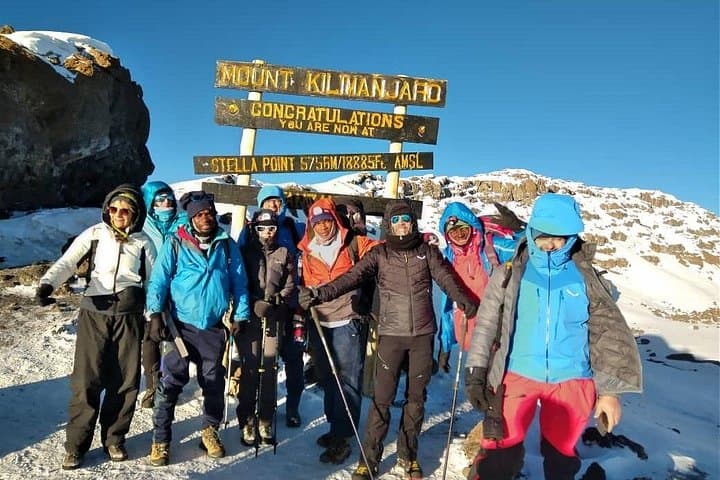
You start before dawn, torchlight cutting a thin ribbon through forest that soon gives way to giant heather and a high, wind-swept saddle. The Marangu Route moves like a living stair—dense rainforest, moorland, lunar desert, then the raw, glaciated rim of Kibo—each zone pressing its own tempo on the climb.
You start before dawn, torchlight cutting a thin ribbon through forest that soon gives way to giant heather and a high, wind-swept saddle. The Marangu Route moves like a living stair—dense rainforest, moorland, lunar desert, then the raw, glaciated rim of Kibo—each zone pressing its own tempo on the climb.
Marangu is the original “Coca‑Cola” route, and the only one on Kilimanjaro with communal huts at every camp. Geologically Kilimanjaro is a three‑peaked volcanic massif—Mawenzi’s jagged towers and Kibo’s ice‑capped dome—formed by repeated eruptions and now carved by retreating glaciers that still cling to the summit. Culturally the foothills are worked by Chagga coffee farmers; porters and guides from local villages are the backbone of summit logistics.
Expect steady elevation gain: park gate ~1,830 m to Uhuru Peak 5,896 m—about 4,000 m total ascent over five days. Typical stage times run 3–6 hours, with a very early summit push starting around 01:00 from Kibo Hut to reach Gillman’s Point by sunrise; Uhuru is a 1–3 hour rim walk beyond that. Terrain shifts from packed earth to loose volcanic scree—trust your boots and move slowly on the steep sections.
Practical notes: acclimatize by keeping a measured pace, hydrate frequently, and prioritize sleep before summit night. Huts offer bunks and basic facilities but expect communal sleeping and cold nights. Altitude is the main challenge—know symptoms, descend if they worsen, and rely on experienced guides and the park’s rescue protocols.