THE ADVENTURE COLLECTIVE® · Independent discovery and booking for outdoor travel

Follow the classic Marangu Route on a compact 5-day ascent to Uhuru Peak. This hut-to-hut Kilimanjaro itinerary pairs clear trails and local hospitality with a demanding midnight summit push—perfect for climbers who want a straightforward, well-supported route.
Follow the classic Marangu Route on a compact 5-day ascent to Uhuru Peak. This hut-to-hut Kilimanjaro itinerary pairs clear trails and local hospitality with a demanding midnight summit push—perfect for climbers who want a straightforward, well-supported route.
Night at the trailhead smells of diesel, coffee and nervous excitement. By dawn the rainforest is a green cathedral, draped in moss and bright with bird song; by the third day the trees thin to heath and alpine moor, and by midnight on day four the world is mostly wind and stone as you push toward Uhuru Peak. The Marangu Route is the classic—and one of the busiest—paths up Kilimanjaro, prized for its hut system, clearly marked trail and a line of huts that turn each night into a communal shell of sleeping bags and steaming mug conversations.
Verified experiences and guided adventures in the surrounding area.
Operated by WIDERANGE AFRICAN SAFARIS - Tanzania safaris & Kilimanjaro hiking Tours · Moshi, Kilimanjaro Region
Night at the trailhead smells of diesel, coffee and nervous excitement. By dawn the rainforest is a green cathedral, draped in moss and bright with bird song; by the third day the trees thin to heath and alpine moor, and by midnight on day four the world is mostly wind and stone as you push toward Uhuru Peak. The Marangu Route is the classic—and one of the busiest—paths up Kilimanjaro, prized for its hut system, clearly marked trail and a line of huts that turn each night into a communal shell of sleeping bags and steaming mug conversations.
Marangu has been a gateway to Africa’s highest summit since the early 20th century, when German and British explorers began mapping Kilimanjaro’s trails. The mountain itself is an eroded stratovolcano; its three volcanic cones—Kibo, Mawenzi and Shira—record a long geology of uplift, eruptions and glacial recession. Cultural life below the slopes is dominated by the Chagga people, whose terraced farms and banana groves around Moshi sustain porters and lodges that make modern ascents possible.
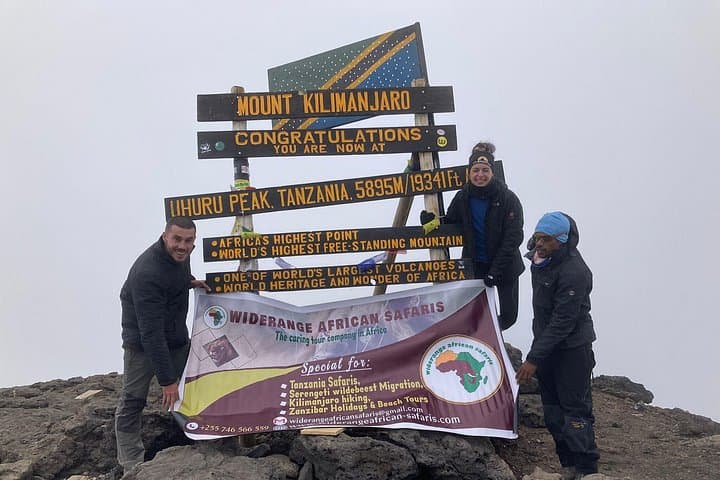
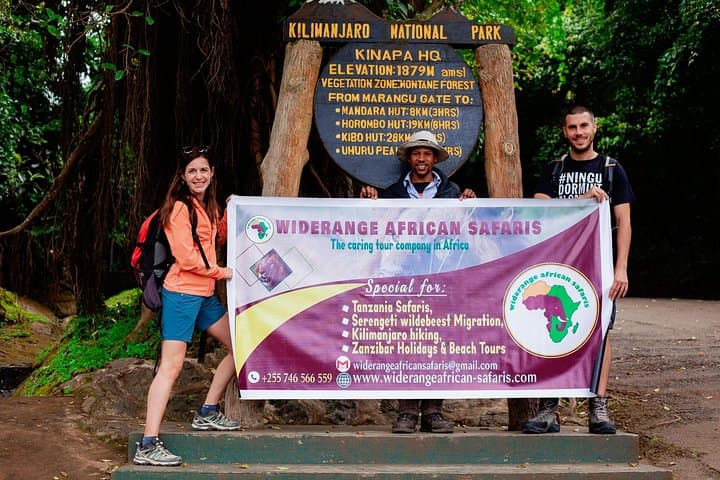
This 5-day itinerary begins at Marangu Gate (1,860 m), climbs through dense montane forest to Mandara Hut, moves up to Horombo Hut across open moorland, then onto the barren Kibo saddle before the midnight push to Gillman’s Point and Uhuru Peak (5,895 m). Plan for roughly 8–12 km days on dirt and rock trails, with the steepest elevation change during the summit night. Expect cold, wind and oxygen-thin air above 4,500 m; success hinges less on speed than on steady pacing and proper acclimatization.
Practicalities: permits for Kilimanjaro National Park are required and typically bundled by your operator; the route uses huts for overnight shelter—bring a warm sleeping liner. Hydrate early and often, and carry electrolytes; altitude sickness is the primary objective hazard, so communicate symptoms immediately to your guide. Sturdy, broken-in hiking boots and crampon-capable gaiters are useful for the upper slopes. Summit starts around midnight; bring a bright headlamp, extra batteries and layered insulation for the long, cold push.
Local insight: the Marangu huts foster camaraderie—pack small tokens for porters and tip fairly; many climbers underestimate descent fatigue, so preserve legs by hiking poles on the return. Weather windows are best during the dry periods (January–March and June–October), when summit chances are highest.
The Marangu Route is straightforward on the map but honest on the mountain: it asks for resilience, humility and respect for high-altitude terrain. Reach the rim at sunrise and you’ll see a continent rearrange light under your feet—an achievement that’s practical, visceral and hard-earned.
No technical climbing skills are required, but strong fitness and some multi-day trekking experience improve your chances of reaching the summit.
Marangu huts are communal dorm-style accommodations; a sleeping liner and earplugs are recommended.
The most reliable seasons are January–March and June–October during drier months; visibility and summit success rates are higher then.
Altitude sickness is the primary risk—symptoms can escalate quickly; guides monitor climbers and will descend anyone with severe signs.
Permits are usually included by the operator; confirm with the supplier which fees and services are bundled.
Tipping porters and guides is customary—plan a fair group tip distributed proportionally; your operator can advise current norms.
WIDERANGE AFRICAN SAFARIS - Tanzania safaris & Kilimanjaro hiking Tours operates guided outdoor trips and adventures with an emphasis on safety, stewardship, and memorable experiences.

Night at the trailhead smells of diesel, coffee and nervous excitement. By dawn the rainforest is a green cathedral, draped in moss and bright with bird song; by the third day the trees thin to heath and alpine moor, and by midnight on day four the world is mostly wind and stone as you push toward Uhuru Peak. The Marangu Route is the classic—and one of the busiest—paths up Kilimanjaro, prized for its hut system, clearly marked trail and a line of huts that turn each night into a communal shell of sleeping bags and steaming mug conversations.
Night at the trailhead smells of diesel, coffee and nervous excitement. By dawn the rainforest is a green cathedral, draped in moss and bright with bird song; by the third day the trees thin to heath and alpine moor, and by midnight on day four the world is mostly wind and stone as you push toward Uhuru Peak. The Marangu Route is the classic—and one of the busiest—paths up Kilimanjaro, prized for its hut system, clearly marked trail and a line of huts that turn each night into a communal shell of sleeping bags and steaming mug conversations.
Marangu has been a gateway to Africa’s highest summit since the early 20th century, when German and British explorers began mapping Kilimanjaro’s trails. The mountain itself is an eroded stratovolcano; its three volcanic cones—Kibo, Mawenzi and Shira—record a long geology of uplift, eruptions and glacial recession. Cultural life below the slopes is dominated by the Chagga people, whose terraced farms and banana groves around Moshi sustain porters and lodges that make modern ascents possible.
This 5-day itinerary begins at Marangu Gate (1,860 m), climbs through dense montane forest to Mandara Hut, moves up to Horombo Hut across open moorland, then onto the barren Kibo saddle before the midnight push to Gillman’s Point and Uhuru Peak (5,895 m). Plan for roughly 8–12 km days on dirt and rock trails, with the steepest elevation change during the summit night. Expect cold, wind and oxygen-thin air above 4,500 m; success hinges less on speed than on steady pacing and proper acclimatization.
Practicalities: permits for Kilimanjaro National Park are required and typically bundled by your operator; the route uses huts for overnight shelter—bring a warm sleeping liner. Hydrate early and often, and carry electrolytes; altitude sickness is the primary objective hazard, so communicate symptoms immediately to your guide. Sturdy, broken-in hiking boots and crampon-capable gaiters are useful for the upper slopes. Summit starts around midnight; bring a bright headlamp, extra batteries and layered insulation for the long, cold push.
Local insight: the Marangu huts foster camaraderie—pack small tokens for porters and tip fairly; many climbers underestimate descent fatigue, so preserve legs by hiking poles on the return. Weather windows are best during the dry periods (January–March and June–October), when summit chances are highest.
The Marangu Route is straightforward on the map but honest on the mountain: it asks for resilience, humility and respect for high-altitude terrain. Reach the rim at sunrise and you’ll see a continent rearrange light under your feet—an achievement that’s practical, visceral and hard-earned.