THE ADVENTURE COLLECTIVE® · Independent discovery and booking for outdoor travel

A compact, hut-based ascent of Kilimanjaro via the Marangu Route—five days of rainforest, moorland, and alpine desert leading to Uhuru Peak. This guide covers the route’s terrain, logistics, acclimatization realities and practical gear to get you to the summit.
A compact, hut-based ascent of Kilimanjaro via the Marangu Route—five days of rainforest, moorland, and alpine desert leading to Uhuru Peak. This guide covers the route’s terrain, logistics, acclimatization realities and practical gear to get you to the summit.
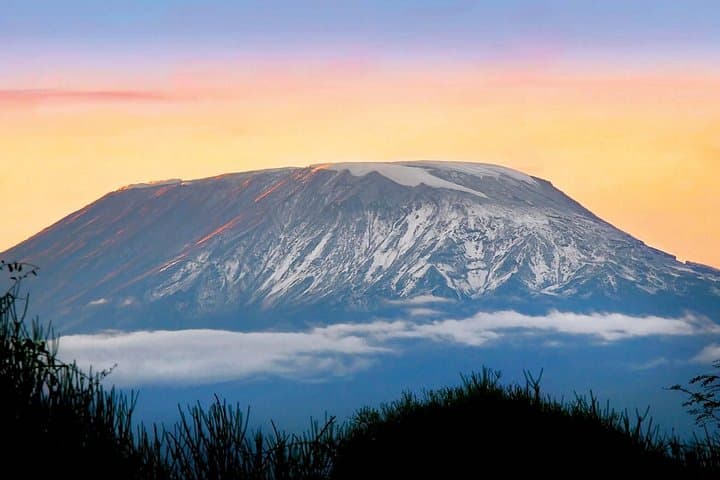
The highland air bites clean and thin as you step through a curtain of mist-damp moss. On day one the trail threads upward from Marangu Gate through dense montane rainforest where Colobus monkeys swing like punctuation marks between giant figs. Each day reshapes the mountain—the forest opens to heather moorland, the moorland gives way to an alpine desert, and finally the ridge above Kibo unfolds, raw and bright beneath the glaciers guarding Uhuru Peak.
Verified experiences and guided adventures in the surrounding area.
Operated by Samsons Safaris · Moshi, Kilimanjaro Region
The highland air bites clean and thin as you step through a curtain of mist-damp moss. On day one the trail threads upward from Marangu Gate through dense montane rainforest where Colobus monkeys swing like punctuation marks between giant figs. Each day reshapes the mountain—the forest opens to heather moorland, the moorland gives way to an alpine desert, and finally the ridge above Kibo unfolds, raw and bright beneath the glaciers guarding Uhuru Peak.
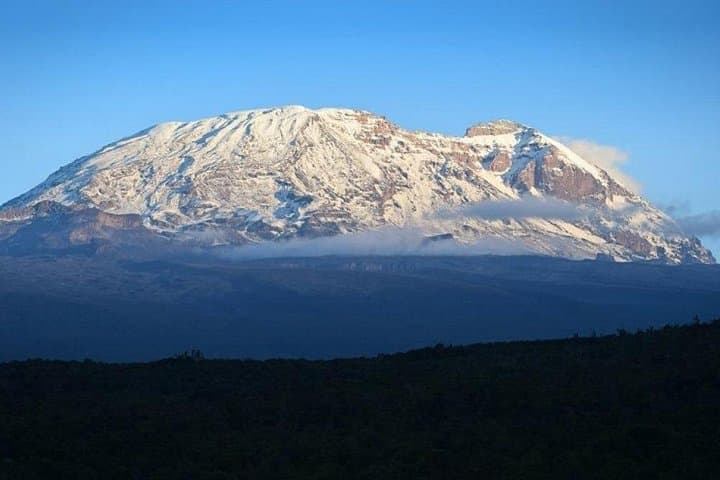
Marangu is the original, hut-based route on Kilimanjaro and the shortest schedule that still aims for the summit. It follows paths used for generations by the Chagga people, who farm the lower slopes and once guided early European explorers. Geologically Kilimanjaro is a massive stratovolcano with three peaks—Shira, Mawenzi and Kibo—Kibo holding the crater and the summit at 5,895 m. The trail exposes the island-like ecology of the mountain: rain-soaked forest, giant lobelia in moorland, and stony alpine desert where wind and sun sculpt the ground.
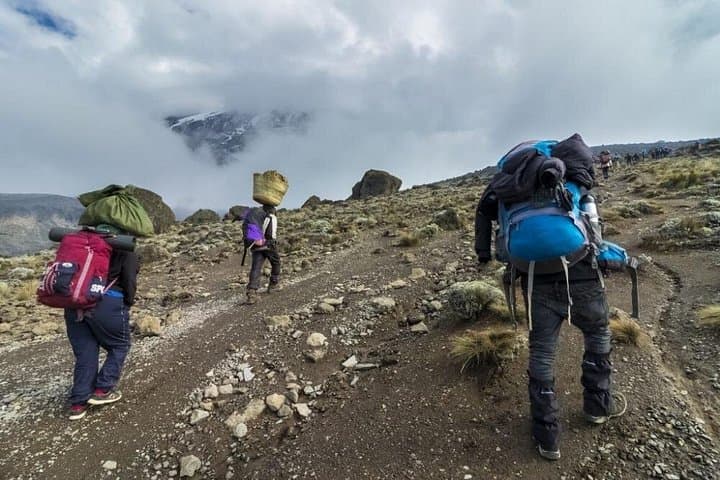
Cultural notes are close to the trail: at Mandara and Horombo huts you’ll meet nimble porters and cooks whose rhythm runs ahead of the group, setting up meals and tents; tipping is both customary and a major local income source. The route also reveals colonial-era climbing history—the first recorded ascent of Kibo was in the late 19th century—while present-day conservation is enforced by Kilimanjaro National Park with regulated protocols and fees.
Practically, this is a 5-day, hut-and-camp itinerary that gains roughly 4,000 m from Marangu Gate (about 1,860 m) to Uhuru Peak (5,895 m). Expect rainforest mud and roots, long dusty switchbacks in moorland, and loose scree near the summit. Night-summit tactics mean an alpine start around midnight from Kibo Hut; you’ll hike in the dark on steep, altitude-sapping slopes before sunrise hits Gilman’s Point and lights the crater rim.
Acclimatization is limited on Marangu compared with longer routes—plan for conservative pacing, watch for acute mountain sickness symptoms, and prioritize sleep, hydration and calories. Footwear should be broken-in, waterproof boots; layering is essential for a temperature swing that can move from humid 15°C in the forest to below −10°C on the summit. Guides carry radios and oxygen for emergencies, but personal preparedness is the first line of safety.
The reward is immediate: sunrise from Uhuru—glaciers glittering, Mawenzi’s jagged spine opposite—followed by a long descent that turns summit fatigue into memory. For travelers who want a compact, historically rooted climb with hut comforts on the lower slopes, the Marangu route delivers a direct, demanding, and deeply memorable way to stand atop Africa.
No technical climbing skills are required—the route is a strenuous hike, not a technical climb—but previous long-day hiking experience is strongly recommended.
Acute Mountain Sickness (AMS) is the primary risk; symptoms include headache, nausea and fatigue—descend immediately if severe and follow guide instructions.
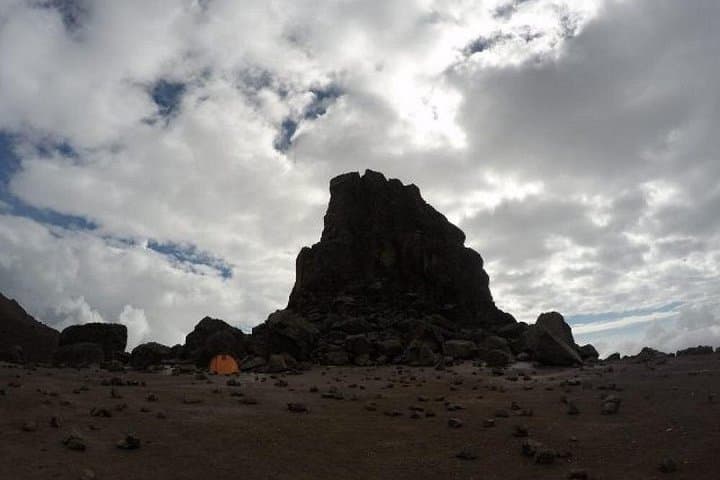
Mandara, Horombo and Kibo huts provide basic bunks and shelters; bring a warm sleeping bag and expect communal facilities and cold nights at higher elevations.
Yes—Kilimanjaro National Park permits and park fees are mandatory and are handled by operators as part of the climb.
Dry seasons (January–March and June–October) offer the most stable weather and clearer summit views; rainy months bring mud and poorer visibility.
Tipping is customary—most operators provide guidance on amounts; consider tipping guides, cooks and porters separately to support local livelihoods.
Samsons Safaris operates guided outdoor trips and adventures with an emphasis on safety, stewardship, and memorable experiences.
The highland air bites clean and thin as you step through a curtain of mist-damp moss. On day one the trail threads upward from Marangu Gate through dense montane rainforest where Colobus monkeys swing like punctuation marks between giant figs. Each day reshapes the mountain—the forest opens to heather moorland, the moorland gives way to an alpine desert, and finally the ridge above Kibo unfolds, raw and bright beneath the glaciers guarding Uhuru Peak.
The highland air bites clean and thin as you step through a curtain of mist-damp moss. On day one the trail threads upward from Marangu Gate through dense montane rainforest where Colobus monkeys swing like punctuation marks between giant figs. Each day reshapes the mountain—the forest opens to heather moorland, the moorland gives way to an alpine desert, and finally the ridge above Kibo unfolds, raw and bright beneath the glaciers guarding Uhuru Peak.
Marangu is the original, hut-based route on Kilimanjaro and the shortest schedule that still aims for the summit. It follows paths used for generations by the Chagga people, who farm the lower slopes and once guided early European explorers. Geologically Kilimanjaro is a massive stratovolcano with three peaks—Shira, Mawenzi and Kibo—Kibo holding the crater and the summit at 5,895 m. The trail exposes the island-like ecology of the mountain: rain-soaked forest, giant lobelia in moorland, and stony alpine desert where wind and sun sculpt the ground.
Cultural notes are close to the trail: at Mandara and Horombo huts you’ll meet nimble porters and cooks whose rhythm runs ahead of the group, setting up meals and tents; tipping is both customary and a major local income source. The route also reveals colonial-era climbing history—the first recorded ascent of Kibo was in the late 19th century—while present-day conservation is enforced by Kilimanjaro National Park with regulated protocols and fees.
Practically, this is a 5-day, hut-and-camp itinerary that gains roughly 4,000 m from Marangu Gate (about 1,860 m) to Uhuru Peak (5,895 m). Expect rainforest mud and roots, long dusty switchbacks in moorland, and loose scree near the summit. Night-summit tactics mean an alpine start around midnight from Kibo Hut; you’ll hike in the dark on steep, altitude-sapping slopes before sunrise hits Gilman’s Point and lights the crater rim.
Acclimatization is limited on Marangu compared with longer routes—plan for conservative pacing, watch for acute mountain sickness symptoms, and prioritize sleep, hydration and calories. Footwear should be broken-in, waterproof boots; layering is essential for a temperature swing that can move from humid 15°C in the forest to below −10°C on the summit. Guides carry radios and oxygen for emergencies, but personal preparedness is the first line of safety.
The reward is immediate: sunrise from Uhuru—glaciers glittering, Mawenzi’s jagged spine opposite—followed by a long descent that turns summit fatigue into memory. For travelers who want a compact, historically rooted climb with hut comforts on the lower slopes, the Marangu route delivers a direct, demanding, and deeply memorable way to stand atop Africa.