THE ADVENTURE COLLECTIVE® · Independent discovery and booking for outdoor travel

A compact five-day safari linking Mikumi’s open plains with Ruaha’s river valleys. Expect private game drives, a guided walking safari, and a night drive that bring you close to elephants, lions, and river life.
A compact five-day safari linking Mikumi’s open plains with Ruaha’s river valleys. Expect private game drives, a guided walking safari, and a night drive that bring you close to elephants, lions, and river life.
Dawn cuts across the savanna as your vehicle threads through tall grass toward a distant watering hole; hippos grumble in the shallows and a lone acacia throws a long shadow on the plain. Over five days you’ll move from the open flats of Mikumi to the rugged river valleys of Ruaha — two very different faces of Tanzania’s southern wilderness.
Verified experiences and guided adventures in the surrounding area.
Operated by Mikumi National Park · Iringa, Iringa Region
Dawn cuts across the savanna as your vehicle threads through tall grass toward a distant watering hole; hippos grumble in the shallows and a lone acacia throws a long shadow on the plain. Over five days you’ll move from the open flats of Mikumi to the rugged river valleys of Ruaha — two very different faces of Tanzania’s southern wilderness.
Mikumi sits on the eastern edge of the Southern Highlands, its grassy plains shaped by seasonal rivers. Ruaha, larger and less visited, is carved by the Great Ruaha River and dominated by red laterite soils and baobab-studded kopjes. The journey links colonial-era towns like Morogoro and Iringa, where Hehe history and the story of Chief Mkwawa are visible in local museums and stonework.
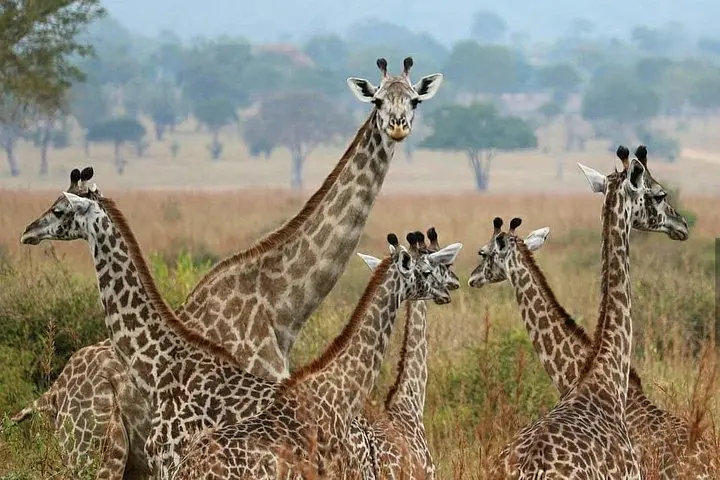
Expect classic African game viewing: elephant herds pacing to riverbanks, lions lounging on kopjes, and painted starlings flashing through riverine acacia. The walking safari — guided and accompanied by an armed ranger — narrows the focus: tracks, dung, and the hush between birdsong become the story.
Practically, the trip balances long road transfers with concentrated game time: morning and sunset drives, one guided walk, and a night drive to scan for nocturnal species. Roads can be rough after rains; luggage is usually limited to soft bags. Bring binoculars, layered clothing for cool mornings and hot afternoons, malaria prophylaxis as recommended, and patience for the rhythms of the bush. With private transport and small groups, the experience is intimate: the bush feels less crowded, and wildlife often behaves like it owns the road — because it does.
Private transportation, accommodations specified in the itinerary, meals listed (breakfasts/lunches/dinners), park fees where noted, and guided game drives and walking safari as described.
The operator notes the tour is suitable for all fitness levels, but children must follow ranger guidance; some lodges restrict ages for walking safaris and night drives—check with the operator.
The dry months (June–October) typically offer the best concentrations at water sources, though birding is excellent after the rains when migrants arrive.
Yellow fever vaccination may be required depending on transit, and malaria prophylaxis is recommended—consult a travel health clinic for personalized advice.
Mikumi National Park operates guided outdoor trips and adventures with an emphasis on safety, stewardship, and memorable experiences.
Dawn cuts across the savanna as your vehicle threads through tall grass toward a distant watering hole; hippos grumble in the shallows and a lone acacia throws a long shadow on the plain. Over five days you’ll move from the open flats of Mikumi to the rugged river valleys of Ruaha — two very different faces of Tanzania’s southern wilderness.
Dawn cuts across the savanna as your vehicle threads through tall grass toward a distant watering hole; hippos grumble in the shallows and a lone acacia throws a long shadow on the plain. Over five days you’ll move from the open flats of Mikumi to the rugged river valleys of Ruaha — two very different faces of Tanzania’s southern wilderness.
Mikumi sits on the eastern edge of the Southern Highlands, its grassy plains shaped by seasonal rivers. Ruaha, larger and less visited, is carved by the Great Ruaha River and dominated by red laterite soils and baobab-studded kopjes. The journey links colonial-era towns like Morogoro and Iringa, where Hehe history and the story of Chief Mkwawa are visible in local museums and stonework.
Expect classic African game viewing: elephant herds pacing to riverbanks, lions lounging on kopjes, and painted starlings flashing through riverine acacia. The walking safari — guided and accompanied by an armed ranger — narrows the focus: tracks, dung, and the hush between birdsong become the story.
Practically, the trip balances long road transfers with concentrated game time: morning and sunset drives, one guided walk, and a night drive to scan for nocturnal species. Roads can be rough after rains; luggage is usually limited to soft bags. Bring binoculars, layered clothing for cool mornings and hot afternoons, malaria prophylaxis as recommended, and patience for the rhythms of the bush. With private transport and small groups, the experience is intimate: the bush feels less crowded, and wildlife often behaves like it owns the road — because it does.