THE ADVENTURE COLLECTIVE® · Independent discovery and booking for outdoor travel

Cross the High Atlas, wander a UNESCO kasbah, and sleep beneath Sahara stars on this five-day loop from Marrakech. Long drives are rewarded with tight gorges, rose valleys and towering Erg Chebbi dunes—ideal for first-time desert travelers who want both culture and landscape.
Cross the High Atlas, wander a UNESCO kasbah, and sleep beneath Sahara stars on this five-day loop from Marrakech. Long drives are rewarded with tight gorges, rose valleys and towering Erg Chebbi dunes—ideal for first-time desert travelers who want both culture and landscape.
Dawn slides up over the Erg Chebbi dunes and the caravan moves like punctuation across the sand—camels lowering and rising, wind sketching new ridges. The tour begins and ends in Marrakech but lives between extremes: the ochre riads of city medinas, the snow-dusted High Atlas, the carved walls of Todra Gorge, and the slow, wide silence of Sahara night.
Verified experiences and guided adventures in the surrounding area.
Operated by Morocco Tours Services · Marrakech, Marrakech-Safi
Dawn slides up over the Erg Chebbi dunes and the caravan moves like punctuation across the sand—camels lowering and rising, wind sketching new ridges. The tour begins and ends in Marrakech but lives between extremes: the ochre riads of city medinas, the snow-dusted High Atlas, the carved walls of Todra Gorge, and the slow, wide silence of Sahara night.
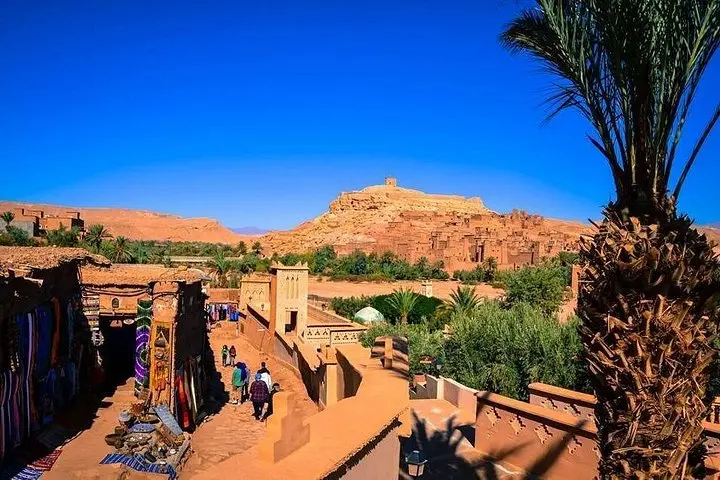
This route follows centuries-old trade corridors. Ait Ben Haddou’s earthen kasbahs are UNESCO-listed examples of rammed-earth architecture and served as film backdrops; the Tizi n’Tichka pass climbs to roughly 2,260 m and exposes the granite backbone of the High Atlas. Todra is a steep limestone cleft where river action has polished sheer walls; Dades Valley threads palm groves and rose cooperatives that supply local distilleries.
Expect long driving days—Marrakech to Merzouga is roughly 560 km and typically 9–10 hours with stops—balanced with brief hikes, a one-hour camel trek to a desert camp, and sunrise and sunset viewing from dune crests that can be 100–150 m high. Accommodations vary: riads in towns, simple hotels in the gorges, and nomad-style camps in Merzouga offering mattress tents and shared facilities.
Practical tips: pack layered clothing for hot days and chilly desert nights, carry sun protection and at least 2–3 liters of water per day, and be ready for bumpy mountain and desert roads. Bring cash for small purchases and local guides inside ksars. The itinerary suits travelers of most fitness levels but involves prolonged vehicle transfers; plan rest and allow time to acclimate at stops.
Driving segments vary; expect the longest transfer (Marrakech–Merzouga) to take 9–10 hours with stops; other days are 4–7 hours.
Camps are nomad-style with mattress tents, shared bathroom facilities in many, and a communal dinner and music; some camps offer hot-water showers.
The tour is broadly suitable for families and varying fitness levels but includes uneven surfaces, camel rides, and long drives—check specifics with the operator for mobility needs.
The itinerary includes breakfasts and some dinners plus guided entrance to Ait Ben Haddou; confirm specifics and any optional extras when booking.
Morocco Tours Services operates guided outdoor trips and adventures with an emphasis on safety, stewardship, and memorable experiences.
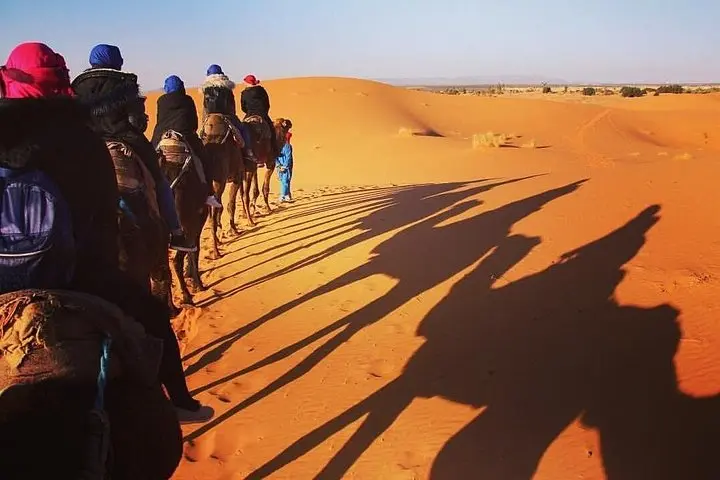
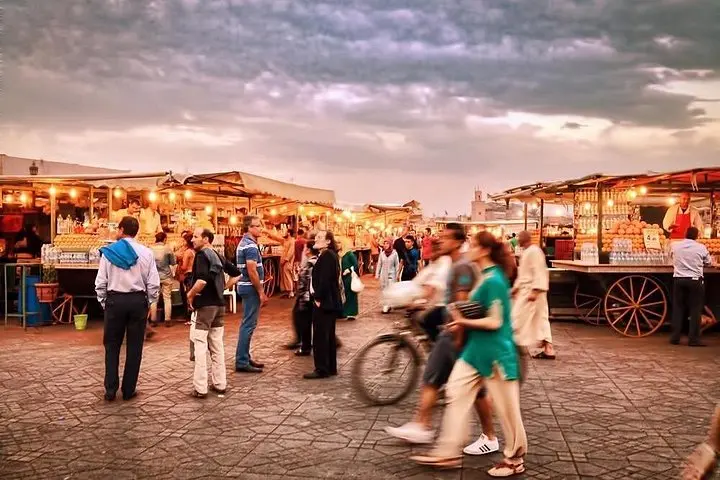
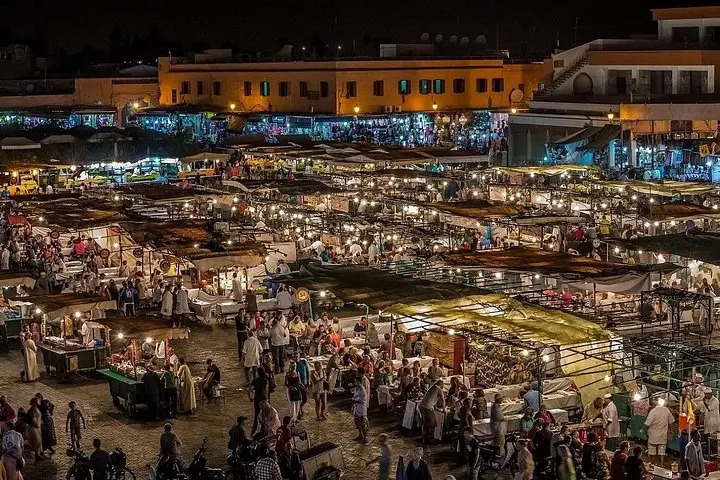
Dawn slides up over the Erg Chebbi dunes and the caravan moves like punctuation across the sand—camels lowering and rising, wind sketching new ridges. The tour begins and ends in Marrakech but lives between extremes: the ochre riads of city medinas, the snow-dusted High Atlas, the carved walls of Todra Gorge, and the slow, wide silence of Sahara night.
Dawn slides up over the Erg Chebbi dunes and the caravan moves like punctuation across the sand—camels lowering and rising, wind sketching new ridges. The tour begins and ends in Marrakech but lives between extremes: the ochre riads of city medinas, the snow-dusted High Atlas, the carved walls of Todra Gorge, and the slow, wide silence of Sahara night.
This route follows centuries-old trade corridors. Ait Ben Haddou’s earthen kasbahs are UNESCO-listed examples of rammed-earth architecture and served as film backdrops; the Tizi n’Tichka pass climbs to roughly 2,260 m and exposes the granite backbone of the High Atlas. Todra is a steep limestone cleft where river action has polished sheer walls; Dades Valley threads palm groves and rose cooperatives that supply local distilleries.
Expect long driving days—Marrakech to Merzouga is roughly 560 km and typically 9–10 hours with stops—balanced with brief hikes, a one-hour camel trek to a desert camp, and sunrise and sunset viewing from dune crests that can be 100–150 m high. Accommodations vary: riads in towns, simple hotels in the gorges, and nomad-style camps in Merzouga offering mattress tents and shared facilities.
Practical tips: pack layered clothing for hot days and chilly desert nights, carry sun protection and at least 2–3 liters of water per day, and be ready for bumpy mountain and desert roads. Bring cash for small purchases and local guides inside ksars. The itinerary suits travelers of most fitness levels but involves prolonged vehicle transfers; plan rest and allow time to acclimate at stops.