THE ADVENTURE COLLECTIVE® · Independent discovery and booking for outdoor travel

A five-day, non-technical alpine trek linking Chogoria and Naro Moru to reach Point Lenana on Mount Kenya. Expect forest trails, giant heather, a pre-dawn summit push, and strong acclimatization planning.
A five-day, non-technical alpine trek linking Chogoria and Naro Moru to reach Point Lenana on Mount Kenya. Expect forest trails, giant heather, a pre-dawn summit push, and strong acclimatization planning.
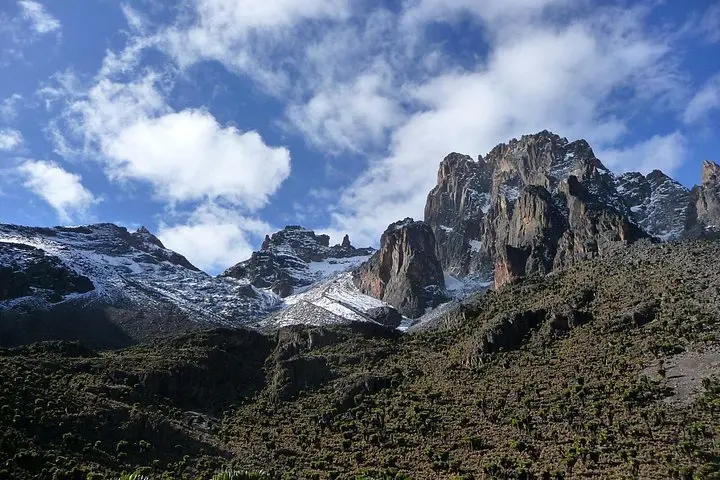
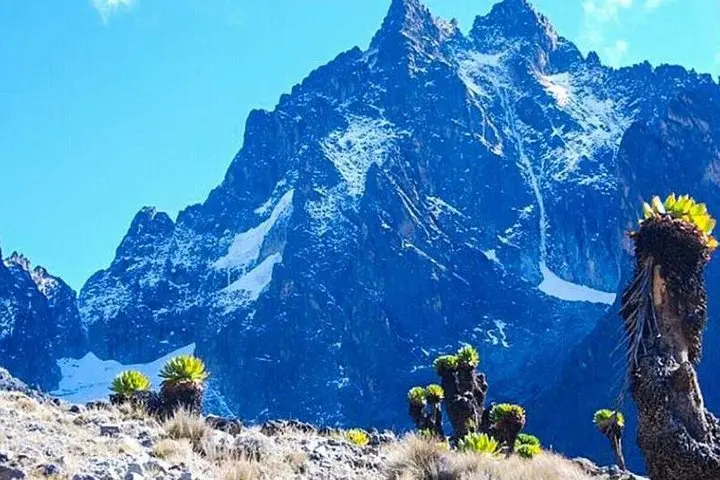
Dawn breaks over chiseled ridges of Mount Kenya, the air thin and bright as you push from Mintos Hut toward the summit plateau. On this 5-day Chogoria–Naro Moru circuit the mountain shifts around you: humid montane forest gives way to giant heather, then a hard, stony alpine world where wind and rock keep strict hours.
Verified experiences and guided adventures in the surrounding area.
Operated by Gracepatt Ecotours Kenya · Naro Moru, Nyeri County
Dawn breaks over chiseled ridges of Mount Kenya, the air thin and bright as you push from Mintos Hut toward the summit plateau. On this 5-day Chogoria–Naro Moru circuit the mountain shifts around you: humid montane forest gives way to giant heather, then a hard, stony alpine world where wind and rock keep strict hours.
The route threads history and geology—ancient volcanic cores uplifted into eroded peaks, glacial valleys carved in the Pleistocene. Chogoria's side is famous for dramatic gorges and the Emerald Sea tarn; the Naro Moru descent drops through rainforest that supports endemic plants and cultural ties to local Kikuyu communities who have long regarded the peaks as sacred.
The itinerary is serious but non-technical: long days of walking, one pre-dawn summit push to Point Lenana at roughly 4,985 m, and multiple nights at progressively higher camps to aid acclimatization. Expect muddy tracks, narrow ridgelines, and sudden weather swings—sun, sleet, wind—often within hours. Guides handle route-finding, camp setup, and permits; climbers carry daypacks with essentials.
Plan for altitude: hydrate, eat, and sleep early; pace conservatively on ascent. Good boots, layered insulation, and a reliable headlamp make the summit night manageable. Allow a day in Nairobi or Nanyuki to rest before and after the trek—logistics are simple but weather can alter timing.
This climb rewards effort with expansive views of the Kenyan highlands, a close look at high-altitude ecology, and a real alpine achievement without technical climbing gear if properly prepared.
No—Point Lenana is a non-technical trekking summit; crampons or ice axes are not required in normal conditions, though trainers for icy patches in the wet season can help.
Mount Kenya National Park fees and camping fees are required and typically managed by the tour operator as part of the package.
The summit day is long (often 10–12 hours round trip) with a pre-dawn start and exposure to altitude; pacing and acclimatization the prior days are critical.
Spend the first nights progressively higher, stay hydrated, eat regularly, avoid alcohol, and inform guides immediately of symptoms; descent is the standard treatment for severe cases.
Gracepatt Ecotours Kenya operates guided outdoor trips and adventures with an emphasis on safety, stewardship, and memorable experiences.
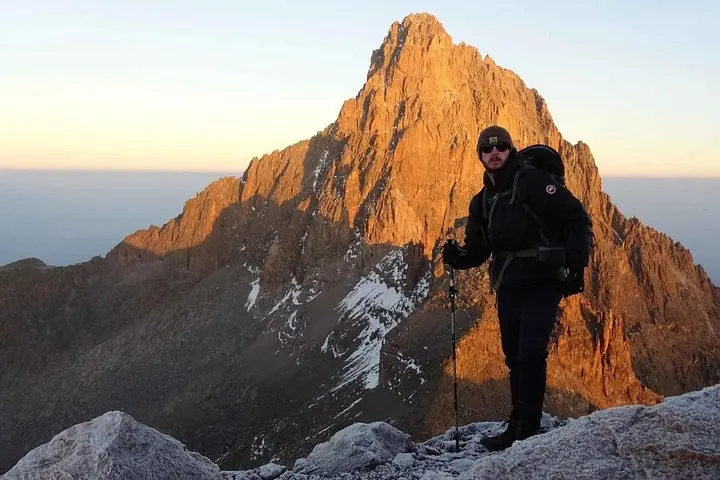
Dawn breaks over chiseled ridges of Mount Kenya, the air thin and bright as you push from Mintos Hut toward the summit plateau. On this 5-day Chogoria–Naro Moru circuit the mountain shifts around you: humid montane forest gives way to giant heather, then a hard, stony alpine world where wind and rock keep strict hours.
Dawn breaks over chiseled ridges of Mount Kenya, the air thin and bright as you push from Mintos Hut toward the summit plateau. On this 5-day Chogoria–Naro Moru circuit the mountain shifts around you: humid montane forest gives way to giant heather, then a hard, stony alpine world where wind and rock keep strict hours.
The route threads history and geology—ancient volcanic cores uplifted into eroded peaks, glacial valleys carved in the Pleistocene. Chogoria's side is famous for dramatic gorges and the Emerald Sea tarn; the Naro Moru descent drops through rainforest that supports endemic plants and cultural ties to local Kikuyu communities who have long regarded the peaks as sacred.
The itinerary is serious but non-technical: long days of walking, one pre-dawn summit push to Point Lenana at roughly 4,985 m, and multiple nights at progressively higher camps to aid acclimatization. Expect muddy tracks, narrow ridgelines, and sudden weather swings—sun, sleet, wind—often within hours. Guides handle route-finding, camp setup, and permits; climbers carry daypacks with essentials.
Plan for altitude: hydrate, eat, and sleep early; pace conservatively on ascent. Good boots, layered insulation, and a reliable headlamp make the summit night manageable. Allow a day in Nairobi or Nanyuki to rest before and after the trek—logistics are simple but weather can alter timing.
This climb rewards effort with expansive views of the Kenyan highlands, a close look at high-altitude ecology, and a real alpine achievement without technical climbing gear if properly prepared.