THE ADVENTURE COLLECTIVE® · Independent discovery and booking for outdoor travel

Traverse Mount Kenya’s two great faces on a five-day Sirimon–Chogoria crossing, summiting Point Lenana. Expect dramatic terrain changes, nights in mountain huts, and a predawn summit push to 4,985 m.
Traverse Mount Kenya’s two great faces on a five-day Sirimon–Chogoria crossing, summiting Point Lenana. Expect dramatic terrain changes, nights in mountain huts, and a predawn summit push to 4,985 m.
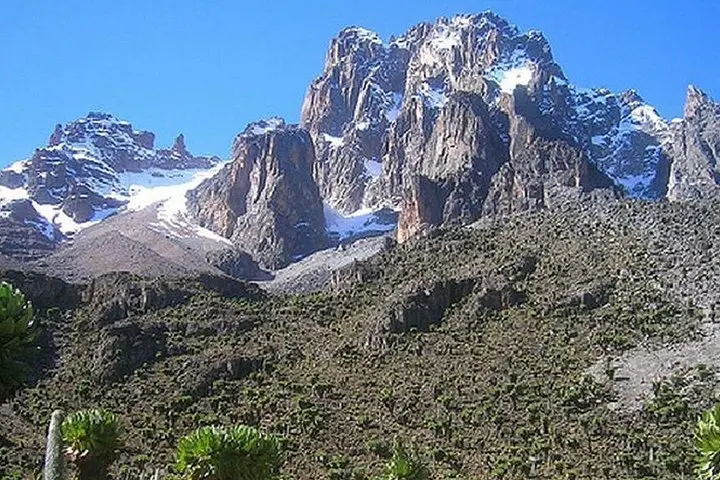
You step out of the vehicle in Nanyuki and the ridge of Mount Kenya looms—rock ribs and glaciers crowning high meadows while the western flank dries into ochre slopes. The Sirimon-to-Chogoria crossing threads those contrasts: brittle, giant trees and scree on the Sirimon side, then lush bamboo, streams and dramatic gorges as you drop toward Chogoria.
Verified experiences and guided adventures in the surrounding area.
Operated by Wellington Ecotours and Safaris · Nanyuki, Laikipia County
You step out of the vehicle in Nanyuki and the ridge of Mount Kenya looms—rock ribs and glaciers crowning high meadows while the western flank dries into ochre slopes. The Sirimon-to-Chogoria crossing threads those contrasts: brittle, giant trees and scree on the Sirimon side, then lush bamboo, streams and dramatic gorges as you drop toward Chogoria.
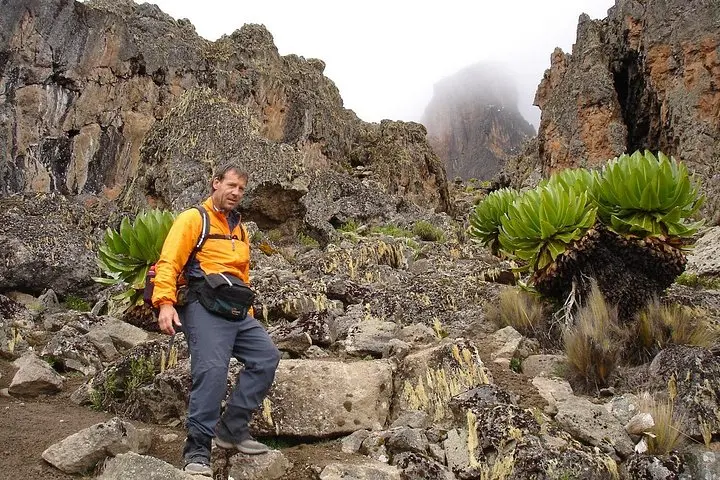
Geology here is blunt and honest—an ancient volcanic massif carved into jagged peaks (Batian and Nelion tower above Point Lenana at 4,985 m). The mountain is central to Kikuyu culture (Kirinyaga, “that which glitters”) and the national park is a UNESCO World Heritage site, protecting unique afro-alpine flora like giant lobelias and endemic alpine grasses.
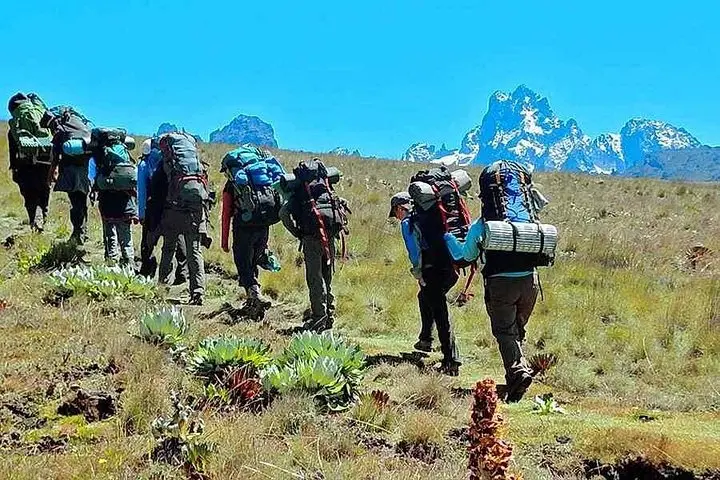
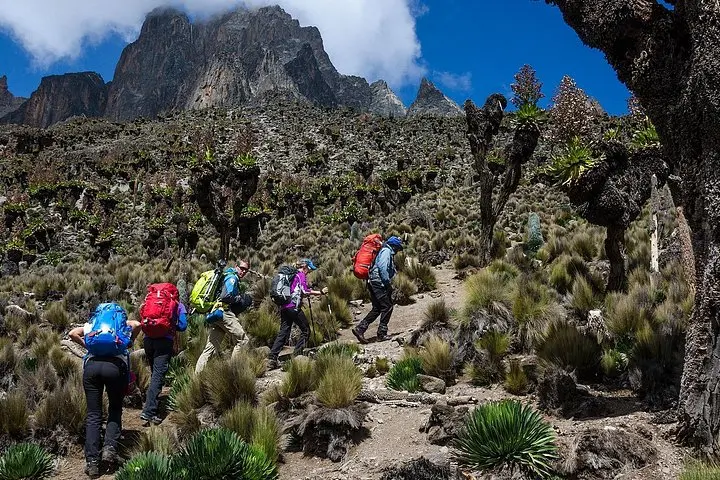
Expect five days of progressive altitude: daytime walks across heath and moorland, nights in mountain huts (Old Moses, Shipton). The summit night is a predawn push to Point Lenana—cold, thin air, and glued to a slow rhythm of steps and headlamp cones.
Practical edge: spread your ascent to reduce altitude stress, carry layered insulation and a waterproof shell, and bring a reliable headlamp for the summit start. Water treatment matters—streams are frequent but boil or filter. Footwear with good ankle support and grippy soles keeps you efficient on scree and muddy bamboo tracks. Guides manage route permits, camping logistics and food at huts; plan for variable weather and to move at a steady, conservative pace.
This trek rewards with dramatic transitions—rock, forest, ice—and a summit that gives a clear, earned view across Kenya’s highlands.
No technical climbing is required for Point Lenana on this route, but prior multi-day trekking experience and good fitness are important.
Temperatures near Point Lenana can drop well below freezing at night; wind chill makes insulated layers essential.
Guides typically handle park permits and hut bookings; confirm what's covered when you book and carry ID for registration.
Mountain huts have basic facilities and water is available from streams—treat or boil water and bring personal hygiene supplies.
Wellington Ecotours and Safaris operates guided outdoor trips and adventures with an emphasis on safety, stewardship, and memorable experiences.
You step out of the vehicle in Nanyuki and the ridge of Mount Kenya looms—rock ribs and glaciers crowning high meadows while the western flank dries into ochre slopes. The Sirimon-to-Chogoria crossing threads those contrasts: brittle, giant trees and scree on the Sirimon side, then lush bamboo, streams and dramatic gorges as you drop toward Chogoria.
You step out of the vehicle in Nanyuki and the ridge of Mount Kenya looms—rock ribs and glaciers crowning high meadows while the western flank dries into ochre slopes. The Sirimon-to-Chogoria crossing threads those contrasts: brittle, giant trees and scree on the Sirimon side, then lush bamboo, streams and dramatic gorges as you drop toward Chogoria.
Geology here is blunt and honest—an ancient volcanic massif carved into jagged peaks (Batian and Nelion tower above Point Lenana at 4,985 m). The mountain is central to Kikuyu culture (Kirinyaga, “that which glitters”) and the national park is a UNESCO World Heritage site, protecting unique afro-alpine flora like giant lobelias and endemic alpine grasses.
Expect five days of progressive altitude: daytime walks across heath and moorland, nights in mountain huts (Old Moses, Shipton). The summit night is a predawn push to Point Lenana—cold, thin air, and glued to a slow rhythm of steps and headlamp cones.
Practical edge: spread your ascent to reduce altitude stress, carry layered insulation and a waterproof shell, and bring a reliable headlamp for the summit start. Water treatment matters—streams are frequent but boil or filter. Footwear with good ankle support and grippy soles keeps you efficient on scree and muddy bamboo tracks. Guides manage route permits, camping logistics and food at huts; plan for variable weather and to move at a steady, conservative pace.
This trek rewards with dramatic transitions—rock, forest, ice—and a summit that gives a clear, earned view across Kenya’s highlands.