THE ADVENTURE COLLECTIVE® · Independent discovery and booking for outdoor travel

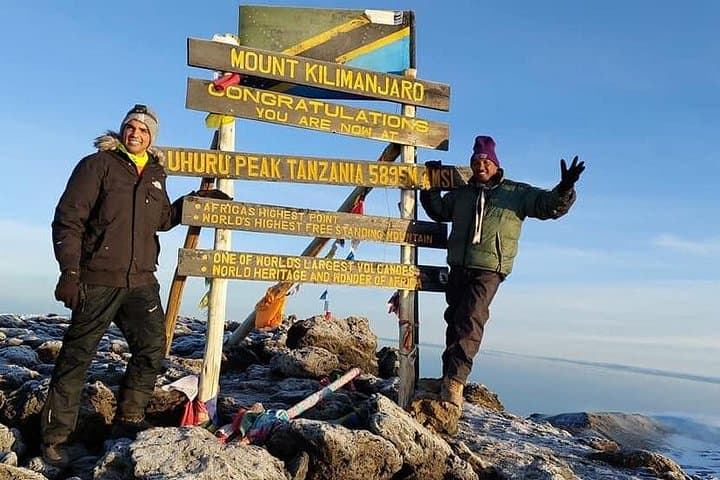
Trek the classic Marangu route over five days to reach Uhuru Peak. This hut-to-hut climb balances gradual grades with technical summit scree and a midnight push that rewards with sunrise over Kibo crater.
Trek the classic Marangu route over five days to reach Uhuru Peak. This hut-to-hut climb balances gradual grades with technical summit scree and a midnight push that rewards with sunrise over Kibo crater.
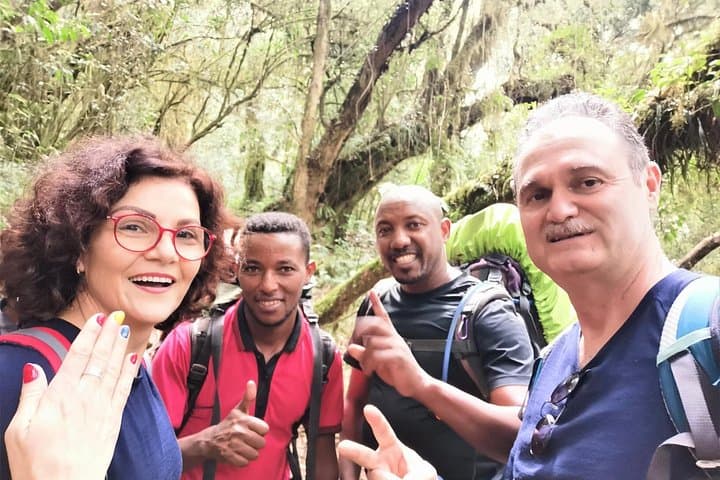
The night bus from Moshi fades into a blackness punctured by headlamps as the party gathers at Marangu Gate. Damp forest breathes around you; mist clings to mossy trunks and the trail immediately insists on a steady, measured pace. By the time Mandara Huts appears — a scatter of wooden dormitories illuminated like small harbors — you already feel the mountain recalibrating your rhythm.
Verified experiences and guided adventures in the surrounding area.
Operated by ALMIGHTY KILIMANJARO · Moshi, Kilimanjaro Region
The night bus from Moshi fades into a blackness punctured by headlamps as the party gathers at Marangu Gate. Damp forest breathes around you; mist clings to mossy trunks and the trail immediately insists on a steady, measured pace. By the time Mandara Huts appears — a scatter of wooden dormitories illuminated like small harbors — you already feel the mountain recalibrating your rhythm.
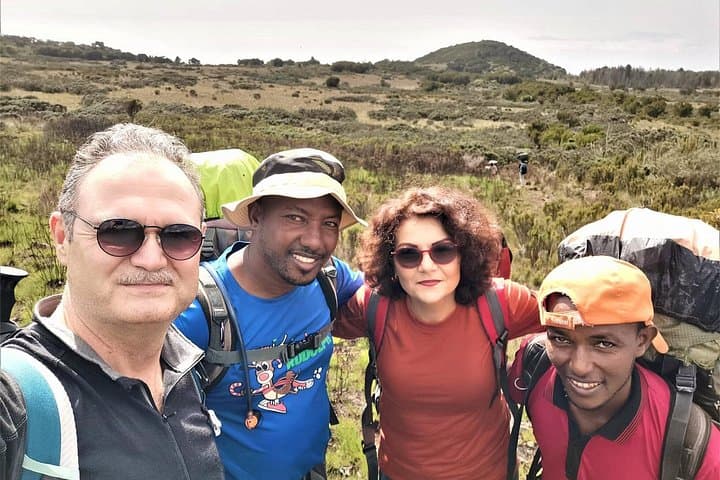
Marangu is the oldest, most established path on Kilimanjaro, the so-called Coca-Cola route favored for its gradual grades and hut accommodations. The route climbs roughly 4,000 meters from Marangu Gate (about 1,830 m) to Uhuru Peak (5,895 m) over five days. Geologically, Kilimanjaro is a dormant stratovolcano whose three volcanic cones — Kibo, Mawenzi and Shira — tell a long story of uplift, erosion and glacial retreat. Expect rainforest at lower elevations, heath and moorland mid-route where giant lobelia punctuate the landscape, and a barren, lunar saddle between Mawenzi and Kibo that foreshadows summit snow.
Culturally, the climb moves through Chagga farmland and villages below the park; porters, guides and cooks are central to the expedition and the summit certificate you receive at the gate marks not just personal achievement but communal effort. Learn a few Swahili phrases, carry a modest tip, and you’ll leave with more than altitude experience.
Practically, the itinerary divides into manageable stages: Day 1, Marangu Gate to Mandara Huts (~4–5 hours, 1,830→2,740 m); Day 2, Mandara to Horombo Huts (~6–8 hours, up to 3,690 m); Day 3, Horombo to Kibo Huts (~6–8 hours, up to 4,695 m); Day 4, Kibo to Summit (midnight start, 5–7 hours to Uhuru, then descent to Horombo); Day 5, Horombo to Marangu Gate and return to Moshi (~6–7 hours). Acclimatization is the deciding factor — fitness matters, but pacing and sleep are what get most climbers to the crater rim.
Expect muddy trails and slippery roots in the rainforest; wind and scree on the upper approaches. Hydration, layered insulation, gaiters and trekking poles will be used every day. Summit night is the hardest stretch: cold, thin air and a long mental push through switchbacks and loose volcanic scree. If you plan logistics from Moshi, transfers are short and permits are handled at the gate, but ensure your passport details and medical forms are current.
This route is straightforward for trekkers with moderate to strong fitness who respect altitude. When the sun slices across Kibo's crater at dawn, it reveals why people keep returning to this mountain — not for easy glory, but for the exacting, honest climb that demands attention to every step.
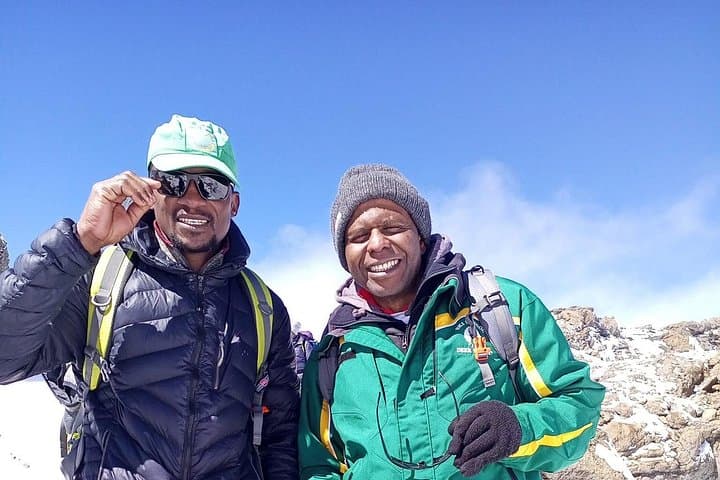
Summit day is the toughest: expect overnight start, 5–7 hours up on scree and possible snow, followed by a long descent; mental resilience is as important as fitness.
No technical mountaineering gear is required for the Marangu route — it's non-technical trekking, though crampons may be used if snow conditions demand it.
Yes — the Marangu route uses dormitory-style huts (Mandara, Horombo, Kibo) rather than tents; expect shared sleeping quarters.
June to October is the driest and most popular window; January–February can also be good, while March–May and October–December have heavier rains.
Park permits and gate transfers are arranged as part of the climb; ensure your passport and entry documents are submitted when booking.
Yes — tipping is customary and important; plan to tip guides, cooks and porters individually after the summit and return to Moshi.
ALMIGHTY KILIMANJARO operates guided outdoor trips and adventures with an emphasis on safety, stewardship, and memorable experiences.
The night bus from Moshi fades into a blackness punctured by headlamps as the party gathers at Marangu Gate. Damp forest breathes around you; mist clings to mossy trunks and the trail immediately insists on a steady, measured pace. By the time Mandara Huts appears — a scatter of wooden dormitories illuminated like small harbors — you already feel the mountain recalibrating your rhythm.
The night bus from Moshi fades into a blackness punctured by headlamps as the party gathers at Marangu Gate. Damp forest breathes around you; mist clings to mossy trunks and the trail immediately insists on a steady, measured pace. By the time Mandara Huts appears — a scatter of wooden dormitories illuminated like small harbors — you already feel the mountain recalibrating your rhythm.
Marangu is the oldest, most established path on Kilimanjaro, the so-called Coca-Cola route favored for its gradual grades and hut accommodations. The route climbs roughly 4,000 meters from Marangu Gate (about 1,830 m) to Uhuru Peak (5,895 m) over five days. Geologically, Kilimanjaro is a dormant stratovolcano whose three volcanic cones — Kibo, Mawenzi and Shira — tell a long story of uplift, erosion and glacial retreat. Expect rainforest at lower elevations, heath and moorland mid-route where giant lobelia punctuate the landscape, and a barren, lunar saddle between Mawenzi and Kibo that foreshadows summit snow.
Culturally, the climb moves through Chagga farmland and villages below the park; porters, guides and cooks are central to the expedition and the summit certificate you receive at the gate marks not just personal achievement but communal effort. Learn a few Swahili phrases, carry a modest tip, and you’ll leave with more than altitude experience.
Practically, the itinerary divides into manageable stages: Day 1, Marangu Gate to Mandara Huts (~4–5 hours, 1,830→2,740 m); Day 2, Mandara to Horombo Huts (~6–8 hours, up to 3,690 m); Day 3, Horombo to Kibo Huts (~6–8 hours, up to 4,695 m); Day 4, Kibo to Summit (midnight start, 5–7 hours to Uhuru, then descent to Horombo); Day 5, Horombo to Marangu Gate and return to Moshi (~6–7 hours). Acclimatization is the deciding factor — fitness matters, but pacing and sleep are what get most climbers to the crater rim.
Expect muddy trails and slippery roots in the rainforest; wind and scree on the upper approaches. Hydration, layered insulation, gaiters and trekking poles will be used every day. Summit night is the hardest stretch: cold, thin air and a long mental push through switchbacks and loose volcanic scree. If you plan logistics from Moshi, transfers are short and permits are handled at the gate, but ensure your passport details and medical forms are current.
This route is straightforward for trekkers with moderate to strong fitness who respect altitude. When the sun slices across Kibo's crater at dawn, it reveals why people keep returning to this mountain — not for easy glory, but for the exacting, honest climb that demands attention to every step.