THE ADVENTURE COLLECTIVE® · Independent discovery and booking for outdoor travel

A fast-paced Marangu-route climb to Uhuru Peak: five days of cloud forest, alpine desert, and a midnight summit push. This guide covers what to expect, how to prepare, and practical tips for a safe ascent.
A fast-paced Marangu-route climb to Uhuru Peak: five days of cloud forest, alpine desert, and a midnight summit push. This guide covers what to expect, how to prepare, and practical tips for a safe ascent.
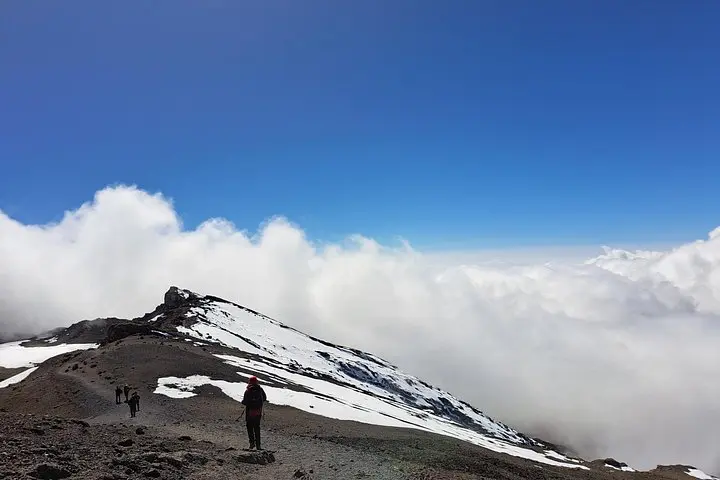
You step out of the early-morning mist and the mountain’s bulk looms: Kibo’s rim slices the sky above a band of giant heather, and the trail ahead narrows into volcanic scree. On this compressed 5-day Marangu-style itinerary you feel the mountain pulling and testing rhythm—altitude, not distance, sets the pace.
Verified experiences and guided adventures in the surrounding area.
Operated by Forever Athletic · Moshi, Kilimanjaro Region
You step out of the early-morning mist and the mountain’s bulk looms: Kibo’s rim slices the sky above a band of giant heather, and the trail ahead narrows into volcanic scree. On this compressed 5-day Marangu-style itinerary you feel the mountain pulling and testing rhythm—altitude, not distance, sets the pace.
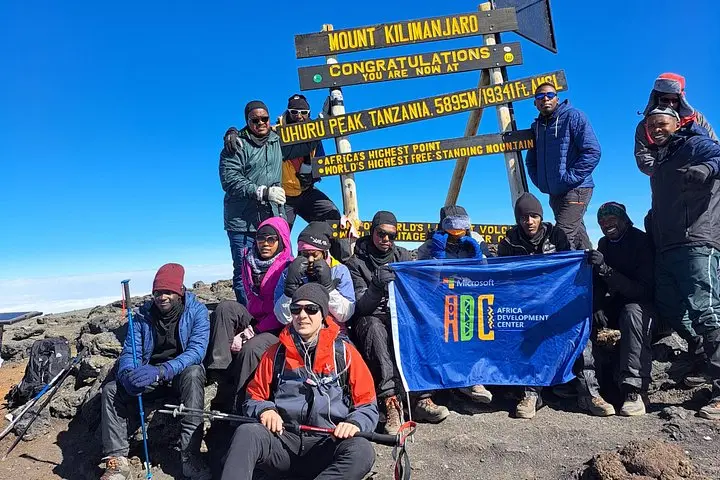
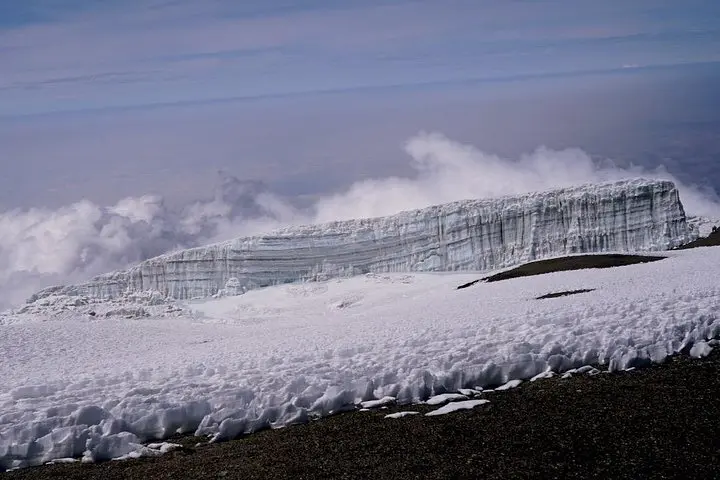
Geologically Kilimanjaro is a dormant stratovolcano with three cones (Shira, Mawenzi, Kibo) and a summit at Uhuru Peak, 5,895 m / 19,341 ft ASL. Glacial teeth still line the crater rim, evidence of a colder past, while lower slopes host lush montane forest tended by the Chagga people who farm the foothills and welcome climbers in Moshi.
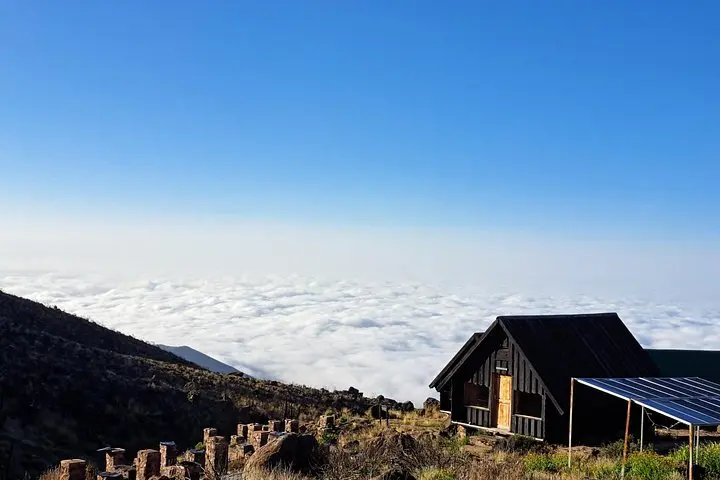
This expedition emphasizes experienced guiding, included park permits, meals, hut accommodations on Marangu (or equivalent), and airport/mountain transfers. Expect long summit-night hours, steep sections of alpine desert, and rapid weather swings; mornings are often clear while afternoons can cloud over suddenly.
Practical guidance: prioritize acclimatization within the program—move slowly, hydrate, and carry a layered system for sub-zero summit temperatures. Break in waterproof, ankle-support boots and train with long ascents and weighted hikes. Summit pushes typically start around midnight to reach the crater rim at sunrise; maintain conservative pacing on the final scree slopes. Watch for signs of AMS (headache, nausea, confusion) and communicate immediately with guides.
Timing matters: the long dry season (June–October) and January–February offer the most stable conditions. Respect park rules, support local crew, and leave no trace—Kilimanjaro’s fragile alpine zone needs careful stewardship.
It’s physically demanding due to rapid ascent profile—good fitness and preparation are required; the schedule allows less acclimatization time than longer routes.
Yes—this package includes park fees, meals while on the mountain, hut accommodations or equivalent, and transfers as listed in the itinerary.
Marangu traditionally uses shared mountain huts; expect bunk-style accommodation at lower and mid camps and communal dining areas.
Move slowly, hydrate, avoid alcohol, eat carbohydrates, and communicate symptoms early; guides may provide oxygen or descents if necessary.
Forever Athletic operates guided outdoor trips and adventures with an emphasis on safety, stewardship, and memorable experiences.
You step out of the early-morning mist and the mountain’s bulk looms: Kibo’s rim slices the sky above a band of giant heather, and the trail ahead narrows into volcanic scree. On this compressed 5-day Marangu-style itinerary you feel the mountain pulling and testing rhythm—altitude, not distance, sets the pace.
You step out of the early-morning mist and the mountain’s bulk looms: Kibo’s rim slices the sky above a band of giant heather, and the trail ahead narrows into volcanic scree. On this compressed 5-day Marangu-style itinerary you feel the mountain pulling and testing rhythm—altitude, not distance, sets the pace.
Geologically Kilimanjaro is a dormant stratovolcano with three cones (Shira, Mawenzi, Kibo) and a summit at Uhuru Peak, 5,895 m / 19,341 ft ASL. Glacial teeth still line the crater rim, evidence of a colder past, while lower slopes host lush montane forest tended by the Chagga people who farm the foothills and welcome climbers in Moshi.
This expedition emphasizes experienced guiding, included park permits, meals, hut accommodations on Marangu (or equivalent), and airport/mountain transfers. Expect long summit-night hours, steep sections of alpine desert, and rapid weather swings; mornings are often clear while afternoons can cloud over suddenly.
Practical guidance: prioritize acclimatization within the program—move slowly, hydrate, and carry a layered system for sub-zero summit temperatures. Break in waterproof, ankle-support boots and train with long ascents and weighted hikes. Summit pushes typically start around midnight to reach the crater rim at sunrise; maintain conservative pacing on the final scree slopes. Watch for signs of AMS (headache, nausea, confusion) and communicate immediately with guides.
Timing matters: the long dry season (June–October) and January–February offer the most stable conditions. Respect park rules, support local crew, and leave no trace—Kilimanjaro’s fragile alpine zone needs careful stewardship.