THE ADVENTURE COLLECTIVE® · Independent discovery and booking for outdoor travel

A concentrated five-day loop from Windhoek to Sossusvlei, the Atlantic coast, and Etosha National Park that pairs dune climbs and Salt Pan game drives with coastal birdlife and cultural stops. Ideal for travelers who want a compact but thorough Namibian sample.
A concentrated five-day loop from Windhoek to Sossusvlei, the Atlantic coast, and Etosha National Park that pairs dune climbs and Salt Pan game drives with coastal birdlife and cultural stops. Ideal for travelers who want a compact but thorough Namibian sample.
The first light in the Namib arrives like an editing mark: it flattens the world, then cuts it into hard-edged dunes of orange and shadow. You leave Windhoek before dawn, watching the city spill into scrub and then into a landscape that seems to have been pared down to essentials — sand, sky, and a horizon that dares you to measure it.
Verified experiences and guided adventures in the surrounding area.
Operated by Across Africa Tours LLC · Windhoek, Khomas Region
The first light in the Namib arrives like an editing mark: it flattens the world, then cuts it into hard-edged dunes of orange and shadow. You leave Windhoek before dawn, watching the city spill into scrub and then into a landscape that seems to have been pared down to essentials — sand, sky, and a horizon that dares you to measure it.
By day two you are on Dune 45, boots sinking into red sand as the wind sculpts ridges underfoot. The desert gives up its secrets slowly: the skeleton trees of Dead Vlei stand black against a skin of salt, Sesriem Canyon whispers of slow water that once carved its walls. On the third day the coast appears, a cool ribbon of Atlantic air cutting across Walvis Bay lagoons where flocks of flamingos stain the shallows pink. The itinerary finishes with Etosha’s wide pans — waterholes act like magnets for elephant herds and an occasional lion silhouette at dusk.
Geology here is theatrical. The Namib is one of the world’s oldest deserts; dunes at Sossusvlei contain sand swept from the Orange River over millions of years. Etosha’s salt pan is a remnant inland sea whose seasonal floods and dry spells structure animal movement and predator-prey rhythms. Culturally, the route threads German colonial-era towns and Herero and Owambo trading hubs; Swakopmund’s architecture still shows a European hand while markets like Okahandja sell wood carvings that speak to present-day Namibian life.
Practical guidance is straightforward: plan for heat and cold within the same 24-hour period, and for roads that demand patience. Expect daily drives of several hours — the tour includes drives across Spreetshoogte, Kuiseb Pass, and long stretches between Swakopmund and Etosha. Dune walks can be steep and require sturdy footwear and sun protection; game drives favor early mornings and late afternoons when wildlife is most active. The tour includes airport transfers, most meals, accommodation for four nights, and transportation in an air-conditioned vehicle. Bring cash for local markets and optional meals in Swakopmund.
For timing, aim for early starts: sunrise at Sossusvlei is when the dunes are most photogenic and manageable temperature-wise. Hydrate constantly in the desert and carry a small daypack for camera gear, water, and layers. Respect park rules at Etosha: stay in the vehicle during game drives unless in a designated area, and avoid feeding animals.
This five-day loop is compact but complete: desert giants give way to a cool coast and then to wildlife-rich savanna. It’s an efficient taste of Namibia — equal parts stark landscape, close wildlife encounters, and cultural waypoints — delivered with practical rhythms and clear logistics for travelers ready to move between extremes.
The tour lists fees and taxes as included; park access for scheduled visits like Sossusvlei is covered, but confirm specifics when booking.
Pickup time is typically 8:30 a.m.; confirm your exact hotel pickup when you finalize reservations.
Dune 45 is a short steep climb that’s manageable with moderate fitness; Big Daddy is far higher and requires stronger cardio and confidence on loose sand.
No sighting is guaranteed, but waterholes and game drives maximize chances for elephants, lions, and rhinos, especially at dawn and dusk.
Four nights of lodging are included, ranging from desert lodges to a beachfront hotel in Swakopmund and lodge near Etosha; specific properties are similar to those listed in the itinerary.
Visitors should check visa rules for Namibia based on nationality and consult a travel clinic for recommended vaccinations; carry passport details and vaccination records as requested at booking.
Across Africa Tours LLC operates guided outdoor trips and adventures with an emphasis on safety, stewardship, and memorable experiences.
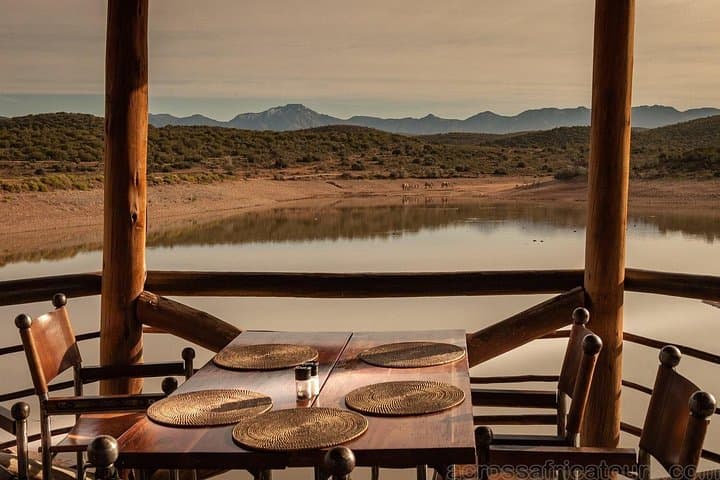


The first light in the Namib arrives like an editing mark: it flattens the world, then cuts it into hard-edged dunes of orange and shadow. You leave Windhoek before dawn, watching the city spill into scrub and then into a landscape that seems to have been pared down to essentials — sand, sky, and a horizon that dares you to measure it.
The first light in the Namib arrives like an editing mark: it flattens the world, then cuts it into hard-edged dunes of orange and shadow. You leave Windhoek before dawn, watching the city spill into scrub and then into a landscape that seems to have been pared down to essentials — sand, sky, and a horizon that dares you to measure it.
By day two you are on Dune 45, boots sinking into red sand as the wind sculpts ridges underfoot. The desert gives up its secrets slowly: the skeleton trees of Dead Vlei stand black against a skin of salt, Sesriem Canyon whispers of slow water that once carved its walls. On the third day the coast appears, a cool ribbon of Atlantic air cutting across Walvis Bay lagoons where flocks of flamingos stain the shallows pink. The itinerary finishes with Etosha’s wide pans — waterholes act like magnets for elephant herds and an occasional lion silhouette at dusk.
Geology here is theatrical. The Namib is one of the world’s oldest deserts; dunes at Sossusvlei contain sand swept from the Orange River over millions of years. Etosha’s salt pan is a remnant inland sea whose seasonal floods and dry spells structure animal movement and predator-prey rhythms. Culturally, the route threads German colonial-era towns and Herero and Owambo trading hubs; Swakopmund’s architecture still shows a European hand while markets like Okahandja sell wood carvings that speak to present-day Namibian life.
Practical guidance is straightforward: plan for heat and cold within the same 24-hour period, and for roads that demand patience. Expect daily drives of several hours — the tour includes drives across Spreetshoogte, Kuiseb Pass, and long stretches between Swakopmund and Etosha. Dune walks can be steep and require sturdy footwear and sun protection; game drives favor early mornings and late afternoons when wildlife is most active. The tour includes airport transfers, most meals, accommodation for four nights, and transportation in an air-conditioned vehicle. Bring cash for local markets and optional meals in Swakopmund.
For timing, aim for early starts: sunrise at Sossusvlei is when the dunes are most photogenic and manageable temperature-wise. Hydrate constantly in the desert and carry a small daypack for camera gear, water, and layers. Respect park rules at Etosha: stay in the vehicle during game drives unless in a designated area, and avoid feeding animals.
This five-day loop is compact but complete: desert giants give way to a cool coast and then to wildlife-rich savanna. It’s an efficient taste of Namibia — equal parts stark landscape, close wildlife encounters, and cultural waypoints — delivered with practical rhythms and clear logistics for travelers ready to move between extremes.