THE ADVENTURE COLLECTIVE® · Independent discovery and booking for outdoor travel

Head north from Windhoek on a 5-day self-drive loop through Okonjima and Omaruru for focused predator viewing, lodge-based nights, and gravel-road adventure. Expect guided AM/PM game drives, AfriCat conservation encounters, and long rural drives with expansive views.
Head north from Windhoek on a 5-day self-drive loop through Okonjima and Omaruru for focused predator viewing, lodge-based nights, and gravel-road adventure. Expect guided AM/PM game drives, AfriCat conservation encounters, and long rural drives with expansive views.
Dust hangs in the car's wake as open plains unroll toward low, serrated hills—this is Namibia on the move. The journey begins at Hosea Kutako Airport and quickly shifts from asphalt to red gravel, with scrub acacias and distant kopjes sliding by while the air itself seems to push you forward.
Verified experiences and guided adventures in the surrounding area.
Operated by Okutembuka Safaris · Windhoek, Khomas
Dust hangs in the car's wake as open plains unroll toward low, serrated hills—this is Namibia on the move. The journey begins at Hosea Kutako Airport and quickly shifts from asphalt to red gravel, with scrub acacias and distant kopjes sliding by while the air itself seems to push you forward.
Okonjima sits on ancient sandstone and calcrete soils carved by millennia of wind. The reserve is home to the AfriCat Foundation, whose predator work reshaped conservation practice in Namibia; Omaruru, farther west, occupies a mixed landscape of grassy savanna and rocky outcrops frequented by giraffes and kudu. Local communities mix Herero and Damara cultural threads—visits often include informal exchanges around craft stalls and storytelling over supper.
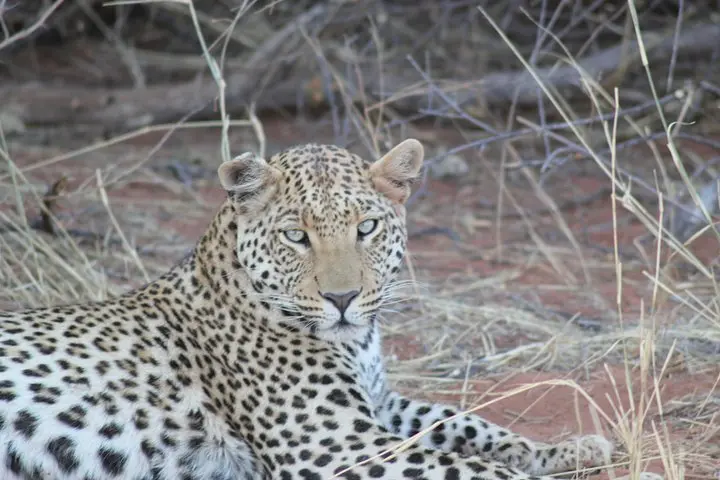
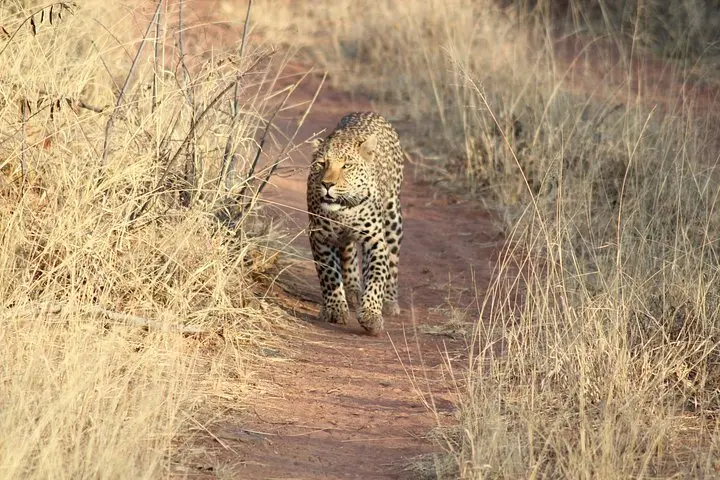
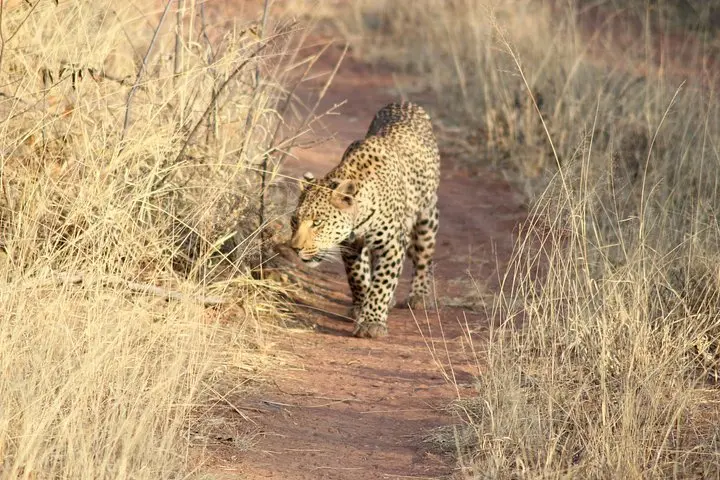
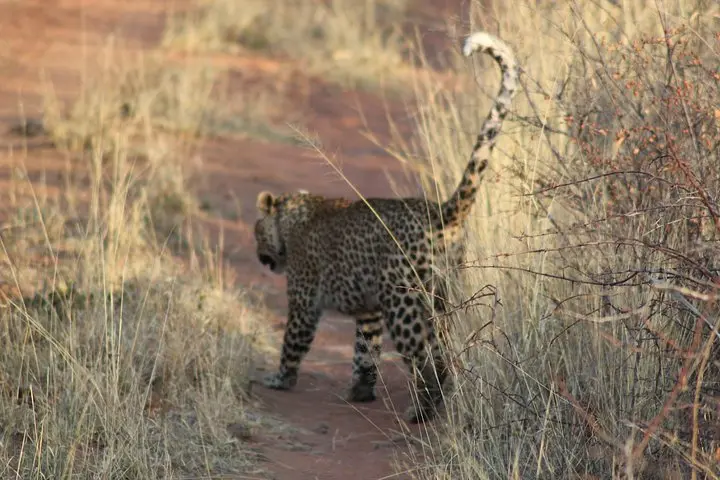
Expect AM and PM guided game drives that focus on cheetah and leopard sightings, plus the steady possibility of oryx, springbok and jackal. Lodges are lodge-comfort rather than wilderness camping: evening lights, ranger briefings, and roads that demand respectful speeds. Drives sometimes include short, supervised walks; wildlife, not people, sets the pace.
Practical edge: plan for long driving stretches between lodges, secure fuel and water, and carry reliable navigation (offline maps recommended). Sun protection and layered clothing are essential—mornings can be cool and days hot. Respect AfriCat protocols during sightings: no sudden moves, quiet voices, and follow guide instructions. With basic gravel-road driving skills and an eye for tracks, this self-drive loop delivers intimate, ethical encounters with Namibia’s predators and broad, unbroken skies.
A high-clearance vehicle is recommended for gravel roads and occasional corrugated surfaces; many travelers use rented SUVs—confirm insurance covers off-paved travel.
Cheetahs and leopards are focal species at Okonjima, with common sightings of giraffe, oryx, springbok and various antelope across both reserves.
Yes—lodges are family-friendly and the program notes stroller accessibility and infant seats; young children should remain supervised during drives.
Dry months (May–Oct) concentrate wildlife at water points and offer cooler mornings, though AfriCat’s focused programs operate year-round.
Okutembuka Safaris operates guided outdoor trips and adventures with an emphasis on safety, stewardship, and memorable experiences.
Dust hangs in the car's wake as open plains unroll toward low, serrated hills—this is Namibia on the move. The journey begins at Hosea Kutako Airport and quickly shifts from asphalt to red gravel, with scrub acacias and distant kopjes sliding by while the air itself seems to push you forward.
Dust hangs in the car's wake as open plains unroll toward low, serrated hills—this is Namibia on the move. The journey begins at Hosea Kutako Airport and quickly shifts from asphalt to red gravel, with scrub acacias and distant kopjes sliding by while the air itself seems to push you forward.
Okonjima sits on ancient sandstone and calcrete soils carved by millennia of wind. The reserve is home to the AfriCat Foundation, whose predator work reshaped conservation practice in Namibia; Omaruru, farther west, occupies a mixed landscape of grassy savanna and rocky outcrops frequented by giraffes and kudu. Local communities mix Herero and Damara cultural threads—visits often include informal exchanges around craft stalls and storytelling over supper.
Expect AM and PM guided game drives that focus on cheetah and leopard sightings, plus the steady possibility of oryx, springbok and jackal. Lodges are lodge-comfort rather than wilderness camping: evening lights, ranger briefings, and roads that demand respectful speeds. Drives sometimes include short, supervised walks; wildlife, not people, sets the pace.
Practical edge: plan for long driving stretches between lodges, secure fuel and water, and carry reliable navigation (offline maps recommended). Sun protection and layered clothing are essential—mornings can be cool and days hot. Respect AfriCat protocols during sightings: no sudden moves, quiet voices, and follow guide instructions. With basic gravel-road driving skills and an eye for tracks, this self-drive loop delivers intimate, ethical encounters with Namibia’s predators and broad, unbroken skies.