THE ADVENTURE COLLECTIVE® · Independent discovery and booking for outdoor travel

Float between Luxor and Aswan on a five-day Nile cruise that pairs an early-morning hot air balloon flight with guided visits to the Valley of the Kings, Karnak, Edfu, Kom Ombo and Abu Simbel. Expect leisurely travel aboard a five-star cruise with daily temple excursions.
Float between Luxor and Aswan on a five-day Nile cruise that pairs an early-morning hot air balloon flight with guided visits to the Valley of the Kings, Karnak, Edfu, Kom Ombo and Abu Simbel. Expect leisurely travel aboard a five-star cruise with daily temple excursions.
You awake before dawn as the boat slips away from Luxor's quay and the Nile carries you past riverbanks where palm fronds whisper and fishermen string nets. A hot air balloon waits over the floodplain, its envelope filling like a slow-breathing giant; below, temple pylons cut hard silhouettes into the light.
Verified experiences and guided adventures in the surrounding area.
Operated by Nile Prince Travel · Luxor, Luxor Governorate
You awake before dawn as the boat slips away from Luxor's quay and the Nile carries you past riverbanks where palm fronds whisper and fishermen string nets. A hot air balloon waits over the floodplain, its envelope filling like a slow-breathing giant; below, temple pylons cut hard silhouettes into the light.
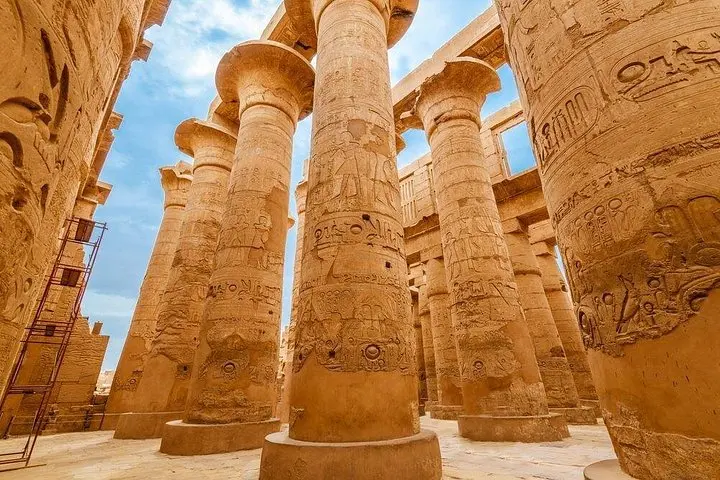
This five-day itinerary threads together Egypt's late Pharaonic and Roman-era monuments: the Valley of the Kings, Hatshepsut's terraces at Deir el-Bahari, Karnak's hypostyle forest of columns, the spotless pylons of Edfu and Kom Ombo, and the monumental façade of Abu Simbel — relocated stone by stone in the 1960s to save it from the High Dam's reservoir.
Geology here is simple and stark: the Nile's alluvial plain spills from a narrow sandstone edge, exposing limestone cliffs that ancient builders carved into tombs and temples. Culture is present in small ways — the cadence of call to prayer in modern towns and linen-wrapped vendors offering hibiscus tea on river landings.
Practical guidance: expect mostly easy walking on uneven stone steps; temple interiors can be dim and cool. Hot air balloon flights launch at first light — bring a windproof layer. Temperatures swing dramatically between sunrise and midday, and sun protection is essential. Cash (Egyptian pounds) is useful for small purchases and tipping; ATMs are available in Luxor and Aswan but not at smaller landings.
Plan for early starts and a relaxed pace on board: the cruise is transportation and hotel rolled together, giving you time to absorb sites between guided visits. Respect fragile painted surfaces, follow guide instructions in tombs, and carry a refillable bottle — the Nile region is arid and the sun is uncompromising.
Yes — a hot air balloon flight is listed among the tour's inclusions and typically takes place at sunrise over the West Bank floodplain.
Yes — the itinerary includes the flight ticket from Cairo to Luxor at the start and a return flight from Aswan to Cairo at the end.
The operator indicates wheelchair-accessible transport and surfaces, but access to some ancient sites involves steps; check specific mobility requirements with the tour provider before booking.
Daily guided walks range from short 30–120 minute site visits to longer temple complexes; most walking is moderate but includes stairs and uneven surfaces.
Nile Prince Travel operates guided outdoor trips and adventures with an emphasis on safety, stewardship, and memorable experiences.
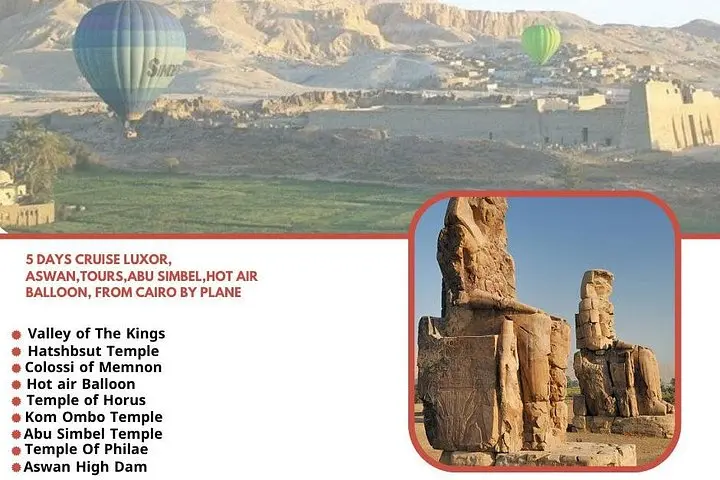

You awake before dawn as the boat slips away from Luxor's quay and the Nile carries you past riverbanks where palm fronds whisper and fishermen string nets. A hot air balloon waits over the floodplain, its envelope filling like a slow-breathing giant; below, temple pylons cut hard silhouettes into the light.
You awake before dawn as the boat slips away from Luxor's quay and the Nile carries you past riverbanks where palm fronds whisper and fishermen string nets. A hot air balloon waits over the floodplain, its envelope filling like a slow-breathing giant; below, temple pylons cut hard silhouettes into the light.
This five-day itinerary threads together Egypt's late Pharaonic and Roman-era monuments: the Valley of the Kings, Hatshepsut's terraces at Deir el-Bahari, Karnak's hypostyle forest of columns, the spotless pylons of Edfu and Kom Ombo, and the monumental façade of Abu Simbel — relocated stone by stone in the 1960s to save it from the High Dam's reservoir.
Geology here is simple and stark: the Nile's alluvial plain spills from a narrow sandstone edge, exposing limestone cliffs that ancient builders carved into tombs and temples. Culture is present in small ways — the cadence of call to prayer in modern towns and linen-wrapped vendors offering hibiscus tea on river landings.
Practical guidance: expect mostly easy walking on uneven stone steps; temple interiors can be dim and cool. Hot air balloon flights launch at first light — bring a windproof layer. Temperatures swing dramatically between sunrise and midday, and sun protection is essential. Cash (Egyptian pounds) is useful for small purchases and tipping; ATMs are available in Luxor and Aswan but not at smaller landings.
Plan for early starts and a relaxed pace on board: the cruise is transportation and hotel rolled together, giving you time to absorb sites between guided visits. Respect fragile painted surfaces, follow guide instructions in tombs, and carry a refillable bottle — the Nile region is arid and the sun is uncompromising.