THE ADVENTURE COLLECTIVE® · Independent discovery and booking for outdoor travel

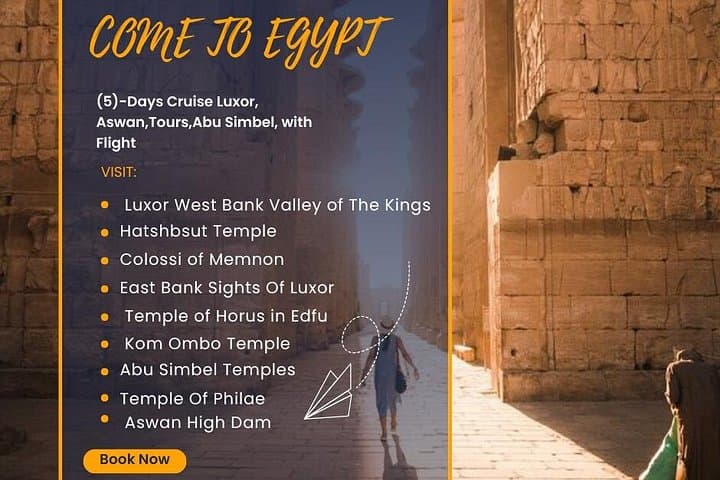
Float down the Nile on a relaxed five-day cruise from Luxor to Aswan, stopping at the Valley of the Kings, Karnak, Edfu, Kom Ombo, Philae and the relocated temples of Abu Simbel. This guided itinerary pairs easy days aboard a five-star vessel with timed land excursions to Egypt’s landmark monuments.
Float down the Nile on a relaxed five-day cruise from Luxor to Aswan, stopping at the Valley of the Kings, Karnak, Edfu, Kom Ombo, Philae and the relocated temples of Abu Simbel. This guided itinerary pairs easy days aboard a five-star vessel with timed land excursions to Egypt’s landmark monuments.
The Nile carries you south in the cool hush before dawn, palms sliding past the cabin windows as the ship slips along a river that has shaped civilizations.
Verified experiences and guided adventures in the surrounding area.
Operated by Nile Prince Travel · Luxor, Luxor Governorate
The Nile carries you south in the cool hush before dawn, palms sliding past the cabin windows as the ship slips along a river that has shaped civilizations.
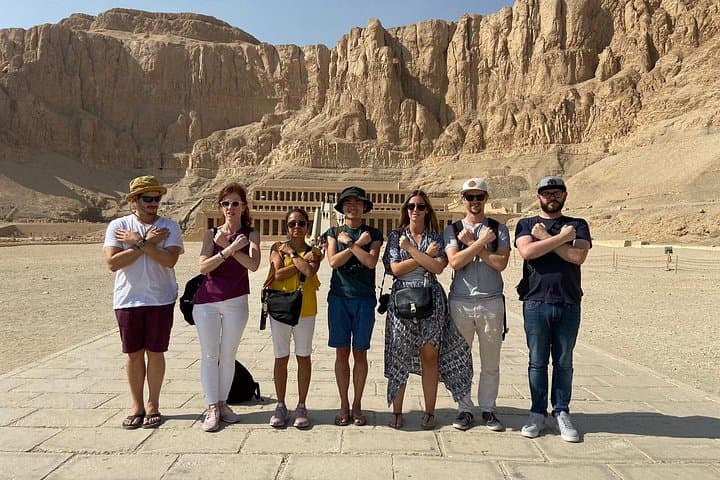
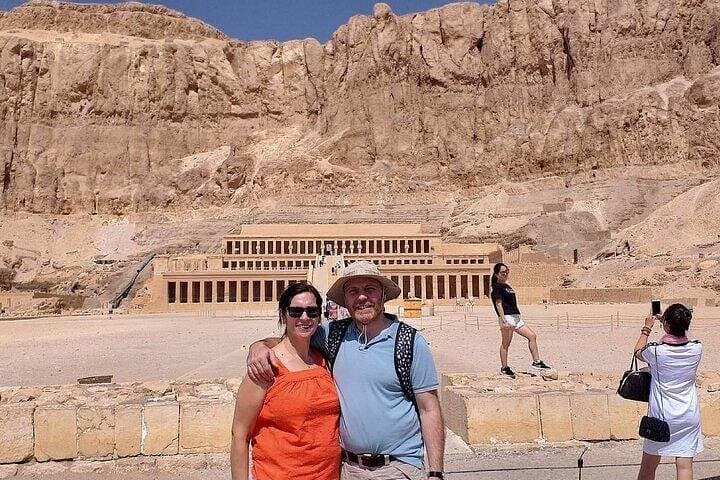
Over five days on a five-star Nile cruise you land at the great open-air stages of ancient Egypt: the terrazzo terraces of Hatshepsut, the shadowed corridors of the Valley of the Kings, Karnak’s forest of columns, the well-preserved Temple of Horus at Edfu, Kom Ombo’s dual sanctuaries, and the monumental faces of Abu Simbel.
Geology here is plain — soft sedimentary banks meet a narrow fertile band where the Nile once flooded annually, depositing silts that sustained Thebes for millennia. Culturally, the route traces pharaonic power and modern ingenuity: note the dramatic 1960s relocations of Abu Simbel and Philae to escape the rising waters of the Aswan High Dam.
Expect gentle days tied to a schedule: guided temple visits, coach or short domestic transfers for Abu Simbel depending on the operator’s plan, and evenings onboard with full board meals. The walking is low-impact but involves uneven stone steps, temple thresholds, and sometimes long sun-exposed stretches.
Practical edge: start tours early to avoid heat and crowds, pack sun protection and a light scarf for temple etiquette, bring small local-currency notes for tips and vendors, and keep passports and entry tickets handy. Hydrate often — the desert pushes the heat outward, and the Nile’s current will remind you this is a working river as much as a living museum.
The itinerary title notes 'with flight' but operators may use a road transfer or a short domestic flight depending on schedules; confirm the transfer method at booking.
The listing indicates wheelchair accessibility for many areas and transportation; note that some temple sites have uneven stone surfaces and steps that may limit access.
This is an easy-level trip: most activity is low-impact walking with occasional stairs and short climbs at temple entrances.
The cruise includes onboard Wi‑Fi allowances per the operator, but connectivity can be intermittent along the river.
Nile Prince Travel operates guided outdoor trips and adventures with an emphasis on safety, stewardship, and memorable experiences.

The Nile carries you south in the cool hush before dawn, palms sliding past the cabin windows as the ship slips along a river that has shaped civilizations.
The Nile carries you south in the cool hush before dawn, palms sliding past the cabin windows as the ship slips along a river that has shaped civilizations.
Over five days on a five-star Nile cruise you land at the great open-air stages of ancient Egypt: the terrazzo terraces of Hatshepsut, the shadowed corridors of the Valley of the Kings, Karnak’s forest of columns, the well-preserved Temple of Horus at Edfu, Kom Ombo’s dual sanctuaries, and the monumental faces of Abu Simbel.
Geology here is plain — soft sedimentary banks meet a narrow fertile band where the Nile once flooded annually, depositing silts that sustained Thebes for millennia. Culturally, the route traces pharaonic power and modern ingenuity: note the dramatic 1960s relocations of Abu Simbel and Philae to escape the rising waters of the Aswan High Dam.
Expect gentle days tied to a schedule: guided temple visits, coach or short domestic transfers for Abu Simbel depending on the operator’s plan, and evenings onboard with full board meals. The walking is low-impact but involves uneven stone steps, temple thresholds, and sometimes long sun-exposed stretches.
Practical edge: start tours early to avoid heat and crowds, pack sun protection and a light scarf for temple etiquette, bring small local-currency notes for tips and vendors, and keep passports and entry tickets handy. Hydrate often — the desert pushes the heat outward, and the Nile’s current will remind you this is a working river as much as a living museum.