THE ADVENTURE COLLECTIVE® · Independent discovery and booking for outdoor travel

Cruise five days between Luxor and Aswan, visiting Karnak, the Valley of the Kings, Edfu and Kom Ombo, with guided shore excursions and leisurely river sailing. This itinerary combines major pharaonic sites with the steady, scenic pace of the Nile.
Cruise five days between Luxor and Aswan, visiting Karnak, the Valley of the Kings, Edfu and Kom Ombo, with guided shore excursions and leisurely river sailing. This itinerary combines major pharaonic sites with the steady, scenic pace of the Nile.
A low breeze off the Nile lifts dust from the quay as the cruise slips away from Luxor at dawn, minarets receding and sandstone pylons growing smaller. On deck, the river narrows and widens like a slow-breathing animal; feluccas feather past, and the ship’s wake disturbs ibis feeding at the margin.
Verified experiences and guided adventures in the surrounding area.
Operated by NORTH AFRICAN SHIPPING AND TOURISM COMPANY (NASCO TOURS) · Luxor, Luxor Governorate
A low breeze off the Nile lifts dust from the quay as the cruise slips away from Luxor at dawn, minarets receding and sandstone pylons growing smaller. On deck, the river narrows and widens like a slow-breathing animal; feluccas feather past, and the ship’s wake disturbs ibis feeding at the margin.
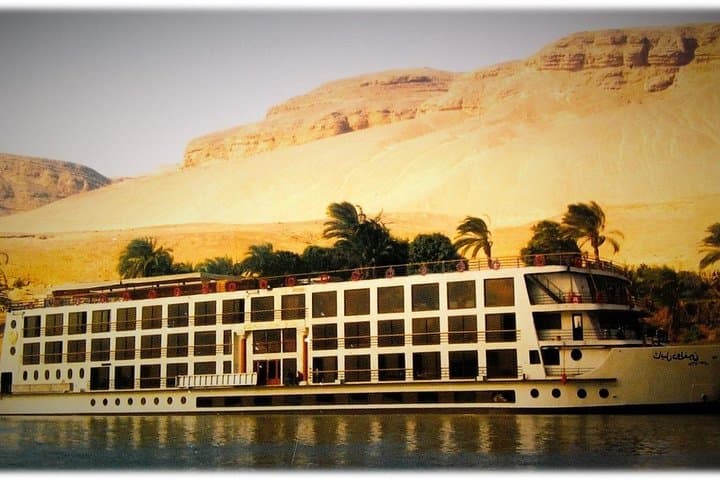
This five-day itinerary threads the great monuments of Upper Egypt into a compact loop: Karnak and Luxor temples on the east bank, the Valley of the Kings and Hatshepsut’s mortuary temple carved into the cliffs, then upriver through Esna Lock toward the finely preserved Ptolemaic shrine at Edfu and the dual cult complex at Kom Ombo. Geology is simple and stark — banded sandstone and Nubian granite rise from a narrow green strip of floodplain — but the human history is enormous: Thebes, New Kingdom pharaohs, and later Ptolemaic and Roman builders left layers of ritual architecture along the Nile’s edge.
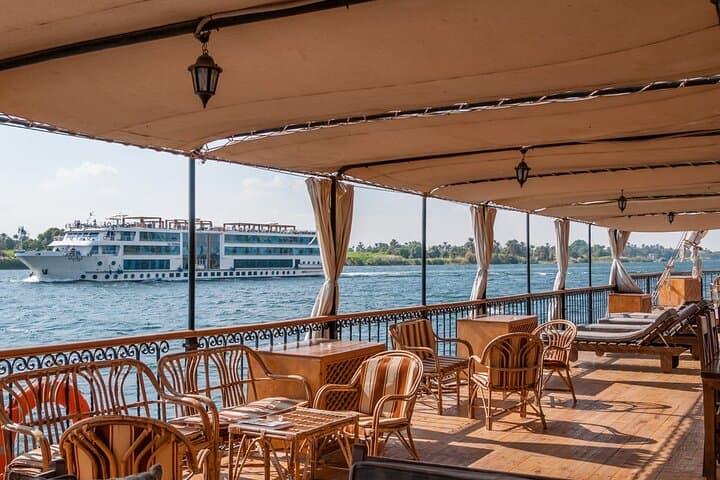
Practical rhythm matters: mornings are for guided walks through tombs and temples when reliefs are coolest and crowds thinnest; afternoons are for sailing and short naps on shaded decks. Expect short, uneven steps inside tombs, open-air markets on disembark, and guided transfers in air-conditioned vehicles. Bring sun protection, a small daypack with water, and modest clothing for religious sites. Plan extra time if you want optional tomb tickets or a felucca spin in Aswan — both repay the slight cost with quieter perspectives on the river and local life.
Main entry is typically included for a selection of tombs; optional extra-ticket tombs like Tutankhamun or Seti I require an additional fee purchased on site.
Many sites have uneven steps and narrow passages; some temples have ramps or nearby viewpoints, but full accessibility can be limited—contact the operator to arrange assistance.
Yes—schedules include guided excursions and free periods for exploring bazaars, taking a felucca, or visiting botanical islands in Aswan independently.
Egyptian pounds are used locally; tipping (baksheesh) is common for guides, drivers, and ship crew—budget modest daily tips or check the operator’s guidance.
NORTH AFRICAN SHIPPING AND TOURISM COMPANY (NASCO TOURS) operates guided outdoor trips and adventures with an emphasis on safety, stewardship, and memorable experiences.
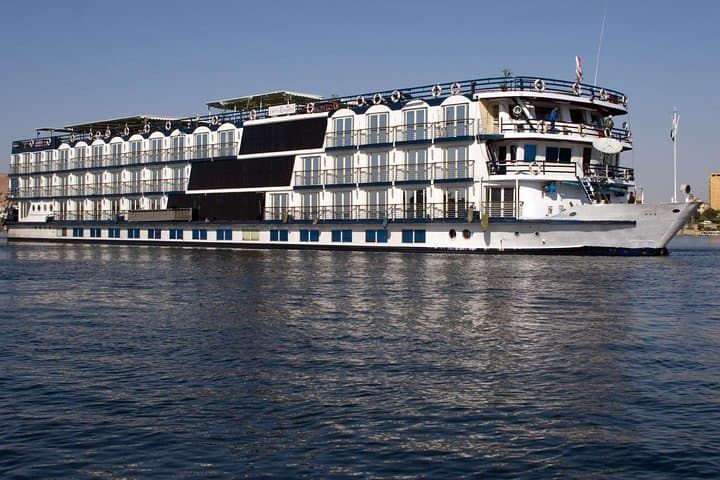
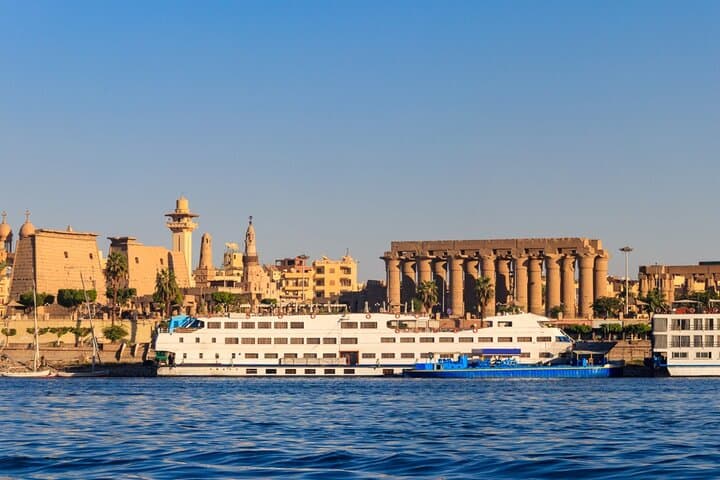
A low breeze off the Nile lifts dust from the quay as the cruise slips away from Luxor at dawn, minarets receding and sandstone pylons growing smaller. On deck, the river narrows and widens like a slow-breathing animal; feluccas feather past, and the ship’s wake disturbs ibis feeding at the margin.
A low breeze off the Nile lifts dust from the quay as the cruise slips away from Luxor at dawn, minarets receding and sandstone pylons growing smaller. On deck, the river narrows and widens like a slow-breathing animal; feluccas feather past, and the ship’s wake disturbs ibis feeding at the margin.
This five-day itinerary threads the great monuments of Upper Egypt into a compact loop: Karnak and Luxor temples on the east bank, the Valley of the Kings and Hatshepsut’s mortuary temple carved into the cliffs, then upriver through Esna Lock toward the finely preserved Ptolemaic shrine at Edfu and the dual cult complex at Kom Ombo. Geology is simple and stark — banded sandstone and Nubian granite rise from a narrow green strip of floodplain — but the human history is enormous: Thebes, New Kingdom pharaohs, and later Ptolemaic and Roman builders left layers of ritual architecture along the Nile’s edge.
Practical rhythm matters: mornings are for guided walks through tombs and temples when reliefs are coolest and crowds thinnest; afternoons are for sailing and short naps on shaded decks. Expect short, uneven steps inside tombs, open-air markets on disembark, and guided transfers in air-conditioned vehicles. Bring sun protection, a small daypack with water, and modest clothing for religious sites. Plan extra time if you want optional tomb tickets or a felucca spin in Aswan — both repay the slight cost with quieter perspectives on the river and local life.