THE ADVENTURE COLLECTIVE® · Independent discovery and booking for outdoor travel

Cover the Baltic essentials in five days: Vilnius to the Curonian Spit, the Hill of Crosses, Riga’s architecture and Tallinn’s Old Town. A private guide strings together dunes, castles and city streets with efficient driving and short walks.
Cover the Baltic essentials in five days: Vilnius to the Curonian Spit, the Hill of Crosses, Riga’s architecture and Tallinn’s Old Town. A private guide strings together dunes, castles and city streets with efficient driving and short walks.
You arrive before dawn on a country road that unspools toward the sea — low pines and reed beds lining a ferry slip where the Baltic wind seems to be testing your plans. The Curonian Spit opens like a long, breathing ridge of sand; dunes push against the sky and the lagoon sits like a sheet of pewter. Over five days you'll move from Vilnius' baroque streets to windswept beaches, to Riga's art‑nouveau avenues and Tallinn's medieval lanes.
Verified experiences and guided adventures in the surrounding area.
Operated by Vad Travel · Vilnius, Vilnius County
You arrive before dawn on a country road that unspools toward the sea — low pines and reed beds lining a ferry slip where the Baltic wind seems to be testing your plans. The Curonian Spit opens like a long, breathing ridge of sand; dunes push against the sky and the lagoon sits like a sheet of pewter. Over five days you'll move from Vilnius' baroque streets to windswept beaches, to Riga's art‑nouveau avenues and Tallinn's medieval lanes.
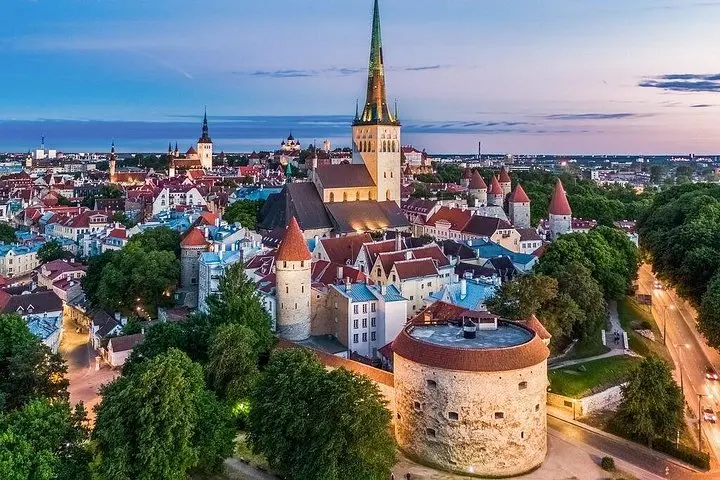
The route traces layers of history: Hanseatic trade in Tallinn and Riga, the 18th‑century flair of Rundāle Palace, and the resilient modern meaning of the Hill of Crosses — a silent, evolving pilgrimage. Geology is obvious on the Curonian Spit where wind and currents have sculpted the drifting dunes and formed a narrow, shifting barrier between lagoon and sea. Local culture alternates between urban cafés and small‑village craft traditions; you’ll hear Latvian and Lithuanian folk notes and see wooden carving traditions in the Hill of Witches.
Practical guidance: expect long drives broken by short walks and ferries; bring sturdy footwear for dunes and cobblestones, layered clothing for sudden coastal wind, and binoculars for bird colonies at Juodkrantė. Ferries to Nida run regularly but can be seasonal — verify times. Pace your days: mornings for sights, afternoons for coastal light and photography. Respect marked paths on dunes and the Hill of Crosses’ solemnity. This is a compact, privately guided way to feel the Baltics’ elemental coastlines and layered histories without rushing them.
Return ferry tickets are typically included on organized transfers for this tour, but confirm timing and boarding location with your guide before departure.
The site has level areas near the main approaches but some paths are uneven; contact the operator for the best accessible routing.
Lithuania, Latvia and Estonia use the euro; small cash is useful for cafes and market stalls, though cards are widely accepted.
Some admissions may be included but it varies; check the itinerary and receipts with your operator so you can budget for optional entries.
Vad Travel operates guided outdoor trips and adventures with an emphasis on safety, stewardship, and memorable experiences.
You arrive before dawn on a country road that unspools toward the sea — low pines and reed beds lining a ferry slip where the Baltic wind seems to be testing your plans. The Curonian Spit opens like a long, breathing ridge of sand; dunes push against the sky and the lagoon sits like a sheet of pewter. Over five days you'll move from Vilnius' baroque streets to windswept beaches, to Riga's art‑nouveau avenues and Tallinn's medieval lanes.
You arrive before dawn on a country road that unspools toward the sea — low pines and reed beds lining a ferry slip where the Baltic wind seems to be testing your plans. The Curonian Spit opens like a long, breathing ridge of sand; dunes push against the sky and the lagoon sits like a sheet of pewter. Over five days you'll move from Vilnius' baroque streets to windswept beaches, to Riga's art‑nouveau avenues and Tallinn's medieval lanes.
The route traces layers of history: Hanseatic trade in Tallinn and Riga, the 18th‑century flair of Rundāle Palace, and the resilient modern meaning of the Hill of Crosses — a silent, evolving pilgrimage. Geology is obvious on the Curonian Spit where wind and currents have sculpted the drifting dunes and formed a narrow, shifting barrier between lagoon and sea. Local culture alternates between urban cafés and small‑village craft traditions; you’ll hear Latvian and Lithuanian folk notes and see wooden carving traditions in the Hill of Witches.
Practical guidance: expect long drives broken by short walks and ferries; bring sturdy footwear for dunes and cobblestones, layered clothing for sudden coastal wind, and binoculars for bird colonies at Juodkrantė. Ferries to Nida run regularly but can be seasonal — verify times. Pace your days: mornings for sights, afternoons for coastal light and photography. Respect marked paths on dunes and the Hill of Crosses’ solemnity. This is a compact, privately guided way to feel the Baltics’ elemental coastlines and layered histories without rushing them.