THE ADVENTURE COLLECTIVE® · Independent discovery and booking for outdoor travel

Drive over the Tizi n’Tichka, explore UNESCO-listed Ait Benhaddou, hike Todra Gorge, and sleep under the stars at Erg Chebbi. This private five-day route pairs cultural encounters with desert landscapes across Morocco’s southern spine.
Drive over the Tizi n’Tichka, explore UNESCO-listed Ait Benhaddou, hike Todra Gorge, and sleep under the stars at Erg Chebbi. This private five-day route pairs cultural encounters with desert landscapes across Morocco’s southern spine.
Morning light slices across the High Atlas as your private driver threads the Tizi n’Tichka pass, hairpin after hairpin lifting you to 2,260 m before the road unfurls toward adobe villages and palm-lined valleys.
Verified experiences and guided adventures in the surrounding area.
Operated by Morocco Tours 4x4 - Day Tours · Marrakech, Marrakech-Safi
Morning light slices across the High Atlas as your private driver threads the Tizi n’Tichka pass, hairpin after hairpin lifting you to 2,260 m before the road unfurls toward adobe villages and palm-lined valleys.
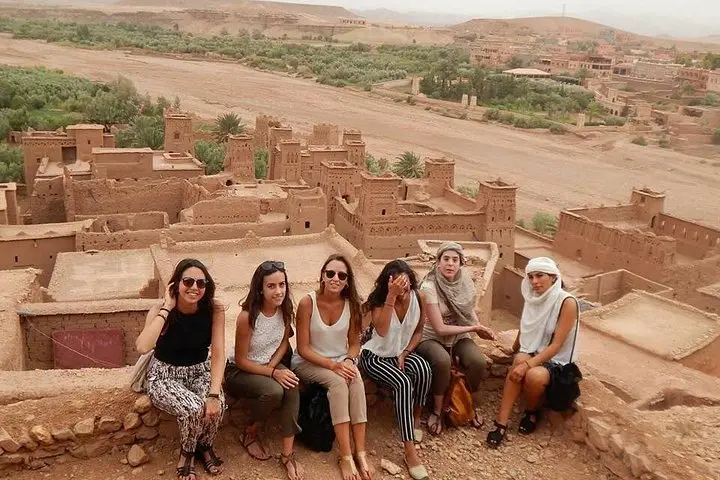
This five-day loop moves fast but deliberately: Ait Benhaddou’s mudbrick towers recall caravan routes and movie sets, Todra Gorge drops vertical walls of red rock up to 300 m, and Erg Chebbi’s dunes rise in waves that can top 150 m. Along the way you pass the Road of a Thousand Kasbahs, saffron fields at Taliouine, and the palm groves of the Draa.
Culturally, the route threads Amazigh (Berber) life — ksars, handcrafted carpets in Taznakht, and Gnawa musicians in Khamlia whose polyrhythms map histories of trade and migration. Geologically, the High Atlas is young and folded; the Anti-Atlas reads like ancient, eroded bedrock, while the Sahara is wind-sculpted sand and alluvial flats.
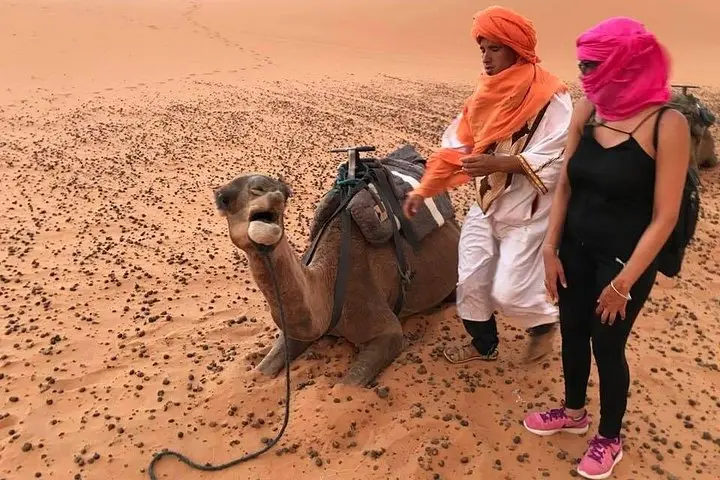
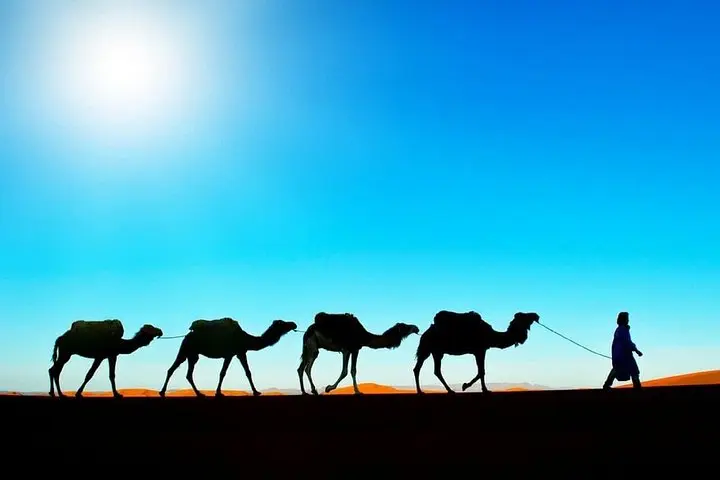
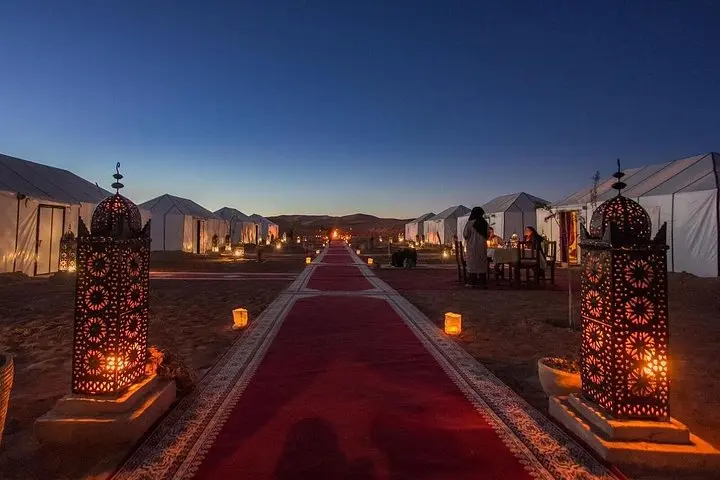
Expect a mix of drives (multiple 2–5 hour legs), short guided walks—an hour at Todra’s canyon floor—and a guided camel trek into the dunes for sunset and sunrise. Accommodations alternate between riads and a desert camp with basic, comfortable tents.
Practical edge: bring layered clothing for large day–night swings, carry 2–3 liters of water per day, and plan for dusty conditions on dune treks. Arrive in Marrakech with flexible time; the long drives reward patience with rarified scenery and close cultural encounters.
The tour typically starts with pickup in Marrakech and ends at your chosen accommodation in Agadir or Taghazout on day five.
Yes—breakfasts and dinners plus riad and one desert camp overnight are included as described in the itinerary.
Yes; camel treks are led by experienced handlers and designed for first-time riders, but they can be uncomfortable for some—bring padding and take motion-sickness precautions if needed.
Carry Moroccan dirham for markets, small vendors, and to tip local guides; ATM availability is limited outside major towns.
Morocco Tours 4x4 - Day Tours operates guided outdoor trips and adventures with an emphasis on safety, stewardship, and memorable experiences.
Morning light slices across the High Atlas as your private driver threads the Tizi n’Tichka pass, hairpin after hairpin lifting you to 2,260 m before the road unfurls toward adobe villages and palm-lined valleys.
Morning light slices across the High Atlas as your private driver threads the Tizi n’Tichka pass, hairpin after hairpin lifting you to 2,260 m before the road unfurls toward adobe villages and palm-lined valleys.
This five-day loop moves fast but deliberately: Ait Benhaddou’s mudbrick towers recall caravan routes and movie sets, Todra Gorge drops vertical walls of red rock up to 300 m, and Erg Chebbi’s dunes rise in waves that can top 150 m. Along the way you pass the Road of a Thousand Kasbahs, saffron fields at Taliouine, and the palm groves of the Draa.
Culturally, the route threads Amazigh (Berber) life — ksars, handcrafted carpets in Taznakht, and Gnawa musicians in Khamlia whose polyrhythms map histories of trade and migration. Geologically, the High Atlas is young and folded; the Anti-Atlas reads like ancient, eroded bedrock, while the Sahara is wind-sculpted sand and alluvial flats.
Expect a mix of drives (multiple 2–5 hour legs), short guided walks—an hour at Todra’s canyon floor—and a guided camel trek into the dunes for sunset and sunrise. Accommodations alternate between riads and a desert camp with basic, comfortable tents.
Practical edge: bring layered clothing for large day–night swings, carry 2–3 liters of water per day, and plan for dusty conditions on dune treks. Arrive in Marrakech with flexible time; the long drives reward patience with rarified scenery and close cultural encounters.