THE ADVENTURE COLLECTIVE® · Independent discovery and booking for outdoor travel

Walk the Siq to Petra’s Treasury, cross the red sands of Wadi Rum by jeep and float in the Dead Sea on a tailored five-day private tour. This compact itinerary pairs big landscapes with local knowledge and private transport for a seamless Jordan introduction.
Walk the Siq to Petra’s Treasury, cross the red sands of Wadi Rum by jeep and float in the Dead Sea on a tailored five-day private tour. This compact itinerary pairs big landscapes with local knowledge and private transport for a seamless Jordan introduction.
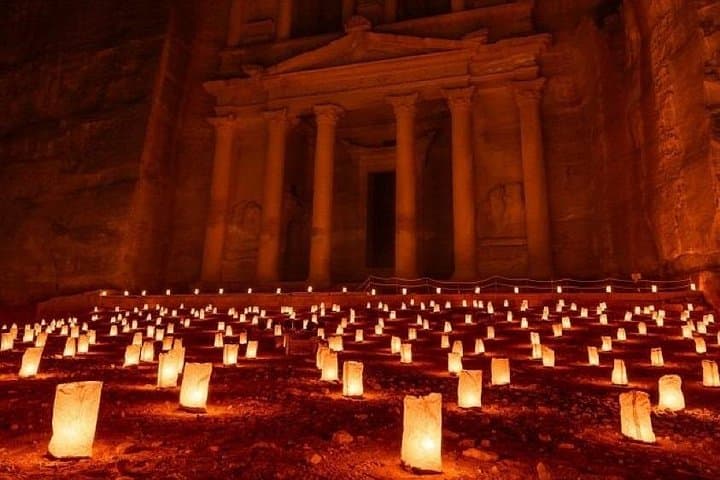
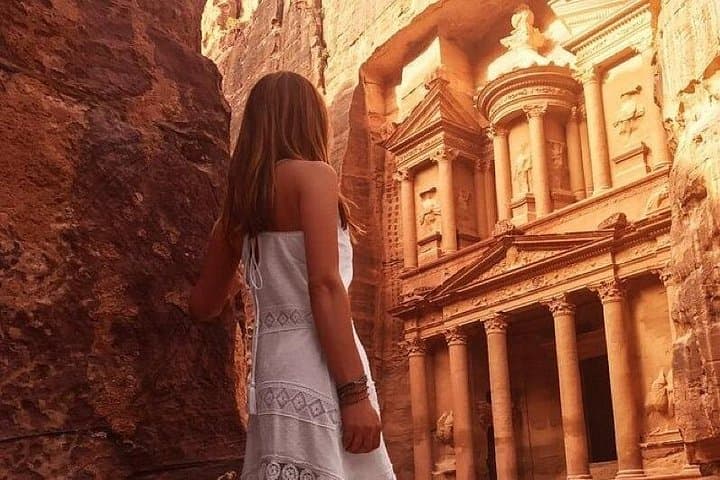
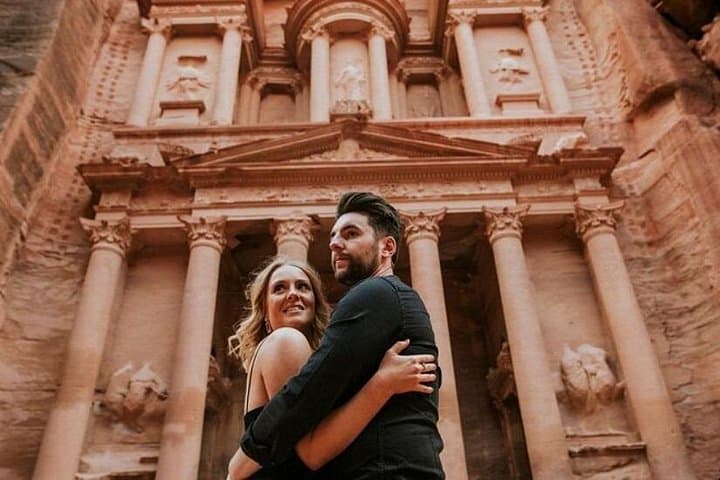
You emerge from the Siq and the sunlight slams into the rose-red face of Al-Khazneh — Petra’s Treasury — and for a beat the centuries feel immediate. Dust on your boots, a guide’s practiced hand indicating a carved capital, and the desert beyond that seems to hold its breath: this is not a sightseeing checklist, it’s a compacted story of empires, prophets and Bedouin tracks.
Verified experiences and guided adventures in the surrounding area.
Operated by VIP Jordan Limo · Wadi Musa, Ma'an Governorate
You emerge from the Siq and the sunlight slams into the rose-red face of Al-Khazneh — Petra’s Treasury — and for a beat the centuries feel immediate. Dust on your boots, a guide’s practiced hand indicating a carved capital, and the desert beyond that seems to hold its breath: this is not a sightseeing checklist, it’s a compacted story of empires, prophets and Bedouin tracks.
This five-day private circuit stitches Jordan’s high-points into a single, easy-moving loop. Start in Amman — a working capital of cafés and Roman ruins — then drive the storied King’s Highway south to Mount Nebo, where tradition says Moses first looked over the Promised Land. Madaba’s Byzantine mosaic map follows, an artifact of Late Antiquity that pins the region’s geography in tesserae. Shobak Castle offers a stone-heavy counterpoint: Crusader vaults perched on a rocky spur, the architecture of contest and control.
Petra, of course, is geological theater and human craft layered together. Nabataean engineers hewed facades directly from sandstone, timing their façades to sunlight and pilgrimage. The surrounding plateaus bear flint and limestone scars; wind and sand continue to sculpt the faces. Southward, Wadi Rum’s ochre dunes and towering arches read like a Martian film set — constant winds that sandblast cliffs give the landscape a slow, purposeful motion. Then the Dead Sea: an otherworldly quiet where saline buoyancy lifts you from gravity’s insistence and the horizon flares against mineral-crusted edges.
Culture here moves at two cadences: hospitality — strong tea, conversation with a driver who knows a family in every town — and the enduring, pragmatic knowledge of desert life maintained by Bedouin communities. History sits everywhere from Byzantine mosaics to Nabataean tombs, and modern Jordan balances tourism against fragile ecosystems.
Practical guidance: allow 3.5–4 hours driving from Amman to Petra with stops; Petra itself requires a full day to see the main sites (expect 6–8 km of walking if you climb to the Monastery). Wadi Rum transfers are short — roughly 1–1.5 hours — and desert temperatures swing dramatically: mornings crisp, afternoons hot. Bring sun protection, sturdy footwear for uneven stone steps and canyon floors, and a refillable water bottle; bottled water is provided in vehicles but refill stations are sparse in remote areas.
Buy a Jordan Pass before arrival to cover entrance fees, and plan early starts in summer to avoid heat and crowds. Optional hot-air balloon rides and Bedouin camp experiences round out the trip but are extra. With private transport and an English-speaking driver, the route is suited to travelers who want curated pace without sacrificing the deep, weathered character of Jordan’s landscapes.
Yes — obtain a Jordan Pass before arrival to cover entrance to Petra and other sites; your operator may require proof at booking.
Expect roughly 3.5–4 hours including stops at Mount Nebo and Madaba, depending on traffic and chosen route via the King’s Highway.
Accommodations and some meals are offered according to your selected hotel category; confirm specifics when booking as some options include full-board upgrades.
Camp standards vary; options range from basic Bedouin tents to luxury bubble or glamping camps with private facilities — check your accommodation choice.
Yes — both are available at extra cost and should be booked in advance, weather permitting, particularly for balloon flights at sunrise.
The tour is private and adaptable; drivers note that Petra involves uneven ground and steps, but many sites are accessible with assistance — notify provider of mobility needs in advance.
VIP Jordan Limo operates guided outdoor trips and adventures with an emphasis on safety, stewardship, and memorable experiences.

You emerge from the Siq and the sunlight slams into the rose-red face of Al-Khazneh — Petra’s Treasury — and for a beat the centuries feel immediate. Dust on your boots, a guide’s practiced hand indicating a carved capital, and the desert beyond that seems to hold its breath: this is not a sightseeing checklist, it’s a compacted story of empires, prophets and Bedouin tracks.
You emerge from the Siq and the sunlight slams into the rose-red face of Al-Khazneh — Petra’s Treasury — and for a beat the centuries feel immediate. Dust on your boots, a guide’s practiced hand indicating a carved capital, and the desert beyond that seems to hold its breath: this is not a sightseeing checklist, it’s a compacted story of empires, prophets and Bedouin tracks.
This five-day private circuit stitches Jordan’s high-points into a single, easy-moving loop. Start in Amman — a working capital of cafés and Roman ruins — then drive the storied King’s Highway south to Mount Nebo, where tradition says Moses first looked over the Promised Land. Madaba’s Byzantine mosaic map follows, an artifact of Late Antiquity that pins the region’s geography in tesserae. Shobak Castle offers a stone-heavy counterpoint: Crusader vaults perched on a rocky spur, the architecture of contest and control.
Petra, of course, is geological theater and human craft layered together. Nabataean engineers hewed facades directly from sandstone, timing their façades to sunlight and pilgrimage. The surrounding plateaus bear flint and limestone scars; wind and sand continue to sculpt the faces. Southward, Wadi Rum’s ochre dunes and towering arches read like a Martian film set — constant winds that sandblast cliffs give the landscape a slow, purposeful motion. Then the Dead Sea: an otherworldly quiet where saline buoyancy lifts you from gravity’s insistence and the horizon flares against mineral-crusted edges.
Culture here moves at two cadences: hospitality — strong tea, conversation with a driver who knows a family in every town — and the enduring, pragmatic knowledge of desert life maintained by Bedouin communities. History sits everywhere from Byzantine mosaics to Nabataean tombs, and modern Jordan balances tourism against fragile ecosystems.
Practical guidance: allow 3.5–4 hours driving from Amman to Petra with stops; Petra itself requires a full day to see the main sites (expect 6–8 km of walking if you climb to the Monastery). Wadi Rum transfers are short — roughly 1–1.5 hours — and desert temperatures swing dramatically: mornings crisp, afternoons hot. Bring sun protection, sturdy footwear for uneven stone steps and canyon floors, and a refillable water bottle; bottled water is provided in vehicles but refill stations are sparse in remote areas.
Buy a Jordan Pass before arrival to cover entrance fees, and plan early starts in summer to avoid heat and crowds. Optional hot-air balloon rides and Bedouin camp experiences round out the trip but are extra. With private transport and an English-speaking driver, the route is suited to travelers who want curated pace without sacrificing the deep, weathered character of Jordan’s landscapes.