THE ADVENTURE COLLECTIVE® · Independent discovery and booking for outdoor travel

Drive Morocco end-to-end in five days: blue alleys of Chefchaouen, the living labyrinth of Fes, cedar forests and Barbary macaques, then camel across Erg Chebbi to a star-filled desert camp. Practical, paced and private—this route compresses classic landscapes into a single, vivid crossing.
Drive Morocco end-to-end in five days: blue alleys of Chefchaouen, the living labyrinth of Fes, cedar forests and Barbary macaques, then camel across Erg Chebbi to a star-filled desert camp. Practical, paced and private—this route compresses classic landscapes into a single, vivid crossing.
You step off the ferry or taxi in Tangier and the road pulls you south: white-washed medinas give way to cedar forests, then a sweep of ochre kasbahs and the orange shadows of Erg Chebbi.
Verified experiences and guided adventures in the surrounding area.
Operated by Trips For Morocco · Tangier, Tangier-Tetouan-Al Hoceima
You step off the ferry or taxi in Tangier and the road pulls you south: white-washed medinas give way to cedar forests, then a sweep of ochre kasbahs and the orange shadows of Erg Chebbi.
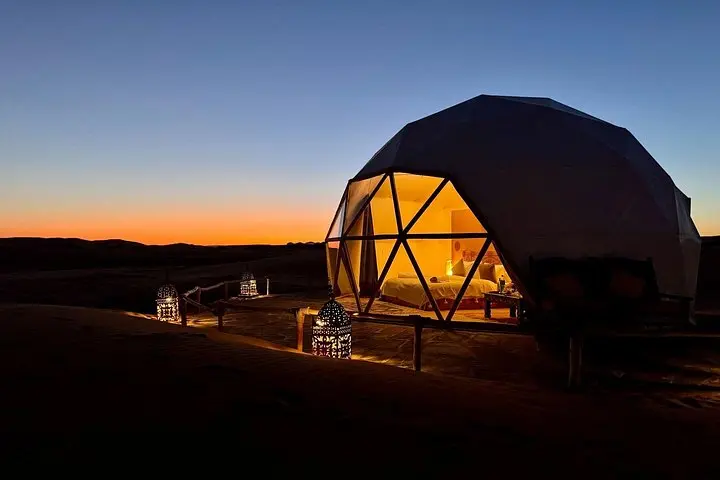
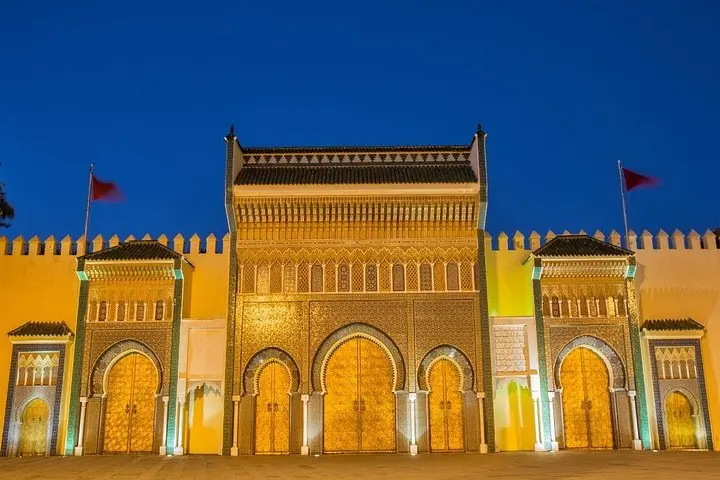
Across five days the itinerary moves fast but deliberately—Chefchaouen’s cobalt alleys and a sunset lookout on Day 1, the labyrinth of Fes with its centuries-old tannery and the Al Quaraouiyine precinct on Day 2, then a long alpine climb through Ifrane and the High Atlas to the Sahara where camels carry you over dunes to a night under the Milky Way on Day 3.
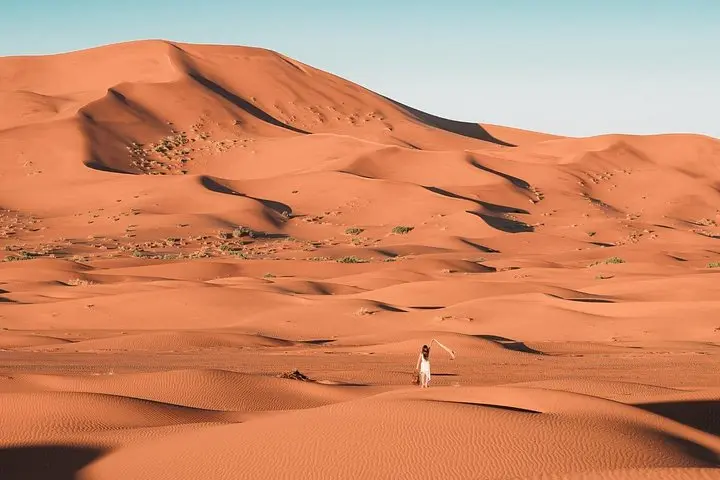
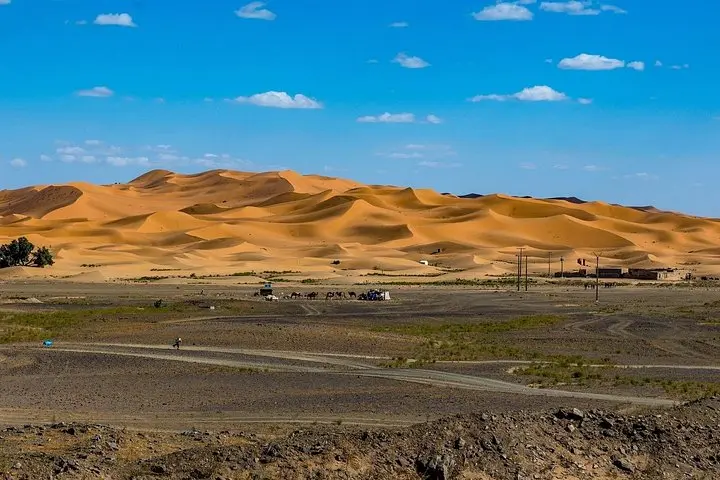
Geology reads like a travelogue here: the High Atlas thrusts up to 2,260 m at Tizi n'Tichka, providing crisp mountain air before the rain-shadowed plains that feed the Ziz palm valley. Erg Chebbi’s dunes rise as much as ~150 m; Todra Gorge later cleaves the earth with near-vertical walls (hundreds of meters) that funnel light for dramatic walks.
Culture is lived—Berber villages, date markets in Erfoud and Rissani, and kasbahs such as Ait Ben Haddou (UNESCO) that recall trans-Saharan trade and film sets alike.
Practical guidance: expect long driving days (several 4–8 hour transfers), modest walks in medinas and gorges, a camel trek of about 1–2 hours and one desert camp overnight. Pack layered clothing for hot days and cold desert nights, sun protection, sturdy shoes for loose sand and canyon walking, and cash for small souks. Hydrate on road days and allow time at high passes to steady your breathing—the trip rewards patience with a vivid cross-section of Morocco’s landscapes and cultures.
No—this private tour is suitable for most fitness levels; you’ll do short walks in medinas, a camel ride of about 1–2 hours and light canyon walking, but no technical hiking.
Breakfast is included for four mornings and two dinners are provided; expect to pay locally for some lunches and extra meals.
Yes—infant seats and stroller access are available, but the operator notes it’s not recommended for pregnant travelers or those with serious heart conditions.
Travel is by private, air-conditioned vehicle with driver; pickup and drop-off points are arranged during booking and transfers cross several long road segments.
Trips For Morocco operates guided outdoor trips and adventures with an emphasis on safety, stewardship, and memorable experiences.
You step off the ferry or taxi in Tangier and the road pulls you south: white-washed medinas give way to cedar forests, then a sweep of ochre kasbahs and the orange shadows of Erg Chebbi.
You step off the ferry or taxi in Tangier and the road pulls you south: white-washed medinas give way to cedar forests, then a sweep of ochre kasbahs and the orange shadows of Erg Chebbi.
Across five days the itinerary moves fast but deliberately—Chefchaouen’s cobalt alleys and a sunset lookout on Day 1, the labyrinth of Fes with its centuries-old tannery and the Al Quaraouiyine precinct on Day 2, then a long alpine climb through Ifrane and the High Atlas to the Sahara where camels carry you over dunes to a night under the Milky Way on Day 3.
Geology reads like a travelogue here: the High Atlas thrusts up to 2,260 m at Tizi n'Tichka, providing crisp mountain air before the rain-shadowed plains that feed the Ziz palm valley. Erg Chebbi’s dunes rise as much as ~150 m; Todra Gorge later cleaves the earth with near-vertical walls (hundreds of meters) that funnel light for dramatic walks.
Culture is lived—Berber villages, date markets in Erfoud and Rissani, and kasbahs such as Ait Ben Haddou (UNESCO) that recall trans-Saharan trade and film sets alike.
Practical guidance: expect long driving days (several 4–8 hour transfers), modest walks in medinas and gorges, a camel trek of about 1–2 hours and one desert camp overnight. Pack layered clothing for hot days and cold desert nights, sun protection, sturdy shoes for loose sand and canyon walking, and cash for small souks. Hydrate on road days and allow time at high passes to steady your breathing—the trip rewards patience with a vivid cross-section of Morocco’s landscapes and cultures.