THE ADVENTURE COLLECTIVE® · Independent discovery and booking for outdoor travel

Spend five days tracking mountain gorillas in Bwindi and chimpanzees in Kibale on a private Uganda safari. Expect steep, muddy trails, intimate primate encounters, and strong community-focused conservation practices.
Spend five days tracking mountain gorillas in Bwindi and chimpanzees in Kibale on a private Uganda safari. Expect steep, muddy trails, intimate primate encounters, and strong community-focused conservation practices.
Mist hangs in the understory as you step off the vehicle, the forest seeming to hold its breath while the canopy tests the morning light. In this five-day circuit through western Uganda you move from the humid, fern-cloaked slopes where mountain gorillas slowly emerge to the drier ridgelines and swampy clearings where chimpanzees chatter and dart. The forest pushes back, roots and vines daring you to keep pace; the trails reward persistence with face-to-face time among some of the planet’s rarest primates.
Verified experiences and guided adventures in the surrounding area.
Mist hangs in the understory as you step off the vehicle, the forest seeming to hold its breath while the canopy tests the morning light. In this five-day circuit through western Uganda you move from the humid, fern-cloaked slopes where mountain gorillas slowly emerge to the drier ridgelines and swampy clearings where chimpanzees chatter and dart. The forest pushes back, roots and vines daring you to keep pace; the trails reward persistence with face-to-face time among some of the planet’s rarest primates.
Bwindi Impenetrable Forest, a UNESCO site, shelters roughly half the world’s mountain gorillas and carries a deep human history—from Batwa hunter-gatherer stewardship to conservation partnerships born in recent decades. Kibale National Park sits on older volcanic soils and is prized for primate diversity; its swamps and gallery forest host long-term chimp habituation research. Local communities around both parks combine traditional Acholi and Bakiga culture with tourism economies—expect simple guesthouses, market produce, and guides who double as cultural interpreters.
Practically, the trip is about patience and preparation: daily treks can be steep, muddy, and last several hours; gorilla encounters are strictly timed and regulated to protect both you and the animals. Bring layered, quick-dry gear, gaiters for the mud, and a small daypack with water, snacks, and hand sanitizer. Plan for early starts, flexible transfer times between parks, and a respect-forward attitude—masks and quiet voices keep disease risk low and the experience authentic. With the right prep, the reward is intimate, powerful, and unmistakably real.
Yes—gorilla permits are required for Bwindi and are limited per day; chimp permits or organized treks in Kibale are also needed, often arranged by your tour operator.
Gorilla viewing is typically limited to one hour per group; chimp encounters vary, from short trekking sightings to longer habituation experiences depending on the permit.
Uganda is good year-round, but the drier months (June–August, December–February) offer firmer trails; the long rains (March–May) make trekking muddier and slower.
Children and those with respiratory illnesses are often discouraged; parks and tour operators set minimum age rules and require travelers to be mobile enough for multi-hour hikes.
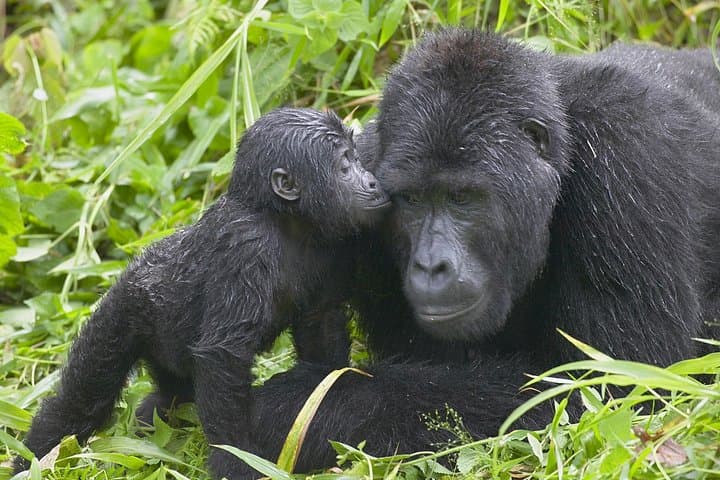
Mist hangs in the understory as you step off the vehicle, the forest seeming to hold its breath while the canopy tests the morning light. In this five-day circuit through western Uganda you move from the humid, fern-cloaked slopes where mountain gorillas slowly emerge to the drier ridgelines and swampy clearings where chimpanzees chatter and dart. The forest pushes back, roots and vines daring you to keep pace; the trails reward persistence with face-to-face time among some of the planet’s rarest primates.
Mist hangs in the understory as you step off the vehicle, the forest seeming to hold its breath while the canopy tests the morning light. In this five-day circuit through western Uganda you move from the humid, fern-cloaked slopes where mountain gorillas slowly emerge to the drier ridgelines and swampy clearings where chimpanzees chatter and dart. The forest pushes back, roots and vines daring you to keep pace; the trails reward persistence with face-to-face time among some of the planet’s rarest primates.
Bwindi Impenetrable Forest, a UNESCO site, shelters roughly half the world’s mountain gorillas and carries a deep human history—from Batwa hunter-gatherer stewardship to conservation partnerships born in recent decades. Kibale National Park sits on older volcanic soils and is prized for primate diversity; its swamps and gallery forest host long-term chimp habituation research. Local communities around both parks combine traditional Acholi and Bakiga culture with tourism economies—expect simple guesthouses, market produce, and guides who double as cultural interpreters.
Practically, the trip is about patience and preparation: daily treks can be steep, muddy, and last several hours; gorilla encounters are strictly timed and regulated to protect both you and the animals. Bring layered, quick-dry gear, gaiters for the mud, and a small daypack with water, snacks, and hand sanitizer. Plan for early starts, flexible transfer times between parks, and a respect-forward attitude—masks and quiet voices keep disease risk low and the experience authentic. With the right prep, the reward is intimate, powerful, and unmistakably real.