THE ADVENTURE COLLECTIVE® · Independent discovery and booking for outdoor travel

A compact five-day loop from Marrakech to Merzouga that mixes High Atlas passes, UNESCO kasbahs, off-road desert exploration and an overnight camel camp in Erg Chebbi. Expect long drives, dramatic dune sunrises and cultural stops in Ouarzazate and Todra Gorge.
A compact five-day loop from Marrakech to Merzouga that mixes High Atlas passes, UNESCO kasbahs, off-road desert exploration and an overnight camel camp in Erg Chebbi. Expect long drives, dramatic dune sunrises and cultural stops in Ouarzazate and Todra Gorge.
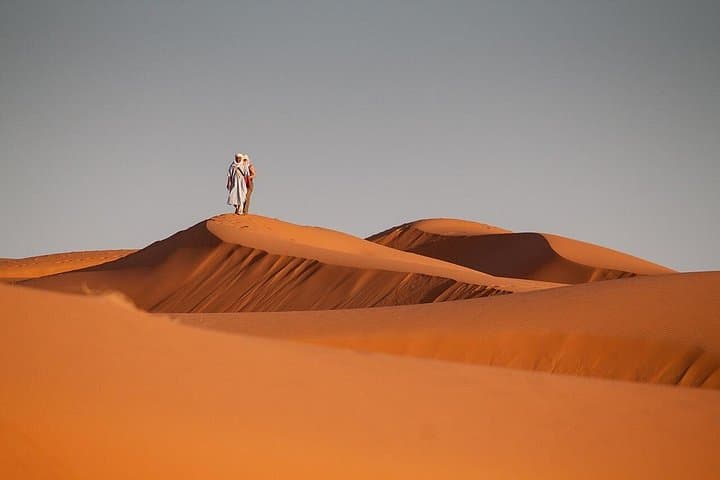
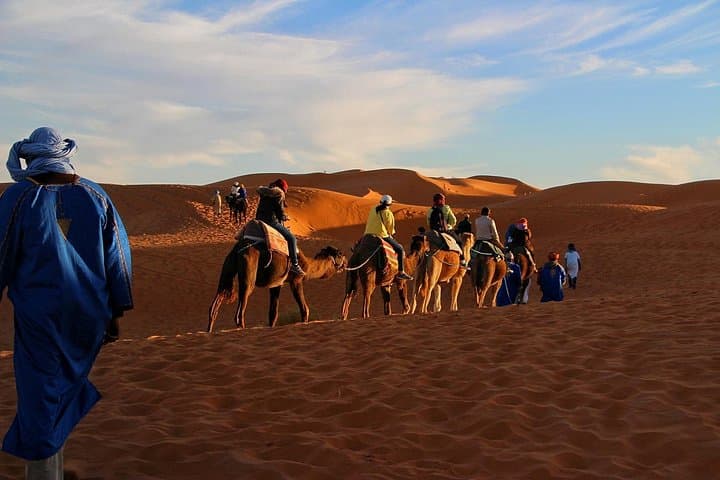
You leave Marrakech before dawn, the city’s ochre walls shrinking as the road climbs into the High Atlas. Wind-teased passes pull the bus through terraced valleys and argan-sculpted slopes; by late afternoon the world flattens into shimmering sand and the Erg Chebbi dunes rise like a slow-moving sea. A camel column grooves a trail across the crest at sunset, and the camp’s low lights scatter like stars pulled to ground level.
Verified experiences and guided adventures in the surrounding area.
Operated by Sahara Desert Crew · Marrakech, Marrakesh-Safi
You leave Marrakech before dawn, the city’s ochre walls shrinking as the road climbs into the High Atlas. Wind-teased passes pull the bus through terraced valleys and argan-sculpted slopes; by late afternoon the world flattens into shimmering sand and the Erg Chebbi dunes rise like a slow-moving sea. A camel column grooves a trail across the crest at sunset, and the camp’s low lights scatter like stars pulled to ground level.
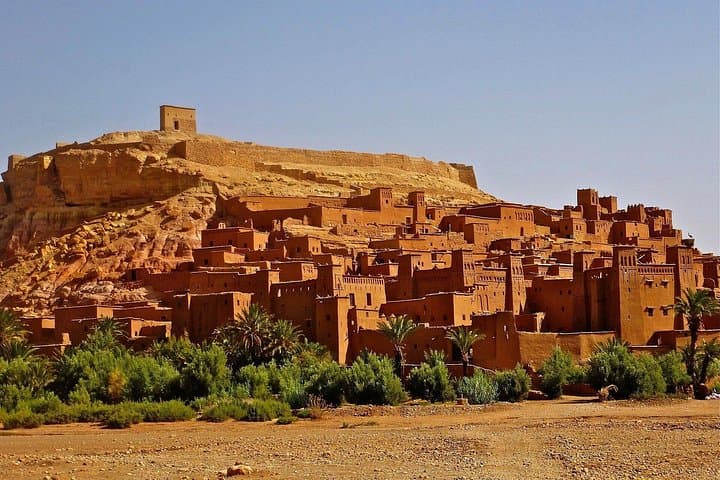
This route stitches together Morocco’s layered history: Ait Ben Haddou’s mud-brick ksar recalls old caravan routes and film crews, while Draa Valley and Todra Gorge show how water and stone shaped human settlement. Geologically, Erg Chebbi is a classic erg—wind-built dunes reaching roughly 100–150 meters—separated from rocky hammadas that hold fossils and dry river beds. Cultural highlights include Khamlia Gnawa music in Merzouga and rose distillation near Kalaat M'gouna.
Expect long drives between stops, a focused day of off-roading around Merzouga, a late-afternoon camel ride and one night in a desert camp under open sky. Practical notes: travel light but bring a warm layer for cold desert nights, sun protection, and dependable footwear for rocky gorges. Hydrate on the road and carry cash for small purchases or souks. Sunrise over Erg Chebbi is worth the early alarm; midday heat is intense in summer so plan activity hours accordingly. Respect local customs—modest dress is appropriate in villages—and follow guides’ instructions in dunes and gorges to minimize environmental impact. This trip balances cultural stops, driving panoramas and pure desert time for a compact Sahara introduction.
The tour typically starts in Marrakech and returns there on day five; exact pickup points are arranged when you book.
Camel treks are low-impact but require basic balance for 30–60 minutes; guides assist mounting and dismounting.
Yes—one night is spent in a desert camp with bedding provided; expect simple, traditional tents and communal dining.
Most breakfasts and dinners are included as described; accommodations vary from 2-star hotels to a desert camp night.
Sahara Desert Crew operates guided outdoor trips and adventures with an emphasis on safety, stewardship, and memorable experiences.

You leave Marrakech before dawn, the city’s ochre walls shrinking as the road climbs into the High Atlas. Wind-teased passes pull the bus through terraced valleys and argan-sculpted slopes; by late afternoon the world flattens into shimmering sand and the Erg Chebbi dunes rise like a slow-moving sea. A camel column grooves a trail across the crest at sunset, and the camp’s low lights scatter like stars pulled to ground level.
You leave Marrakech before dawn, the city’s ochre walls shrinking as the road climbs into the High Atlas. Wind-teased passes pull the bus through terraced valleys and argan-sculpted slopes; by late afternoon the world flattens into shimmering sand and the Erg Chebbi dunes rise like a slow-moving sea. A camel column grooves a trail across the crest at sunset, and the camp’s low lights scatter like stars pulled to ground level.
This route stitches together Morocco’s layered history: Ait Ben Haddou’s mud-brick ksar recalls old caravan routes and film crews, while Draa Valley and Todra Gorge show how water and stone shaped human settlement. Geologically, Erg Chebbi is a classic erg—wind-built dunes reaching roughly 100–150 meters—separated from rocky hammadas that hold fossils and dry river beds. Cultural highlights include Khamlia Gnawa music in Merzouga and rose distillation near Kalaat M'gouna.
Expect long drives between stops, a focused day of off-roading around Merzouga, a late-afternoon camel ride and one night in a desert camp under open sky. Practical notes: travel light but bring a warm layer for cold desert nights, sun protection, and dependable footwear for rocky gorges. Hydrate on the road and carry cash for small purchases or souks. Sunrise over Erg Chebbi is worth the early alarm; midday heat is intense in summer so plan activity hours accordingly. Respect local customs—modest dress is appropriate in villages—and follow guides’ instructions in dunes and gorges to minimize environmental impact. This trip balances cultural stops, driving panoramas and pure desert time for a compact Sahara introduction.