THE ADVENTURE COLLECTIVE® · Independent discovery and booking for outdoor travel

Traverse Morocco from Chefchaouen’s blue alleys to the wind-sculpted Erg Chebbi dunes on a private five-day loop through Roman ruins, Atlas passes and UNESCO kasbahs. Expect long drives, varied terrain and one unforgettable night under the Sahara sky.
Traverse Morocco from Chefchaouen’s blue alleys to the wind-sculpted Erg Chebbi dunes on a private five-day loop through Roman ruins, Atlas passes and UNESCO kasbahs. Expect long drives, varied terrain and one unforgettable night under the Sahara sky.
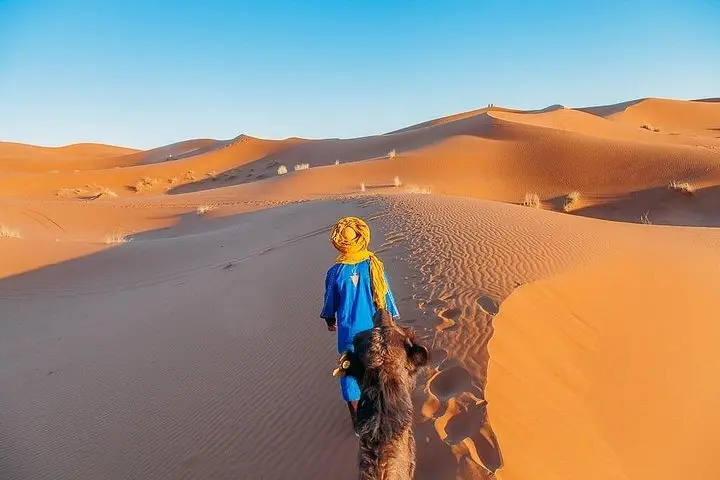
You step out of a blue-washed alley in Chefchaouen as the van hums to life and the Rif mountains fold behind you—stone villages give way to cedar forests, then to the ochre ribs of the High Atlas. The road is a ribbon of changing climates: cool cedar shade, the Ziz Valley's palm-lined river, and finally the wide, rippling sea of Erg Chebbi where dunes push at the horizon.
Verified experiences and guided adventures in the surrounding area.
Operated by Morocco Tours 4x4 - Day Tours · Chefchaouen, Tanger-Tetouan-Al Hoceima
You step out of a blue-washed alley in Chefchaouen as the van hums to life and the Rif mountains fold behind you—stone villages give way to cedar forests, then to the ochre ribs of the High Atlas. The road is a ribbon of changing climates: cool cedar shade, the Ziz Valley's palm-lined river, and finally the wide, rippling sea of Erg Chebbi where dunes push at the horizon.
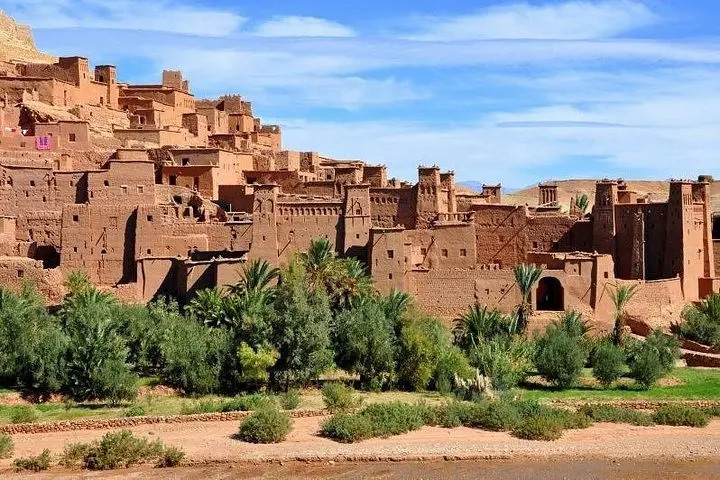
Along the way the landscape reads like layered history: Roman mosaics at Volubilis, the imperial gateways of Meknes, and Ait Benhaddou’s mud-brick kasbahs—UNESCO-stamped movie sets carved from local earthen architecture. Geology is literal here: the Atlas was folded by tectonics to form the Tizi n'Tichka pass (about 2,260 m), and erosion carved Todgha’s narrow gorge with cliffs rising roughly 160 m.
Cultural notes: Berber villages and women’s cooperatives pop up along trade routes; mint tea is both welcome and social currency. Wildlife shows up in small, memorable ways—from Barbary macaques in cedar groves to nocturnal desert fox tracks after dusk.
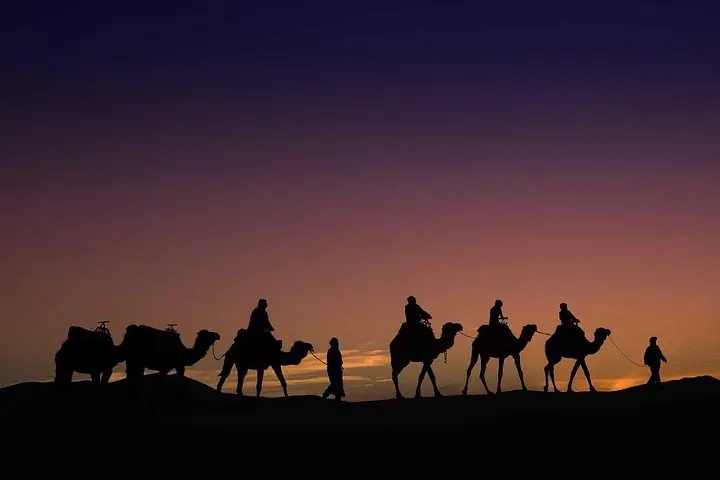
Practical edge: expect several long driving days (3–7 hours between major stops), short guided walks in medinas and gorges, and a camel-led approach to a desert camp where dunes can reach 100–150 m. Bring layered clothing for big diurnal swings, sunscreen and ample water, and be ready for an early pre-dawn camel ride to watch color rewrite the dunes. Accommodations alternate between riads, guesthouses and a comfortable desert camp with basic facilities—bookings are private and the itinerary is paced for travelers who want breadth in five compact days.
The itinerary lists a private tour and comfortable desert camp overnight; expect private or semi-private Berber-style tents with basic bedding, shared toilets and washing facilities, and dinner served in camp.
Several legs range from 2–7 hours—certain days include long transfers (e.g., Fes to Merzouga) with scenic stops; plan for full travel days and shorter walking periods.
Camels are generally accessible for most ages but mounting can be awkward; check with the operator for infant seats or alternative transport if mobility is limited.
Visa requirements depend on your nationality; routine vaccinations are recommended—consult government travel advice and your healthcare provider before departure.
Morocco Tours 4x4 - Day Tours operates guided outdoor trips and adventures with an emphasis on safety, stewardship, and memorable experiences.
You step out of a blue-washed alley in Chefchaouen as the van hums to life and the Rif mountains fold behind you—stone villages give way to cedar forests, then to the ochre ribs of the High Atlas. The road is a ribbon of changing climates: cool cedar shade, the Ziz Valley's palm-lined river, and finally the wide, rippling sea of Erg Chebbi where dunes push at the horizon.
You step out of a blue-washed alley in Chefchaouen as the van hums to life and the Rif mountains fold behind you—stone villages give way to cedar forests, then to the ochre ribs of the High Atlas. The road is a ribbon of changing climates: cool cedar shade, the Ziz Valley's palm-lined river, and finally the wide, rippling sea of Erg Chebbi where dunes push at the horizon.
Along the way the landscape reads like layered history: Roman mosaics at Volubilis, the imperial gateways of Meknes, and Ait Benhaddou’s mud-brick kasbahs—UNESCO-stamped movie sets carved from local earthen architecture. Geology is literal here: the Atlas was folded by tectonics to form the Tizi n'Tichka pass (about 2,260 m), and erosion carved Todgha’s narrow gorge with cliffs rising roughly 160 m.
Cultural notes: Berber villages and women’s cooperatives pop up along trade routes; mint tea is both welcome and social currency. Wildlife shows up in small, memorable ways—from Barbary macaques in cedar groves to nocturnal desert fox tracks after dusk.
Practical edge: expect several long driving days (3–7 hours between major stops), short guided walks in medinas and gorges, and a camel-led approach to a desert camp where dunes can reach 100–150 m. Bring layered clothing for big diurnal swings, sunscreen and ample water, and be ready for an early pre-dawn camel ride to watch color rewrite the dunes. Accommodations alternate between riads, guesthouses and a comfortable desert camp with basic facilities—bookings are private and the itinerary is paced for travelers who want breadth in five compact days.