THE ADVENTURE COLLECTIVE® · Independent discovery and booking for outdoor travel

Five days of guided game drives through Tarangire, the Serengeti, and Ngorongoro crater deliver close wildlife encounters, dramatic geology, and comfortable lodge and tented-camp nights. This itinerary pairs long driving days with focused morning and evening fieldwork — ideal for first-time safari travelers who want reliable logistics and strong viewing opportunities.
Five days of guided game drives through Tarangire, the Serengeti, and Ngorongoro crater deliver close wildlife encounters, dramatic geology, and comfortable lodge and tented-camp nights. This itinerary pairs long driving days with focused morning and evening fieldwork — ideal for first-time safari travelers who want reliable logistics and strong viewing opportunities.
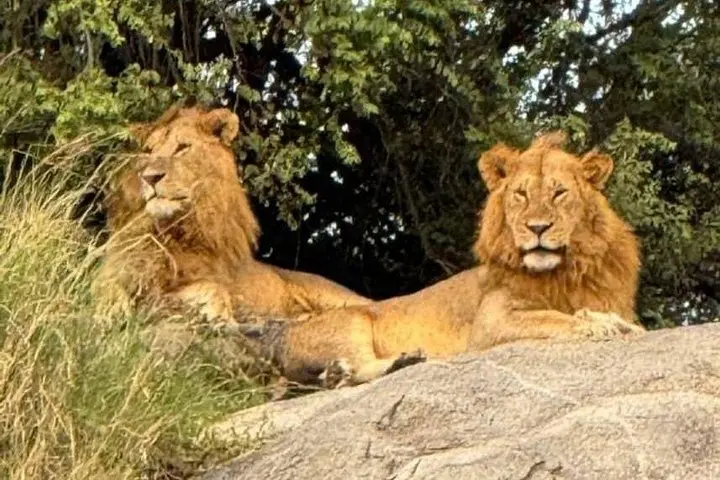
Dust rises in thin curtains as a 4x4 slips off the highway and onto a red-earth track — the vehicle’s silhouette framed by baobabs that seem to watch the road. Travelers settle into long, quiet hours when the Serengeti’s horizon pushes and swells with life: a line of wildebeest like a moving ridge, solitary lions claiming a kopje, and elephants tracing the river’s margins as if following an old map.
Verified experiences and guided adventures in the surrounding area.
Operated by Dreamworth Safaris · Arusha, Arusha Region
Dust rises in thin curtains as a 4x4 slips off the highway and onto a red-earth track — the vehicle’s silhouette framed by baobabs that seem to watch the road. Travelers settle into long, quiet hours when the Serengeti’s horizon pushes and swells with life: a line of wildebeest like a moving ridge, solitary lions claiming a kopje, and elephants tracing the river’s margins as if following an old map.
These landscapes are young in story but ancient in process. The Ngorongoro Crater is a collapsed volcano whose steep walls hold year-round water and an unusually dense population of mammals; the Serengeti’s plains are underlain by seasonal floodplains that dictate the great migration; Tarangire’s swamps and river corridors concentrate elephant herds during dry months. The Maasai and other local communities shape the region’s cultural rhythm — livestock, coffee farms in the highlands, and market towns like Karatu punctuate the travel route.
On the practical side, this private multi-day itinerary runs primarily by road with game drives each day. Expect early starts to catch predators at dawn and mid-day pauses back at lodges or tented camps for hot showers and meals. Roads can be rough; seatbelt up and store gear in soft bags. Bring binoculars and a camera with a telephoto lens, layer clothing for cool early mornings and hot afternoons, and carry basic medications for motion sickness. Respect park rules: stay in vehicles, keep noise low, and follow ranger guidance — both for safety and to reduce disturbance.
This safari is straightforward in logistics but rich in pacing: long drives that reward patience, sudden sightings that require quick framing, and evenings that collapse into clear, starlit quiet.
The migration timing shifts annually; June–September typically brings large herds through the central and northern Serengeti, while December–March sees calving in the southern plains.
Park entry and conservation fees are usually separate — confirm with the operator which fees are included in your booking price.
Consult a travel clinic for up-to-date recommendations; malaria prophylaxis is commonly advised for Tanzania and routine vaccines should be current.
Tipping guides and drivers at the end of the safari is standard — amounts vary, but $10–20 per person per day for guides is a common guideline; check local norms.
Dreamworth Safaris operates guided outdoor trips and adventures with an emphasis on safety, stewardship, and memorable experiences.
Dust rises in thin curtains as a 4x4 slips off the highway and onto a red-earth track — the vehicle’s silhouette framed by baobabs that seem to watch the road. Travelers settle into long, quiet hours when the Serengeti’s horizon pushes and swells with life: a line of wildebeest like a moving ridge, solitary lions claiming a kopje, and elephants tracing the river’s margins as if following an old map.
Dust rises in thin curtains as a 4x4 slips off the highway and onto a red-earth track — the vehicle’s silhouette framed by baobabs that seem to watch the road. Travelers settle into long, quiet hours when the Serengeti’s horizon pushes and swells with life: a line of wildebeest like a moving ridge, solitary lions claiming a kopje, and elephants tracing the river’s margins as if following an old map.
These landscapes are young in story but ancient in process. The Ngorongoro Crater is a collapsed volcano whose steep walls hold year-round water and an unusually dense population of mammals; the Serengeti’s plains are underlain by seasonal floodplains that dictate the great migration; Tarangire’s swamps and river corridors concentrate elephant herds during dry months. The Maasai and other local communities shape the region’s cultural rhythm — livestock, coffee farms in the highlands, and market towns like Karatu punctuate the travel route.
On the practical side, this private multi-day itinerary runs primarily by road with game drives each day. Expect early starts to catch predators at dawn and mid-day pauses back at lodges or tented camps for hot showers and meals. Roads can be rough; seatbelt up and store gear in soft bags. Bring binoculars and a camera with a telephoto lens, layer clothing for cool early mornings and hot afternoons, and carry basic medications for motion sickness. Respect park rules: stay in vehicles, keep noise low, and follow ranger guidance — both for safety and to reduce disturbance.
This safari is straightforward in logistics but rich in pacing: long drives that reward patience, sudden sightings that require quick framing, and evenings that collapse into clear, starlit quiet.