THE ADVENTURE COLLECTIVE® · Independent discovery and booking for outdoor travel

Pair a technical day on North Africa’s highest peak with a plush night in Merzouga’s luxury desert camp. This five-day circuit blends steep mountain trails, Berber village culture, dramatic gorges and towering sand dunes.
Pair a technical day on North Africa’s highest peak with a plush night in Merzouga’s luxury desert camp. This five-day circuit blends steep mountain trails, Berber village culture, dramatic gorges and towering sand dunes.
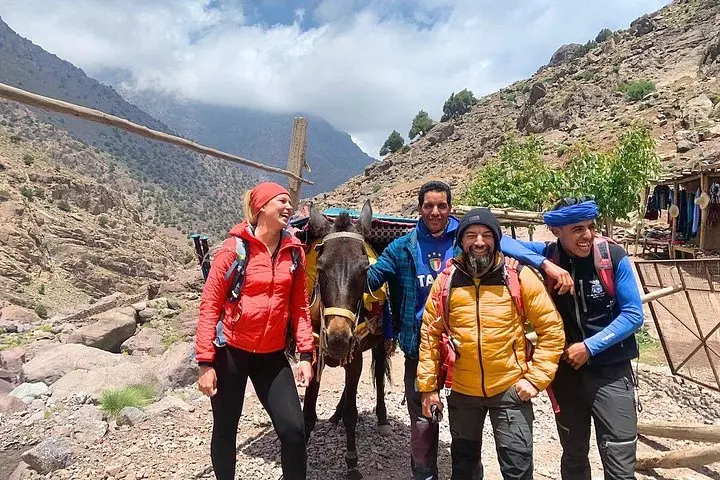
You start before dawn in Imlil, the mountain air cold and sharp, packs loaded and guides checking crampons. The trail climbs quickly out of terraced fields, pine and juniper giving way to stony slopes as the Toubkal Refuge appears like a weathered outpost at roughly 3,200 m. On summit day you push above the refuge, negotiating loose scree and steep switchbacks to reach 4,165 m; the summit rewards you with raw, high-altitude panoramas and a wind that seems to push you toward the horizon.
Verified experiences and guided adventures in the surrounding area.
Operated by Smart Morocco Tours Excursions · Imlil, Marrakech-Safi
You start before dawn in Imlil, the mountain air cold and sharp, packs loaded and guides checking crampons. The trail climbs quickly out of terraced fields, pine and juniper giving way to stony slopes as the Toubkal Refuge appears like a weathered outpost at roughly 3,200 m. On summit day you push above the refuge, negotiating loose scree and steep switchbacks to reach 4,165 m; the summit rewards you with raw, high-altitude panoramas and a wind that seems to push you toward the horizon.
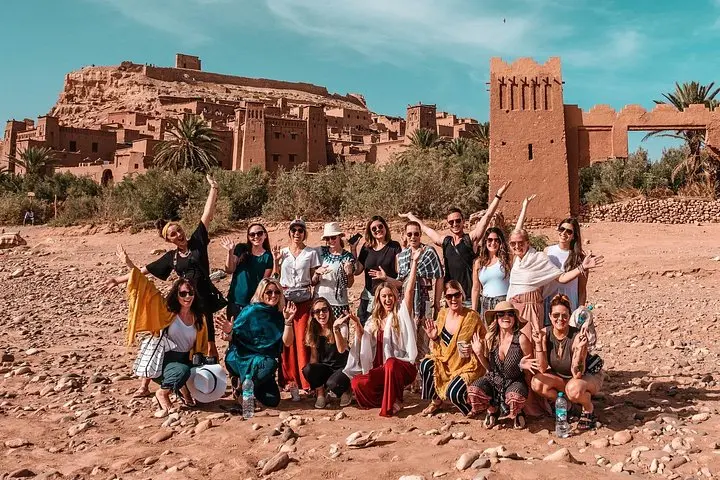
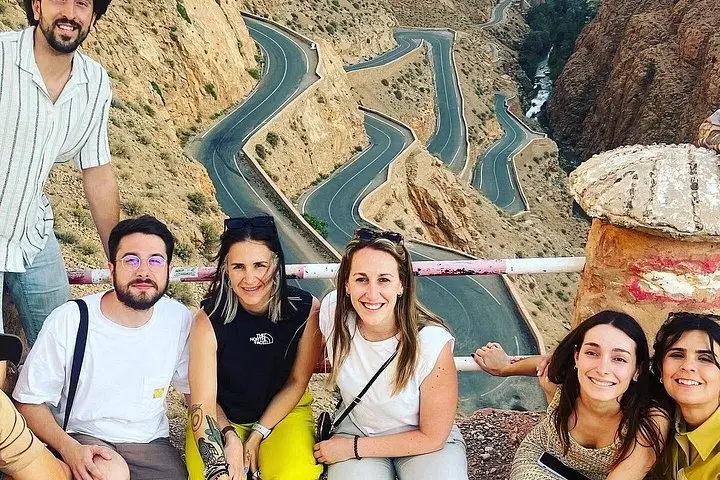
This route crosses millennia of human passage — Berber villages carved into the southern flank of the High Atlas, centuries-old kasbahs, and caravan routes that linked Marrakech to the desert. Geologically, the Atlas is folded metamorphic rock rising from the Sahara’s edge; later you descend in a single multi-day sweep across dramatic gorges and fossil-rich plateaus into the Erg Chebbi dunes near Merzouga.
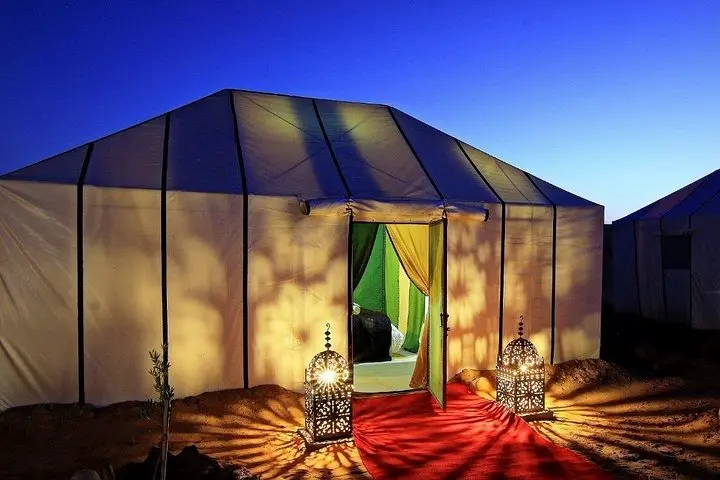
Culture is immediate: mule trains in mountain villages, mint tea hospitality, and evenings in a luxury desert camp where Bedouin rhythms and contemporary comfort meet under a broad desert sky. Dunes here dare you to climb them at sunrise; camel caravans move like deliberate punctuation on the sand.
Practical guidance: allow time to acclimatize, expect 900–1,000 m of elevation gain on summit day and 8–10 km of mountain hiking, and bring layered insulation for cold nights. Footwear with good ankle support, trekking poles for scree, sun protection for the desert, and patience for long drives between regions will make this five-day combination both attainable and memorable.
Expect a sustained uphill day of 900–1,000 m vertical gain from the refuge with loose scree near the top; it’s non-technical but physically demanding.
No specialized climbing gear is needed for the standard Toubkal route, but crampons may be required in snowy conditions and guides provide local guidance.
Road travel between Marrakech and Merzouga is long (often 8–10 hours with stops); the tour typically breaks the drive into scenic stages with overnight stays en route.
Yes; moderate acclimatization, steady pacing, hydration, and communicating symptoms to guides are essential—those with heart or serious health conditions should consult a physician.
Smart Morocco Tours Excursions operates guided outdoor trips and adventures with an emphasis on safety, stewardship, and memorable experiences.
You start before dawn in Imlil, the mountain air cold and sharp, packs loaded and guides checking crampons. The trail climbs quickly out of terraced fields, pine and juniper giving way to stony slopes as the Toubkal Refuge appears like a weathered outpost at roughly 3,200 m. On summit day you push above the refuge, negotiating loose scree and steep switchbacks to reach 4,165 m; the summit rewards you with raw, high-altitude panoramas and a wind that seems to push you toward the horizon.
You start before dawn in Imlil, the mountain air cold and sharp, packs loaded and guides checking crampons. The trail climbs quickly out of terraced fields, pine and juniper giving way to stony slopes as the Toubkal Refuge appears like a weathered outpost at roughly 3,200 m. On summit day you push above the refuge, negotiating loose scree and steep switchbacks to reach 4,165 m; the summit rewards you with raw, high-altitude panoramas and a wind that seems to push you toward the horizon.
This route crosses millennia of human passage — Berber villages carved into the southern flank of the High Atlas, centuries-old kasbahs, and caravan routes that linked Marrakech to the desert. Geologically, the Atlas is folded metamorphic rock rising from the Sahara’s edge; later you descend in a single multi-day sweep across dramatic gorges and fossil-rich plateaus into the Erg Chebbi dunes near Merzouga.
Culture is immediate: mule trains in mountain villages, mint tea hospitality, and evenings in a luxury desert camp where Bedouin rhythms and contemporary comfort meet under a broad desert sky. Dunes here dare you to climb them at sunrise; camel caravans move like deliberate punctuation on the sand.
Practical guidance: allow time to acclimatize, expect 900–1,000 m of elevation gain on summit day and 8–10 km of mountain hiking, and bring layered insulation for cold nights. Footwear with good ankle support, trekking poles for scree, sun protection for the desert, and patience for long drives between regions will make this five-day combination both attainable and memorable.