THE ADVENTURE COLLECTIVE® · Independent discovery and booking for outdoor travel

Ride the back seat of a modified tuk-tuk through Mae Wang and up to Doi Inthanon on this five-day northern Thailand adventure. Expect hill-tribe villages, waterfalls, an ethical elephant sanctuary, bamboo rafting and a 5–6 km forest trek.
Ride the back seat of a modified tuk-tuk through Mae Wang and up to Doi Inthanon on this five-day northern Thailand adventure. Expect hill-tribe villages, waterfalls, an ethical elephant sanctuary, bamboo rafting and a 5–6 km forest trek.
You kick back into a converted tuk-tuk, engine chuffing, wind working at the rolled-back roof as northern Thailand's foothills rise like a living map. Small lanes open into orchids of rice terraces; the tuk-tuk presses on, the driver weaving through switchbacks while your guide points out a temple spire catching late light.
Verified experiences and guided adventures in the surrounding area.
Operated by The Tuk Tuk Club · Chiang Mai, Chiang Mai Province
You kick back into a converted tuk-tuk, engine chuffing, wind working at the rolled-back roof as northern Thailand's foothills rise like a living map. Small lanes open into orchids of rice terraces; the tuk-tuk presses on, the driver weaving through switchbacks while your guide points out a temple spire catching late light.
This five-day route runs from Chiang Mai into Mae Wang and up toward Doi Inthanon, Thailand's highest peak (about 2,565 m). The region is layered with Karen and other hill-tribe villages, teak and evergreen forest, and rivers that push you to pause. Geologically speaking, the mountains are part of the Thai highlands—granite and metamorphic ridges weathered into stepped fields and cool gullies.
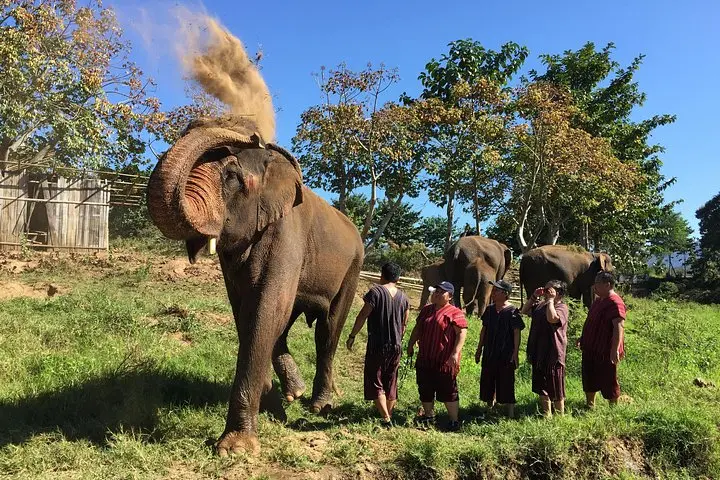
Culturally the trip threads local life and ritual—temple blessings, mountain coffee, and family-run eateries where recipes are regional and hands-on. An elephant sanctuary on the route focuses on non-riding care; bamboo rafting and short treks put you close to rivers and waterfalls.
Practically: expect a mix of vehicle days and a 5–6 km guided hike on moderate trails with 200–400 m of cumulative ascent on trek day. Accommodation is basic rural lodging and wooden bungalows; nights are simple, meals are local. Each tuk-tuk has a support vehicle for luggage and water and walkie-talkies for communication.
Bring sturdy shoes, sun and rain protection, and a compact daypack for hikes. Hydrate on the road; mountain weather can flip between warm valley air and cool mist on the high slopes. This is exploratory travel—relaxed but active—and best for travelers who want close cultural contact and scenic driving that’s as much the point as the destinations.
No. The included elephant experience is hands-on care, feeding and bathing only; riding is not permitted.
The guided hike is about 5–6 km with an initial uphill then mostly flat or downhill sections; it's paced for mixed fitness levels.
The tour meets and returns to Chiang Mai Gate Hotel in Chiang Mai—pickup is in the morning of Day 1 and you return before midday on Day 5.
Yes, a support vehicle carries your luggage, spare parts and extra water while the tuk-tuks travel light.
The Tuk Tuk Club operates guided outdoor trips and adventures with an emphasis on safety, stewardship, and memorable experiences.
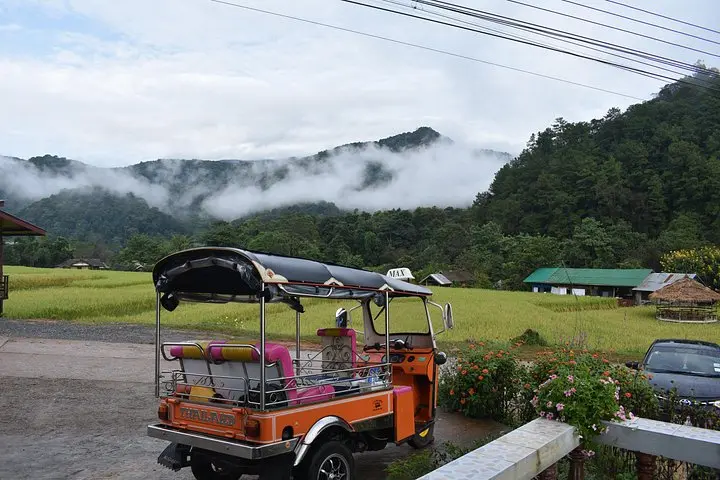
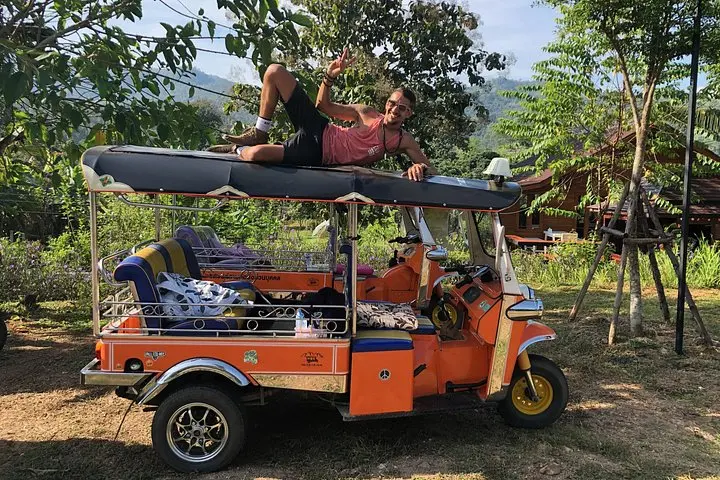
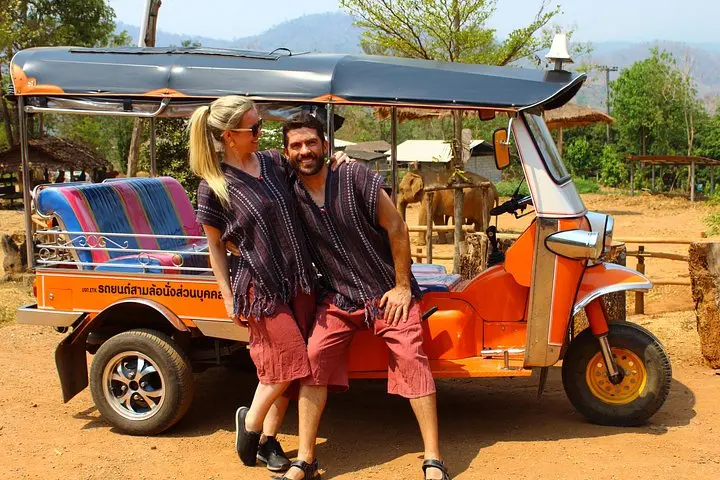
You kick back into a converted tuk-tuk, engine chuffing, wind working at the rolled-back roof as northern Thailand's foothills rise like a living map. Small lanes open into orchids of rice terraces; the tuk-tuk presses on, the driver weaving through switchbacks while your guide points out a temple spire catching late light.
You kick back into a converted tuk-tuk, engine chuffing, wind working at the rolled-back roof as northern Thailand's foothills rise like a living map. Small lanes open into orchids of rice terraces; the tuk-tuk presses on, the driver weaving through switchbacks while your guide points out a temple spire catching late light.
This five-day route runs from Chiang Mai into Mae Wang and up toward Doi Inthanon, Thailand's highest peak (about 2,565 m). The region is layered with Karen and other hill-tribe villages, teak and evergreen forest, and rivers that push you to pause. Geologically speaking, the mountains are part of the Thai highlands—granite and metamorphic ridges weathered into stepped fields and cool gullies.
Culturally the trip threads local life and ritual—temple blessings, mountain coffee, and family-run eateries where recipes are regional and hands-on. An elephant sanctuary on the route focuses on non-riding care; bamboo rafting and short treks put you close to rivers and waterfalls.
Practically: expect a mix of vehicle days and a 5–6 km guided hike on moderate trails with 200–400 m of cumulative ascent on trek day. Accommodation is basic rural lodging and wooden bungalows; nights are simple, meals are local. Each tuk-tuk has a support vehicle for luggage and water and walkie-talkies for communication.
Bring sturdy shoes, sun and rain protection, and a compact daypack for hikes. Hydrate on the road; mountain weather can flip between warm valley air and cool mist on the high slopes. This is exploratory travel—relaxed but active—and best for travelers who want close cultural contact and scenic driving that’s as much the point as the destinations.