THE ADVENTURE COLLECTIVE® · Independent discovery and booking for outdoor travel

Cross a blinding salt plain, stand amid steaming geysers, and watch flamingos color high-altitude lagoons on a five-day overland traverse from La Paz. This practical guide outlines what to expect—terrain, altitude, and essential gear—for the Uyuni and Eduardo Avaroa circuit.
Cross a blinding salt plain, stand amid steaming geysers, and watch flamingos color high-altitude lagoons on a five-day overland traverse from La Paz. This practical guide outlines what to expect—terrain, altitude, and essential gear—for the Uyuni and Eduardo Avaroa circuit.
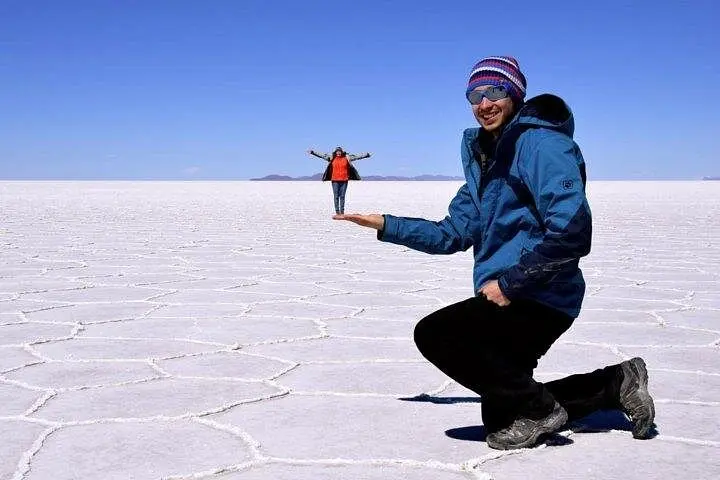
Night on the altiplano is a hard, clear thing: the Land Cruiser hums across white salt that seems to hold the sky, and the stars lean close enough to count. By day the plains glare back—an expanse of crystalline salt, islands of giant cacti, and horizons that force perspective to reset.
Verified experiences and guided adventures in the surrounding area.
Operated by Bamba Travel · Uyuni, Potosí Department
Night on the altiplano is a hard, clear thing: the Land Cruiser hums across white salt that seems to hold the sky, and the stars lean close enough to count. By day the plains glare back—an expanse of crystalline salt, islands of giant cacti, and horizons that force perspective to reset.
This five-day route threads La Paz with the high Andean desert around Salar de Uyuni and the Eduardo Avaroa Reserve. You’ll pass the Train Cemetery and Colchani’s salt works, cross the mirror-flat salt pan, and walk among volcanic fields where Sol de Mañana’s geysers belch steam. Geological contrasts are extreme: the flat, evaporated salt plain sits at roughly 3,650 m while lagoons and geysers in the southwest climb toward 4,500–5,000 m. Culturally, the journey moves through small Aymara and Quechua villages whose salt crafts and llama-herding practices persist under the same relentless sun.
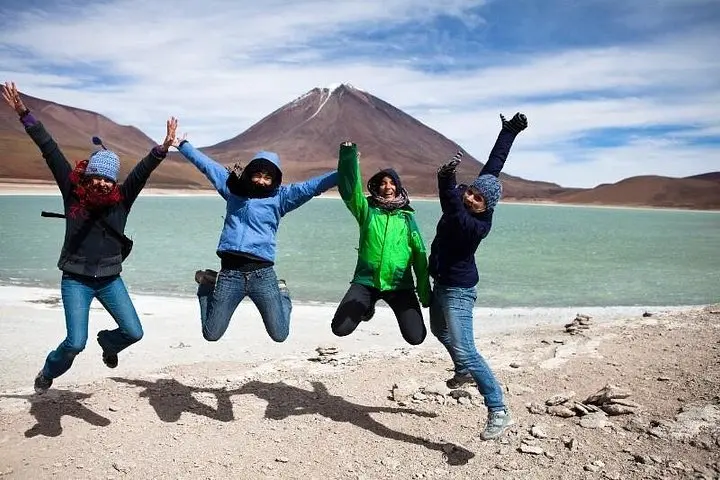
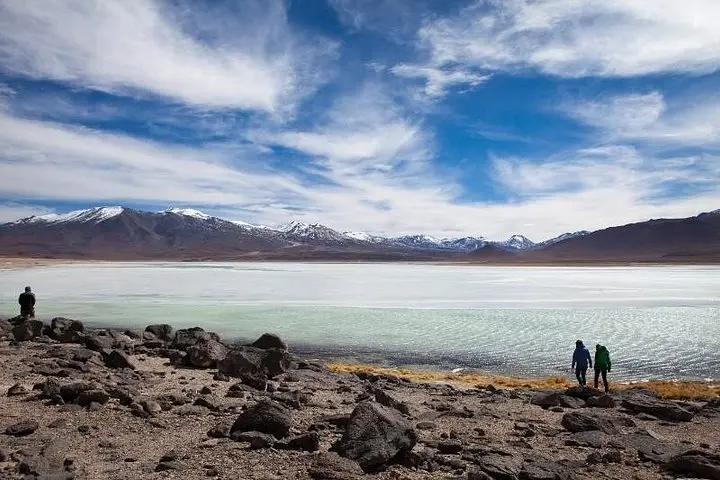
Expect varied terrain—packed salt crust, gravel desert, high puna and rocky outcrops such as the Stone Tree—and wildlife like Andean flamingos concentrated at mineral-rich lagoons. The accommodations are basic in remote refuges and sometimes in a salt hotel built from salt-brick walls.
Practical edge: acclimatize in La Paz or at least above 3,000 m before departure, hydrate relentlessly, and pack layered insulation for nights that can drop well below freezing. Roads are long and rough; plan for long driving days and minimal connectivity. Bring sun protection, extra water, and patience—this is landscape travel on nature’s timetable.
The tour crosses elevations from roughly 3,650 m up to near 5,000 m; many people feel headaches or breathlessness—acclimatize in La Paz, hydrate, avoid alcohol, and consult a physician about medication.
Yes—December to April brings seasonal flooding that creates mirror reflections; however, routes and some stops may change and parts of the salt plain can be impassable.
Expect basic hotels and refuges with shared bathrooms in remote areas; the Salt Hotel is a novelty but services are rustic compared to city standards.
Yes—high-altitude lagoons support Andean flamingos and other birdlife, especially during drier months when salt pans and wetlands concentrate minerals and food.
Bamba Travel operates guided outdoor trips and adventures with an emphasis on safety, stewardship, and memorable experiences.
Night on the altiplano is a hard, clear thing: the Land Cruiser hums across white salt that seems to hold the sky, and the stars lean close enough to count. By day the plains glare back—an expanse of crystalline salt, islands of giant cacti, and horizons that force perspective to reset.
Night on the altiplano is a hard, clear thing: the Land Cruiser hums across white salt that seems to hold the sky, and the stars lean close enough to count. By day the plains glare back—an expanse of crystalline salt, islands of giant cacti, and horizons that force perspective to reset.
This five-day route threads La Paz with the high Andean desert around Salar de Uyuni and the Eduardo Avaroa Reserve. You’ll pass the Train Cemetery and Colchani’s salt works, cross the mirror-flat salt pan, and walk among volcanic fields where Sol de Mañana’s geysers belch steam. Geological contrasts are extreme: the flat, evaporated salt plain sits at roughly 3,650 m while lagoons and geysers in the southwest climb toward 4,500–5,000 m. Culturally, the journey moves through small Aymara and Quechua villages whose salt crafts and llama-herding practices persist under the same relentless sun.
Expect varied terrain—packed salt crust, gravel desert, high puna and rocky outcrops such as the Stone Tree—and wildlife like Andean flamingos concentrated at mineral-rich lagoons. The accommodations are basic in remote refuges and sometimes in a salt hotel built from salt-brick walls.
Practical edge: acclimatize in La Paz or at least above 3,000 m before departure, hydrate relentlessly, and pack layered insulation for nights that can drop well below freezing. Roads are long and rough; plan for long driving days and minimal connectivity. Bring sun protection, extra water, and patience—this is landscape travel on nature’s timetable.