THE ADVENTURE COLLECTIVE® · Independent discovery and booking for outdoor travel

Spend five days chasing the Northern Lights from Yellowknife with snowmobiling, dogsledding, ice fishing and multiple aurora viewing camps. Practical, guided nights on Great Slave Lake maximize your chances to see the aurora while keeping you warm and safe.
Spend five days chasing the Northern Lights from Yellowknife with snowmobiling, dogsledding, ice fishing and multiple aurora viewing camps. Practical, guided nights on Great Slave Lake maximize your chances to see the aurora while keeping you warm and safe.
A cold wind from Great Slave Lake brushes your face as the first green curtains flare low on the horizon — Yellowknife’s night sky dares you to keep watching. Over five days you move from the warm glow of Explorer Hotel to the quiet glare of ice-camp lights, trading hotel breakfasts for heated cabins, snowmobile engines, and the steady pant of sled dogs. Each night a different vantage — Sky Dome, glass tipi, ice-camp cabins — offers a new angle on the aurora’s choreography.
Verified experiences and guided adventures in the surrounding area.
A cold wind from Great Slave Lake brushes your face as the first green curtains flare low on the horizon — Yellowknife’s night sky dares you to keep watching. Over five days you move from the warm glow of Explorer Hotel to the quiet glare of ice-camp lights, trading hotel breakfasts for heated cabins, snowmobile engines, and the steady pant of sled dogs. Each night a different vantage — Sky Dome, glass tipi, ice-camp cabins — offers a new angle on the aurora’s choreography.
This place grew from Dene trade routes and a 20th-century gold rush, later reshaped by diamond mining; the town’s Old Town and the Prince of Wales Northern Heritage Museum tell that story. Geology here is blunt and honest: the deep bowl of Great Slave Lake shapes weather and light, and the region’s bedrock and glacial history make nights particularly clear and cold in winter.
Expect a practical northern rhythm: daytime sightseeing (Wildlife Gallery, Bush Pilot Monument), adrenaline on snowmobile and dogsled, and hands-on ice fishing on thick lake ice. Local guides brief on safety, interpret auroral science, and point out wildlife tracks between activities.
Plan for severe cold, short daylight, and variable aurora intensity — the lights are never guaranteed, but the experience of traversing the frozen landscape and the variety of viewing platforms increases your chances. Bring layered insulation, warm footwear, spare batteries, and a tripod if you want reliable night photos. In short: come prepared, stay curious, and let the Arctic’s sky do the rest.
No — the aurora is a natural phenomenon and cannot be guaranteed; the itinerary increases viewing opportunities by using multiple nights and locations.
Winter clothing rental is included for the tour, but many travelers bring their own insulated boots and base layers for a better fit and comfort.
Round-trip airport transfers and hotel pickups are included; exact pickup times are confirmed after booking and depend on flight arrivals.
The tour notes infants must sit on laps and it’s not recommended for people with serious spinal or cardiovascular problems; contact the operator if you have specific health concerns.
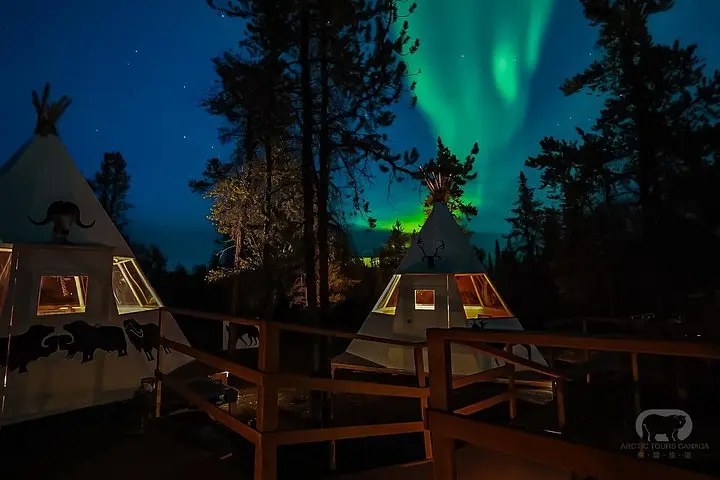
A cold wind from Great Slave Lake brushes your face as the first green curtains flare low on the horizon — Yellowknife’s night sky dares you to keep watching. Over five days you move from the warm glow of Explorer Hotel to the quiet glare of ice-camp lights, trading hotel breakfasts for heated cabins, snowmobile engines, and the steady pant of sled dogs. Each night a different vantage — Sky Dome, glass tipi, ice-camp cabins — offers a new angle on the aurora’s choreography.
A cold wind from Great Slave Lake brushes your face as the first green curtains flare low on the horizon — Yellowknife’s night sky dares you to keep watching. Over five days you move from the warm glow of Explorer Hotel to the quiet glare of ice-camp lights, trading hotel breakfasts for heated cabins, snowmobile engines, and the steady pant of sled dogs. Each night a different vantage — Sky Dome, glass tipi, ice-camp cabins — offers a new angle on the aurora’s choreography.
This place grew from Dene trade routes and a 20th-century gold rush, later reshaped by diamond mining; the town’s Old Town and the Prince of Wales Northern Heritage Museum tell that story. Geology here is blunt and honest: the deep bowl of Great Slave Lake shapes weather and light, and the region’s bedrock and glacial history make nights particularly clear and cold in winter.
Expect a practical northern rhythm: daytime sightseeing (Wildlife Gallery, Bush Pilot Monument), adrenaline on snowmobile and dogsled, and hands-on ice fishing on thick lake ice. Local guides brief on safety, interpret auroral science, and point out wildlife tracks between activities.
Plan for severe cold, short daylight, and variable aurora intensity — the lights are never guaranteed, but the experience of traversing the frozen landscape and the variety of viewing platforms increases your chances. Bring layered insulation, warm footwear, spare batteries, and a tripod if you want reliable night photos. In short: come prepared, stay curious, and let the Arctic’s sky do the rest.