THE ADVENTURE COLLECTIVE® · Independent discovery and booking for outdoor travel

Walk with a camel caravan from the Draa Valley into the dunes of Erg Zahar. This six-day trek pairs mornings on plateau and shifting sand with nomadic camps, sunrise dunes and nights under wide desert skies.
Walk with a camel caravan from the Draa Valley into the dunes of Erg Zahar. This six-day trek pairs mornings on plateau and shifting sand with nomadic camps, sunrise dunes and nights under wide desert skies.
Dawn pulls a long, cool ribbon across the Sahara as a camel caravan files away from the last palms of M'Hamid. The soft grind of sand under hoof and the hiss of wind through tamarisk set the pace; walkers move at their own speed while guides and camel drivers marshal the kit and light the evening fire.
Verified experiences and guided adventures in the surrounding area.
Operated by Desertbrise Travel · Zagora, Drâa-Tafilalet
Dawn pulls a long, cool ribbon across the Sahara as a camel caravan files away from the last palms of M'Hamid. The soft grind of sand under hoof and the hiss of wind through tamarisk set the pace; walkers move at their own speed while guides and camel drivers marshal the kit and light the evening fire.
The route threads Tichka Pass, the palm-lined Draa valley and Ait Benhaddou — a 16th-century kasbah and frequent film backdrop — before slipping into the wide dunes around Erg Zahar. Geologically, the region is a meeting of gravel plains and shifting erg: wind sculpts dunes daily, revealing layers of ancient riverbeds and alluvial deposits. Culturally, travelers will cross landscapes shaped by trans‑Saharan trade and visit marabout sanctuaries such as Sidi Naji, where oral histories anchor nomadic life.
Expect walking sections of plateau and loose sand, generally split into morning and late-afternoon pushes to avoid midday heat. Nights are in nomadic-style camps with simple meals—tagine, sand-baked bread, mint tea—and expansive stars. Camels carry luggage; guests walk with daypacks.
Practical tips: start early, carry 2–3 liters of water and electrolyte replacements, and use grippy footwear suitable for sand. Temperatures swing widely—light layers for daytime, an insulated jacket for nights. Respect local custom: ask before photographing people and follow guides’ instructions around sacred sites. This trek balances long quiet hours in the dunes with short cultural encounters in oasis villages—an immersive desert rhythm that rewards patience and basic preparation.
Daily walking varies but typically includes two sessions totaling 3–5 hours, with longer transfers by camel or vehicle on arrival and departure days.
Riding is optional; camels primarily carry luggage while guests walk, but short rides can be arranged during rest stops for those who want them.
Camps are basic nomadic-style bivouacs: sleeping mats or simple beds, shared latrines; shower access is limited until return to M'Hamid.
Not recommended for pregnant travelers and families should assess children’s endurance for long walks and desert conditions; consult the operator for age limits.
Desertbrise Travel operates guided outdoor trips and adventures with an emphasis on safety, stewardship, and memorable experiences.
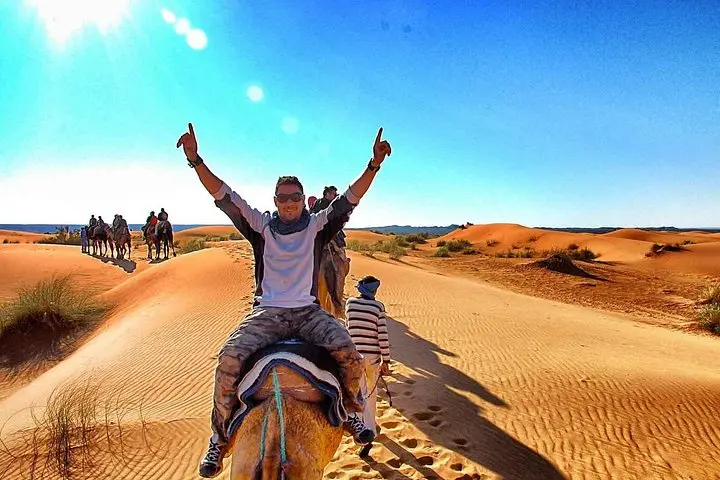
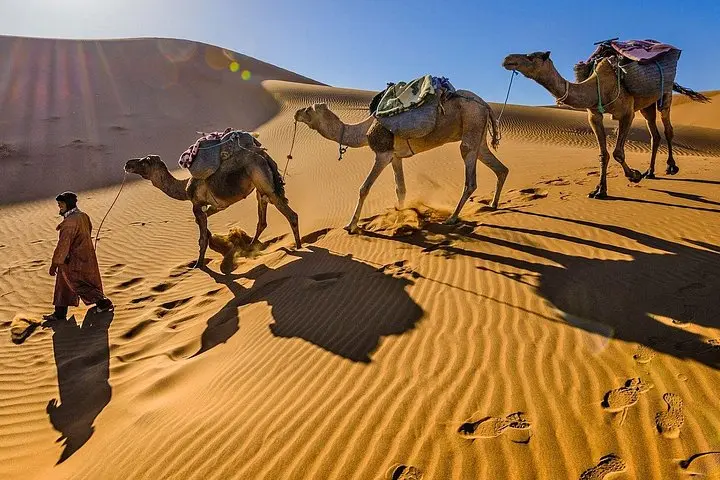
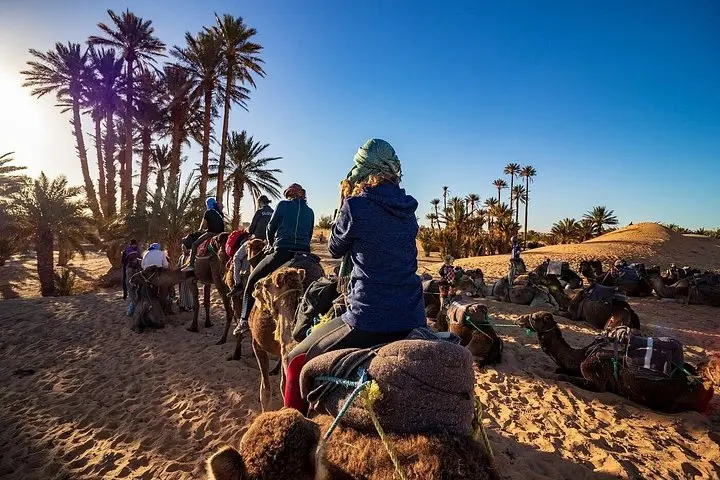
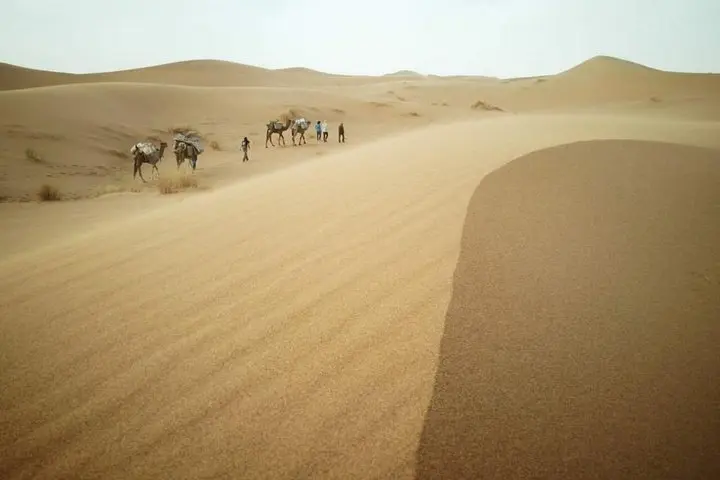
Dawn pulls a long, cool ribbon across the Sahara as a camel caravan files away from the last palms of M'Hamid. The soft grind of sand under hoof and the hiss of wind through tamarisk set the pace; walkers move at their own speed while guides and camel drivers marshal the kit and light the evening fire.
Dawn pulls a long, cool ribbon across the Sahara as a camel caravan files away from the last palms of M'Hamid. The soft grind of sand under hoof and the hiss of wind through tamarisk set the pace; walkers move at their own speed while guides and camel drivers marshal the kit and light the evening fire.
The route threads Tichka Pass, the palm-lined Draa valley and Ait Benhaddou — a 16th-century kasbah and frequent film backdrop — before slipping into the wide dunes around Erg Zahar. Geologically, the region is a meeting of gravel plains and shifting erg: wind sculpts dunes daily, revealing layers of ancient riverbeds and alluvial deposits. Culturally, travelers will cross landscapes shaped by trans‑Saharan trade and visit marabout sanctuaries such as Sidi Naji, where oral histories anchor nomadic life.
Expect walking sections of plateau and loose sand, generally split into morning and late-afternoon pushes to avoid midday heat. Nights are in nomadic-style camps with simple meals—tagine, sand-baked bread, mint tea—and expansive stars. Camels carry luggage; guests walk with daypacks.
Practical tips: start early, carry 2–3 liters of water and electrolyte replacements, and use grippy footwear suitable for sand. Temperatures swing widely—light layers for daytime, an insulated jacket for nights. Respect local custom: ask before photographing people and follow guides’ instructions around sacred sites. This trek balances long quiet hours in the dunes with short cultural encounters in oasis villages—an immersive desert rhythm that rewards patience and basic preparation.