THE ADVENTURE COLLECTIVE® · Independent discovery and booking for outdoor travel

A six-day ridge-to-reservoir trek through Uzbekistan’s Western Tian Shan, finishing with a summit push to Great Chimgan (3,309 m). Expect river valleys, high passes, shepherd huts and multi-day camping with daily stretches of sustained elevation.
A six-day ridge-to-reservoir trek through Uzbekistan’s Western Tian Shan, finishing with a summit push to Great Chimgan (3,309 m). Expect river valleys, high passes, shepherd huts and multi-day camping with daily stretches of sustained elevation.
The morning air bites clean and thin as the convoy drops you at Gidjal and the ridgeline opens up—stone paths, wind-sculpted grass, and the Aksakata River daring you to keep pace. Over six days you move from river-carved valleys to high alpine ridges, sleeping under a wide sky and climbing toward Great Chimgan’s 3,309-meter crown.
Verified experiences and guided adventures in the surrounding area.
Operated by Nuratau Travel · Chimgan, Tashkent Region
The morning air bites clean and thin as the convoy drops you at Gidjal and the ridgeline opens up—stone paths, wind-sculpted grass, and the Aksakata River daring you to keep pace. Over six days you move from river-carved valleys to high alpine ridges, sleeping under a wide sky and climbing toward Great Chimgan’s 3,309-meter crown.
This route runs through the Western Tian Shan, a folded range formed by the collision of the Indian and Eurasian plates; granite outcrops and scree fields alternate with shaded river corridors where shepherds still graze flocks in summer. Cultural notes are simple and direct: local shepherd huts, traditional tea, and mountain registration that reflects Uzbekistan’s pastoral mountain stewardship.
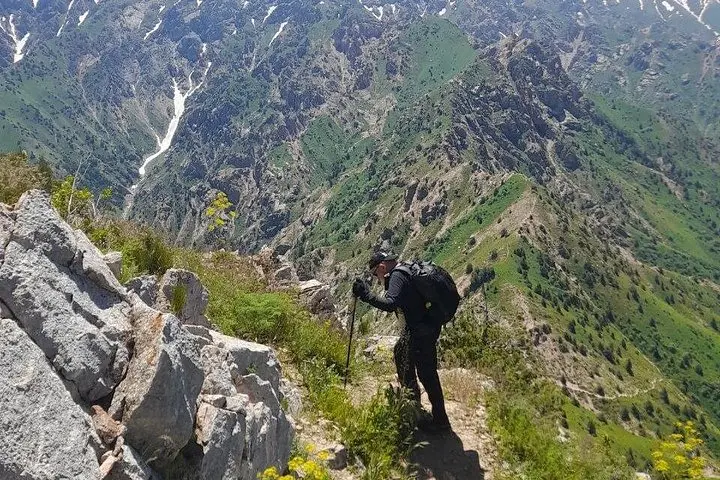
Expect varied terrain—riverbeds and meadow trails on days one and two, steep passes around 2,200–2,700 m mid-trek, and a rocky, exposed final push to Great Chimgan. Weather shifts quickly here; wind and afternoon storms are common in summer, and snow can linger on higher slopes into late spring.
Practical guidance: travel light but carry a solid sleeping system and waterproof layers; daily hikes range 6–10 hours with sustained elevation gain. Guides manage camp logistics, cooking, and luggage transfers, but you should be comfortable with multi-day camping and basic trail navigation. Hydration, sun protection, and steady pacing make summit day achievable for fit, experienced trekkers. Finish at Beldersay and the Charvak corridor, where a warm vehicle ride returns you to valley comforts.
You should have recent experience with long day hikes (6–10 hours) and prior multi-day camping; the itinerary includes sustained elevation gains to 3,309 m.
Yes—English-speaking mountain guides, tents, sleeping mattresses, gas stoves, and tableware are included in the tour package.
This trek is fully camping-based with prepared camps each night; the final transfer ends at Beldersay/Charvak valley accommodations.
Yes—gradual ascent, hydration, and steady pacing help; inform guides of any symptoms and they carry a first-aid kit and evacuation plan.
Nuratau Travel operates guided outdoor trips and adventures with an emphasis on safety, stewardship, and memorable experiences.
The morning air bites clean and thin as the convoy drops you at Gidjal and the ridgeline opens up—stone paths, wind-sculpted grass, and the Aksakata River daring you to keep pace. Over six days you move from river-carved valleys to high alpine ridges, sleeping under a wide sky and climbing toward Great Chimgan’s 3,309-meter crown.
The morning air bites clean and thin as the convoy drops you at Gidjal and the ridgeline opens up—stone paths, wind-sculpted grass, and the Aksakata River daring you to keep pace. Over six days you move from river-carved valleys to high alpine ridges, sleeping under a wide sky and climbing toward Great Chimgan’s 3,309-meter crown.
This route runs through the Western Tian Shan, a folded range formed by the collision of the Indian and Eurasian plates; granite outcrops and scree fields alternate with shaded river corridors where shepherds still graze flocks in summer. Cultural notes are simple and direct: local shepherd huts, traditional tea, and mountain registration that reflects Uzbekistan’s pastoral mountain stewardship.
Expect varied terrain—riverbeds and meadow trails on days one and two, steep passes around 2,200–2,700 m mid-trek, and a rocky, exposed final push to Great Chimgan. Weather shifts quickly here; wind and afternoon storms are common in summer, and snow can linger on higher slopes into late spring.
Practical guidance: travel light but carry a solid sleeping system and waterproof layers; daily hikes range 6–10 hours with sustained elevation gain. Guides manage camp logistics, cooking, and luggage transfers, but you should be comfortable with multi-day camping and basic trail navigation. Hydration, sun protection, and steady pacing make summit day achievable for fit, experienced trekkers. Finish at Beldersay and the Charvak corridor, where a warm vehicle ride returns you to valley comforts.