THE ADVENTURE COLLECTIVE® · Independent discovery and booking for outdoor travel

Float between Luxor and Aswan on a classic dahabeya and step into Egypt’s temple legacy—Dendera, Abydos, Karnak, Edfu, Kom Ombo and Philae—all served with full-board comfort and expert guides. Rise early for balloon views, pack sun protection, and prepare for walking on ancient stone.
Float between Luxor and Aswan on a classic dahabeya and step into Egypt’s temple legacy—Dendera, Abydos, Karnak, Edfu, Kom Ombo and Philae—all served with full-board comfort and expert guides. Rise early for balloon views, pack sun protection, and prepare for walking on ancient stone.
Morning light pulls a thin ribbon across the Nile as the dahabeya slips from Luxor’s quay. On deck, the river breathes warmth; mudbrick villages slide past, opaque gullies and low palms sculpting the horizon. Inside, polished wood cabins open to slow hours and an itinerary stacked with Egypt’s greatest temple sites.
Verified experiences and guided adventures in the surrounding area.
Operated by Egypt Best Day Tours · Luxor, Luxor Governorate
Morning light pulls a thin ribbon across the Nile as the dahabeya slips from Luxor’s quay. On deck, the river breathes warmth; mudbrick villages slide past, opaque gullies and low palms sculpting the horizon. Inside, polished wood cabins open to slow hours and an itinerary stacked with Egypt’s greatest temple sites.
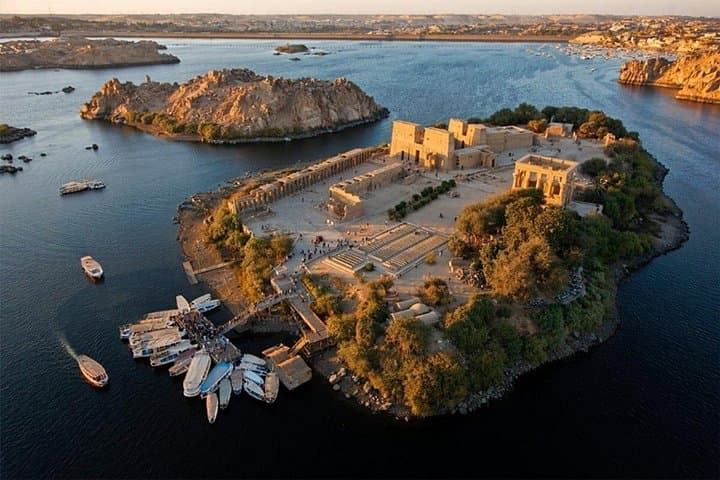
This six-day voyage links the living Nile to the stone record of pharaohs. You’ll visit Dendera’s astronomical ceiling and its Hathor sanctuary, trace the Abydos King List at Seti I’s temple, and move through Karnak’s hypostyle hall and Luxor’s pylons. West Bank tombs—Valley of the Kings and Hatshepsut’s terraces—reveal painted crypts, while Edfu and Kom Ombo demonstrate local cults of Horus and Sobek. The itinerary finishes in Aswan with the High Dam and the relocated Temple of Philae.
Geology here is quiet but present: the Nile’s alluvial ribbon carved a green corridor between desert escarpments where sediment and stone preserve millennia of human endeavour. Local culture centers on market life, felucca traffic, and the slow choreography of village mornings. Expect lectures, cooking demos and music onboard that frame the archaeology in living context.
Practical guidance: rise early for cooler site visits and the optional hot-air balloon at dawn; carry a daypack, plenty of water and sun protection, and shoes that handle sand and uneven temple stone. Many entrances require modest dress. Plan for small-group walking at monuments and limited internet while you travel—this is a trip to the past, paced by the river.
Yes — a dawn hot-air balloon flight is listed among the inclusions but is weather-dependent and scheduled by the operator.
Most travelers require an Egyptian visa—check your embassy’s rules and obtain an e-visa or visa on arrival where applicable before travel.
Some dahabeyas offer limited Wi‑Fi; expect slow or intermittent service and use the trip to disconnect and enjoy the sites.
Many sites have uneven surfaces, steps and narrow tomb passages; accessibility is limited—contact the operator to discuss accommodations and transfers.
Egypt Best Day Tours operates guided outdoor trips and adventures with an emphasis on safety, stewardship, and memorable experiences.
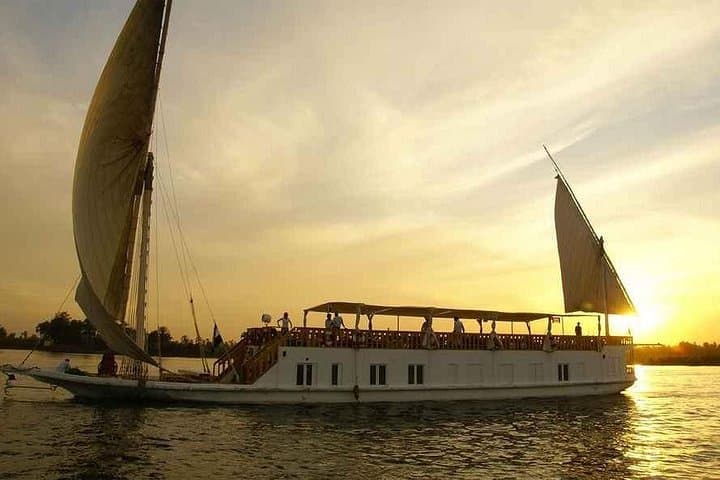

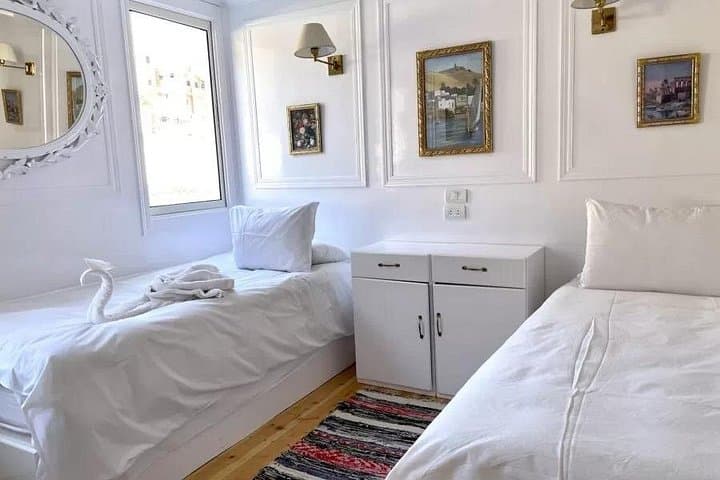
Morning light pulls a thin ribbon across the Nile as the dahabeya slips from Luxor’s quay. On deck, the river breathes warmth; mudbrick villages slide past, opaque gullies and low palms sculpting the horizon. Inside, polished wood cabins open to slow hours and an itinerary stacked with Egypt’s greatest temple sites.
Morning light pulls a thin ribbon across the Nile as the dahabeya slips from Luxor’s quay. On deck, the river breathes warmth; mudbrick villages slide past, opaque gullies and low palms sculpting the horizon. Inside, polished wood cabins open to slow hours and an itinerary stacked with Egypt’s greatest temple sites.
This six-day voyage links the living Nile to the stone record of pharaohs. You’ll visit Dendera’s astronomical ceiling and its Hathor sanctuary, trace the Abydos King List at Seti I’s temple, and move through Karnak’s hypostyle hall and Luxor’s pylons. West Bank tombs—Valley of the Kings and Hatshepsut’s terraces—reveal painted crypts, while Edfu and Kom Ombo demonstrate local cults of Horus and Sobek. The itinerary finishes in Aswan with the High Dam and the relocated Temple of Philae.
Geology here is quiet but present: the Nile’s alluvial ribbon carved a green corridor between desert escarpments where sediment and stone preserve millennia of human endeavour. Local culture centers on market life, felucca traffic, and the slow choreography of village mornings. Expect lectures, cooking demos and music onboard that frame the archaeology in living context.
Practical guidance: rise early for cooler site visits and the optional hot-air balloon at dawn; carry a daypack, plenty of water and sun protection, and shoes that handle sand and uneven temple stone. Many entrances require modest dress. Plan for small-group walking at monuments and limited internet while you travel—this is a trip to the past, paced by the river.