THE ADVENTURE COLLECTIVE® · Independent discovery and booking for outdoor travel

Traverse the Drâa Valley on a six-day guided trek from M'hamid, moving from palm groves into windswept dunes and hamada. This expedition mixes cultural encounters with varied desert terrain—expect mobile bivouacs, camel caravans, and hands-on local guidance.
Traverse the Drâa Valley on a six-day guided trek from M'hamid, moving from palm groves into windswept dunes and hamada. This expedition mixes cultural encounters with varied desert terrain—expect mobile bivouacs, camel caravans, and hands-on local guidance.
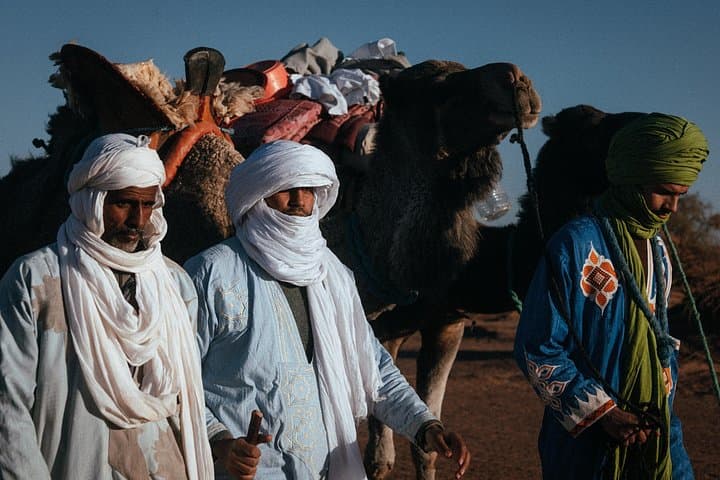
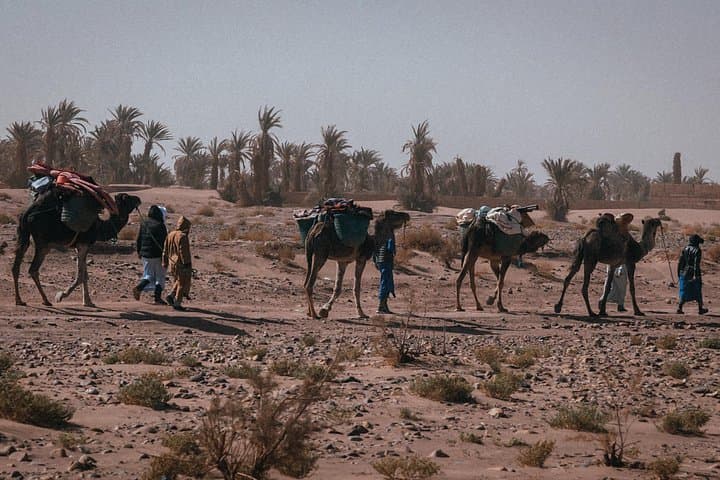
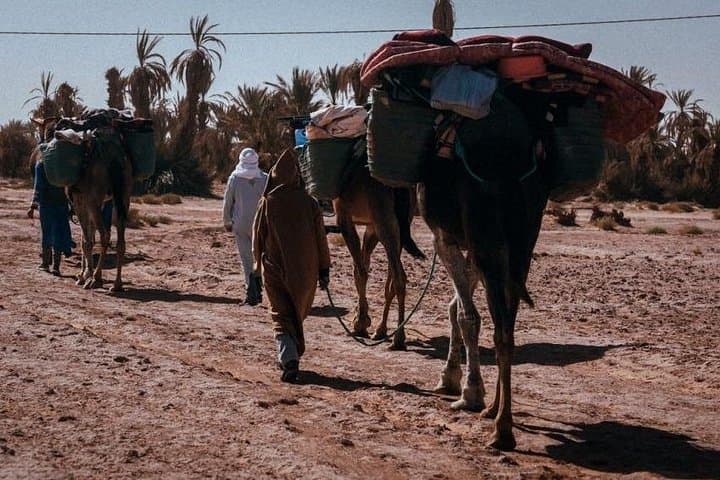
A low sun melts gold across the dunes as you step out of M'hamid and into the Drâa Valley’s open silence. Camels shift, wind arranges sand into new shapes, and the route threads from palm groves into hamada—stony plateaus that force you to change cadence and attention. The desert here feels deliberate: boulders hold the day's heat, dunes sing when wind finds their slopes, and an old wadi draws a narrow line of life through the plain.
Verified experiences and guided adventures in the surrounding area.
Operated by Trek Desert Maroc · M'hamid, Drâa-Tafilalet
A low sun melts gold across the dunes as you step out of M'hamid and into the Drâa Valley’s open silence. Camels shift, wind arranges sand into new shapes, and the route threads from palm groves into hamada—stony plateaus that force you to change cadence and attention. The desert here feels deliberate: boulders hold the day's heat, dunes sing when wind finds their slopes, and an old wadi draws a narrow line of life through the plain.
This stretch of southern Morocco sits at a cultural crossroads. The Drâa has long been a caravan corridor linking oases and kasbahs; Ait Ben Haddou and local marabout sites like Sidi Naji carry visible traces of centuries of trade and Berber nomadic life. Geologically, shifting sands rest on fluvial terraces and hardened limestone hamada, offering contrasting underfoot textures from soft sand to compacted shale.
Expect guided walking across 4 days of desert terrain, nights in mobile bivouacs or a fixed bivouac near M'hamid, and slow-moving days timed to avoid midday heat. Local guides and camel caravans set the pace; stories around the fire introduce cultural context. Practicalities matter: water planning, layered clothing for warm days and cold nights, and gaiters for dune travel. Footing alternates between soft dunes and rocky hamada, so strong ankles and steady pacing pay off.
This is an expedition-form hike—immersive, physically engaging, and rooted in place. Prepare to carry day essentials, follow your guide’s rhythm, and leave the landscape as unchanged as you found it.
Daily walks are typically 4–6 hours on varied terrain; the rhythm is steady and guided—expect challenging sections on dunes and rocky hamada.
Nights alternate between mobile bivouacs in the desert and a fixed comfortable bivouac in M'hamid with shepherded camp facilities and meals provided.
No—this is a guided trek suitable for hikers with moderate fitness, but good conditioning and experience with multi-day hiking is helpful.
Guides supply and distribute potable water; participants should carry their own containers and follow the guide’s rationing instructions.
Trek Desert Maroc operates guided outdoor trips and adventures with an emphasis on safety, stewardship, and memorable experiences.

A low sun melts gold across the dunes as you step out of M'hamid and into the Drâa Valley’s open silence. Camels shift, wind arranges sand into new shapes, and the route threads from palm groves into hamada—stony plateaus that force you to change cadence and attention. The desert here feels deliberate: boulders hold the day's heat, dunes sing when wind finds their slopes, and an old wadi draws a narrow line of life through the plain.
A low sun melts gold across the dunes as you step out of M'hamid and into the Drâa Valley’s open silence. Camels shift, wind arranges sand into new shapes, and the route threads from palm groves into hamada—stony plateaus that force you to change cadence and attention. The desert here feels deliberate: boulders hold the day's heat, dunes sing when wind finds their slopes, and an old wadi draws a narrow line of life through the plain.
This stretch of southern Morocco sits at a cultural crossroads. The Drâa has long been a caravan corridor linking oases and kasbahs; Ait Ben Haddou and local marabout sites like Sidi Naji carry visible traces of centuries of trade and Berber nomadic life. Geologically, shifting sands rest on fluvial terraces and hardened limestone hamada, offering contrasting underfoot textures from soft sand to compacted shale.
Expect guided walking across 4 days of desert terrain, nights in mobile bivouacs or a fixed bivouac near M'hamid, and slow-moving days timed to avoid midday heat. Local guides and camel caravans set the pace; stories around the fire introduce cultural context. Practicalities matter: water planning, layered clothing for warm days and cold nights, and gaiters for dune travel. Footing alternates between soft dunes and rocky hamada, so strong ankles and steady pacing pay off.
This is an expedition-form hike—immersive, physically engaging, and rooted in place. Prepare to carry day essentials, follow your guide’s rhythm, and leave the landscape as unchanged as you found it.