THE ADVENTURE COLLECTIVE® · Independent discovery and booking for outdoor travel

A six-day ascent of Kilimanjaro’s Marangu Route, this itinerary climbs from rainforest to alpine desert and tops out at Uhuru Peak. Expect muddy lower trails, an acclimatization day, a midnight summit push and hut accommodations along the way.
A six-day ascent of Kilimanjaro’s Marangu Route, this itinerary climbs from rainforest to alpine desert and tops out at Uhuru Peak. Expect muddy lower trails, an acclimatization day, a midnight summit push and hut accommodations along the way.
The trail opens in a humid rainforest where mist threads through moss-draped trunks and the path climbs out of Marangu, gaining roughly 900m on day one.
Verified experiences and guided adventures in the surrounding area.
Operated by everlasting african adventure · Moshi, Kilimanjaro Region
The trail opens in a humid rainforest where mist threads through moss-draped trunks and the path climbs out of Marangu, gaining roughly 900m on day one.
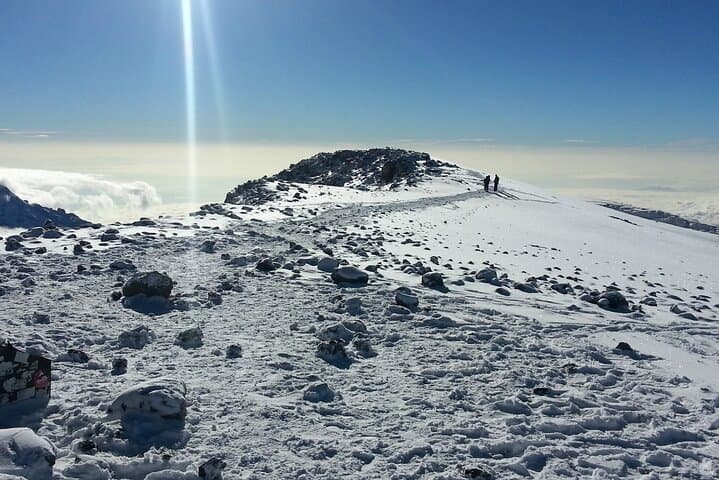
Across six days you move from 1,830m at Marangu Gate to 5,895m on Uhuru Peak — a sequence of ecosystems: rainforest that reaches for your sleeves, heathland with giant lobelias, open moorland, an expansive alpine saddle and finally scree and snow on the summit cone. The Marangu Route walks a clear, well-worn line: Mandara Hut to Horombo, a planned acclimatization stop at Zebra Rock, then Kibo Hut and a midnight summit push through switchbacks to Gillman’s Point and Uhuru Peak.
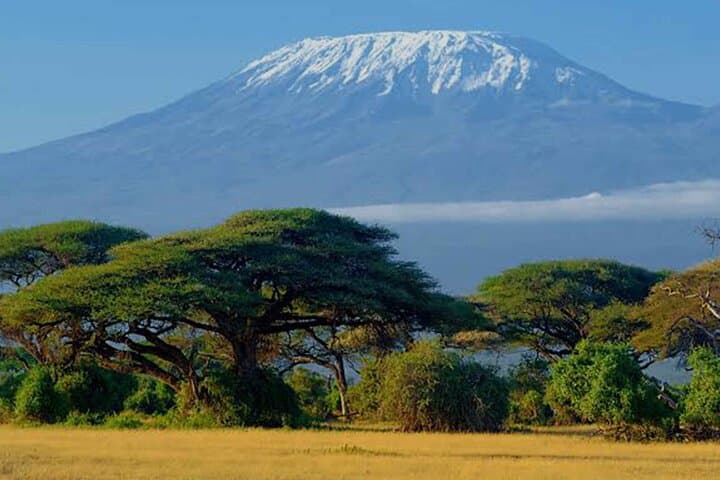
Geologically, Kilimanjaro is a dormant stratovolcano whose three volcanic cones—Shira, Mawenzi and Kibo—shape the skyline; Kibo’s crater rims frame the summit panorama. The slopes have long been home to the Chagga people, whose agriculture and traditions still color villages around Moshi.
Practical guidance: prepare for muddy trails at lower elevations and loose scree above Kibo; gaiters and sturdy boots matter. Nights get sharply cold above Horombo—an insulated jacket and reliable sleeping layers are essential. The summit ascent begins between midnight and 2:00 a.m. and demands steady pacing for altitude; the itinerary includes an acclimatization day to reduce acute mountain sickness risk.
Logistics: permits and hut accommodations are included on typical organized 6‑day itineraries; meals are provided en route and an oxygen cylinder is often carried for emergencies. Hydration, layered clothing, and respect for porters and park regulations will make the difference between a difficult push and a successful summit day.
The Marangu Route is non-technical but physically demanding due to altitude and long hours; no rope or glacier skills are required but good fitness and altitude awareness are essential.
Most packages include park permits, hut accommodation, meals on trek, guides, porters and often oxygen for emergencies—confirm specifics with your operator.
Success depends on fitness, acclimatization and weather; typical 6‑day Marangu itineraries have moderate summit rates but individual outcomes vary.
Acclimatize (observe the rest day at Zebra Rock), ascend slowly, stay hydrated and communicate symptoms early; guides can administer oxygen and arrange descent if needed.
everlasting african adventure operates guided outdoor trips and adventures with an emphasis on safety, stewardship, and memorable experiences.

The trail opens in a humid rainforest where mist threads through moss-draped trunks and the path climbs out of Marangu, gaining roughly 900m on day one.
The trail opens in a humid rainforest where mist threads through moss-draped trunks and the path climbs out of Marangu, gaining roughly 900m on day one.
Across six days you move from 1,830m at Marangu Gate to 5,895m on Uhuru Peak — a sequence of ecosystems: rainforest that reaches for your sleeves, heathland with giant lobelias, open moorland, an expansive alpine saddle and finally scree and snow on the summit cone. The Marangu Route walks a clear, well-worn line: Mandara Hut to Horombo, a planned acclimatization stop at Zebra Rock, then Kibo Hut and a midnight summit push through switchbacks to Gillman’s Point and Uhuru Peak.
Geologically, Kilimanjaro is a dormant stratovolcano whose three volcanic cones—Shira, Mawenzi and Kibo—shape the skyline; Kibo’s crater rims frame the summit panorama. The slopes have long been home to the Chagga people, whose agriculture and traditions still color villages around Moshi.
Practical guidance: prepare for muddy trails at lower elevations and loose scree above Kibo; gaiters and sturdy boots matter. Nights get sharply cold above Horombo—an insulated jacket and reliable sleeping layers are essential. The summit ascent begins between midnight and 2:00 a.m. and demands steady pacing for altitude; the itinerary includes an acclimatization day to reduce acute mountain sickness risk.
Logistics: permits and hut accommodations are included on typical organized 6‑day itineraries; meals are provided en route and an oxygen cylinder is often carried for emergencies. Hydration, layered clothing, and respect for porters and park regulations will make the difference between a difficult push and a successful summit day.