THE ADVENTURE COLLECTIVE® · Independent discovery and booking for outdoor travel

A private six-day ascent of Mount Kilimanjaro via the Lemosho Route offers less-crowded trails, measured acclimatization, and a high chance of reaching Uhuru Peak. This guide outlines what to expect day-by-day, practical prep, and local insights to plan your summit bid.
A private six-day ascent of Mount Kilimanjaro via the Lemosho Route offers less-crowded trails, measured acclimatization, and a high chance of reaching Uhuru Peak. This guide outlines what to expect day-by-day, practical prep, and local insights to plan your summit bid.
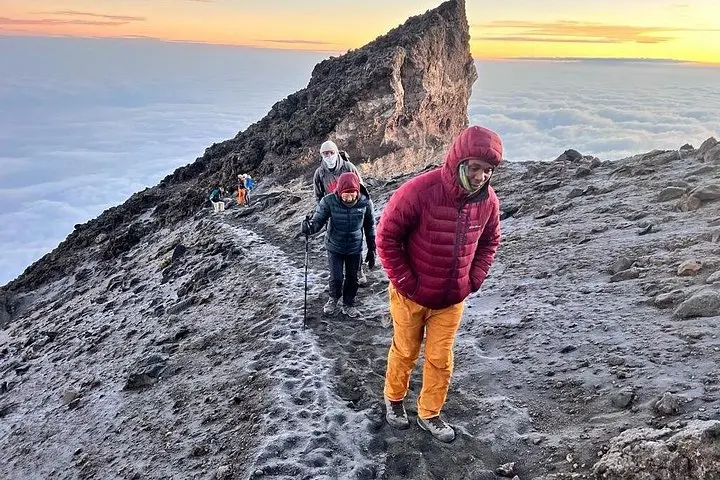
The headlamp pool in the dark looks like a necklace of tiny stars as our group steps off from Barafu Hut into the cold that steals the breath. The trail is a ribbon of headtorches winding up volcanic scree, each step a negotiation with loose gravel and thinning air. Hours later, after a slow, relentless climb, the horizon cracks open and sunlight pours across the crater rim; Uhuru Peak sits above you like the final page of a hard-won book.
Verified experiences and guided adventures in the surrounding area.
Operated by Africa Exhibition Safari Agency · Moshi, Kilimanjaro Region
The headlamp pool in the dark looks like a necklace of tiny stars as our group steps off from Barafu Hut into the cold that steals the breath. The trail is a ribbon of headtorches winding up volcanic scree, each step a negotiation with loose gravel and thinning air. Hours later, after a slow, relentless climb, the horizon cracks open and sunlight pours across the crater rim; Uhuru Peak sits above you like the final page of a hard-won book.
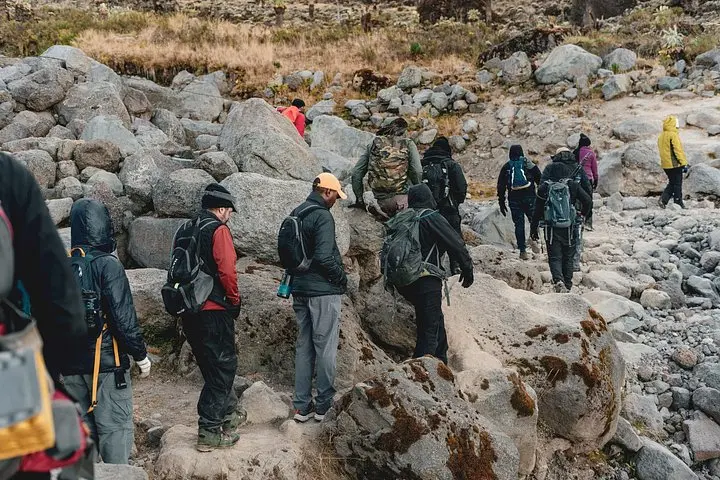
The Lemosho Route approaches Kilimanjaro from the mountain's quieter western flank, threading four distinct ecological bands over six days: dense montane forest, moorland of giant heather and lobelia, alpine desert, and the icy summit zone. The path favors gradual elevation gain, an intentional mercy that improves acclimatization and increases summit odds compared with steeper tracks. The tale of this mountain is geological — a collapsed volcanic cone crowned by the glaciated Kibo summit — and cultural: the Chagga people have lived on Kilimanjaro’s lower slopes for centuries, shaping terraced farms and village life beneath the snowline.
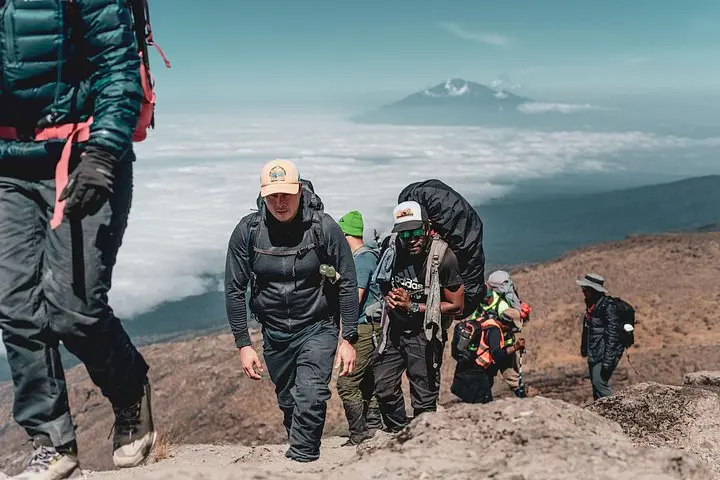
Day-by-day, the hike balances scenery and physiology. You move from Londorossi Gate through shadowed rainforest (6 km, ~3–4 hours) to broad Shira Plateau crossings where Kibo’s bulk hangs across the skyline (18 km, a long 8–10 hour day). The so-called acclimatization day to Lava Tower and Barranco is a classic ‘climb high, sleep low’ maneuver — essential for the summit push. Summit night, starting around midnight from Barafu, is a test of slow, steady pacing: scree to Stella Point, then the final snow-slippered hour to Uhuru Peak at 19,345 ft.
Practical matters are decisive: hire experienced guides and porters, carry a layered system for tropical-to-arctic shifts, and use trekking poles and gaiters on loose gravel. Hydration and calories are non-negotiable; slow pacing beats speed. Permits and park fees are handled through the operator, but confirm what’s included before you go. Expect basic tented camps and crew-cooked meals; the private option gives you flexibility with pace and rest.
For planning: aim for the drier months (June–October or late December–February), train with long hikes and stair sessions, and budget for park conservation fees and tipping porters. On summit morning, give yourself extra time for weather delays — the mountain sets the schedule.
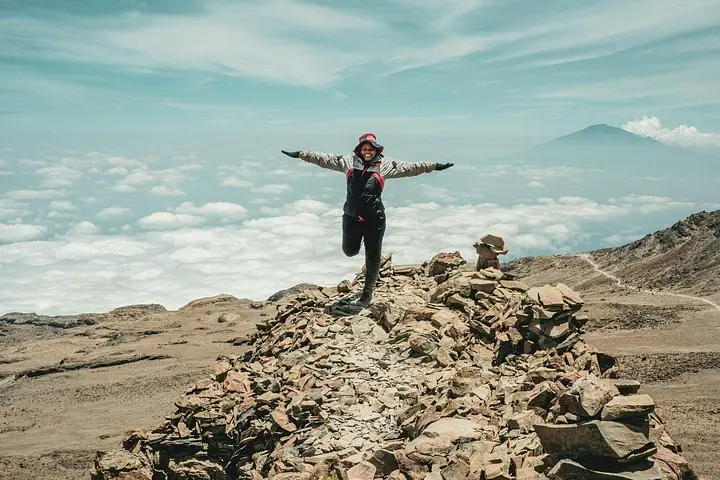
Climbing Kilimanjaro via Lemosho is less about technical climbing and more about endurance, patience, and paying attention to your body. Reach the summit, and the continent opens beneath you — a hard-earned, utterly singular view that explains why people come back to this mountain again and again.
Lemosho is considered among the better routes for acclimatization because it gains altitude gradually and approaches from the west, offering more scenic variation and higher summit success than steeper tracks.
Yes—this itinerary uses tented camps and includes meals prepared by the crew; expect shared dining tents and camp beds provided by your operator.
No technical mountaineering skills are required for the Lemosho Route; the challenge is altitude and endurance rather than ropework or glacier travel.
Ensure routine vaccinations are up to date, carry yellow fever proof if required for your itinerary, and confirm park permits and conservation fees are included with your booking.
Altitude sickness is common above 3,000 m; gradual ascent, proper hydration, rest days, and communicating symptoms to guides are key—medications like acetazolamide can be discussed with a physician beforehand.
The drier months—June to October and late December to February—offer more stable weather and clearer summit views, though Kilimanjaro’s weather can be unpredictable year-round.
Africa Exhibition Safari Agency operates guided outdoor trips and adventures with an emphasis on safety, stewardship, and memorable experiences.
The headlamp pool in the dark looks like a necklace of tiny stars as our group steps off from Barafu Hut into the cold that steals the breath. The trail is a ribbon of headtorches winding up volcanic scree, each step a negotiation with loose gravel and thinning air. Hours later, after a slow, relentless climb, the horizon cracks open and sunlight pours across the crater rim; Uhuru Peak sits above you like the final page of a hard-won book.
The headlamp pool in the dark looks like a necklace of tiny stars as our group steps off from Barafu Hut into the cold that steals the breath. The trail is a ribbon of headtorches winding up volcanic scree, each step a negotiation with loose gravel and thinning air. Hours later, after a slow, relentless climb, the horizon cracks open and sunlight pours across the crater rim; Uhuru Peak sits above you like the final page of a hard-won book.
The Lemosho Route approaches Kilimanjaro from the mountain's quieter western flank, threading four distinct ecological bands over six days: dense montane forest, moorland of giant heather and lobelia, alpine desert, and the icy summit zone. The path favors gradual elevation gain, an intentional mercy that improves acclimatization and increases summit odds compared with steeper tracks. The tale of this mountain is geological — a collapsed volcanic cone crowned by the glaciated Kibo summit — and cultural: the Chagga people have lived on Kilimanjaro’s lower slopes for centuries, shaping terraced farms and village life beneath the snowline.
Day-by-day, the hike balances scenery and physiology. You move from Londorossi Gate through shadowed rainforest (6 km, ~3–4 hours) to broad Shira Plateau crossings where Kibo’s bulk hangs across the skyline (18 km, a long 8–10 hour day). The so-called acclimatization day to Lava Tower and Barranco is a classic ‘climb high, sleep low’ maneuver — essential for the summit push. Summit night, starting around midnight from Barafu, is a test of slow, steady pacing: scree to Stella Point, then the final snow-slippered hour to Uhuru Peak at 19,345 ft.
Practical matters are decisive: hire experienced guides and porters, carry a layered system for tropical-to-arctic shifts, and use trekking poles and gaiters on loose gravel. Hydration and calories are non-negotiable; slow pacing beats speed. Permits and park fees are handled through the operator, but confirm what’s included before you go. Expect basic tented camps and crew-cooked meals; the private option gives you flexibility with pace and rest.
For planning: aim for the drier months (June–October or late December–February), train with long hikes and stair sessions, and budget for park conservation fees and tipping porters. On summit morning, give yourself extra time for weather delays — the mountain sets the schedule.
Climbing Kilimanjaro via Lemosho is less about technical climbing and more about endurance, patience, and paying attention to your body. Reach the summit, and the continent opens beneath you — a hard-earned, utterly singular view that explains why people come back to this mountain again and again.