THE ADVENTURE COLLECTIVE® · Independent discovery and booking for outdoor travel

A six‑day, hut‑based climb on the Marangu (Coca‑Cola) Route offers a structured, gradual ascent to Uhuru Peak with daily comforts and a focused acclimatization profile—ideal for first‑time high‑altitude trekkers aiming for Africa’s summit.
A six‑day, hut‑based climb on the Marangu (Coca‑Cola) Route offers a structured, gradual ascent to Uhuru Peak with daily comforts and a focused acclimatization profile—ideal for first‑time high‑altitude trekkers aiming for Africa’s summit.
Dawn at Marangu Gate feels like a soft promise: mist drips from broad-leafed trees, porters stoke tiny fires, and the first steps of a six-day climb to Africa’s roof begin under a dripping rainforest canopy. The Marangu Route, often called the Coca‑Cola Route, is the island of relative comfort on Kilimanjaro — marked trails, communal huts, and a gradual profile that gives your lungs time to adjust while the mountain reveals itself in stages.
Verified experiences and guided adventures in the surrounding area.
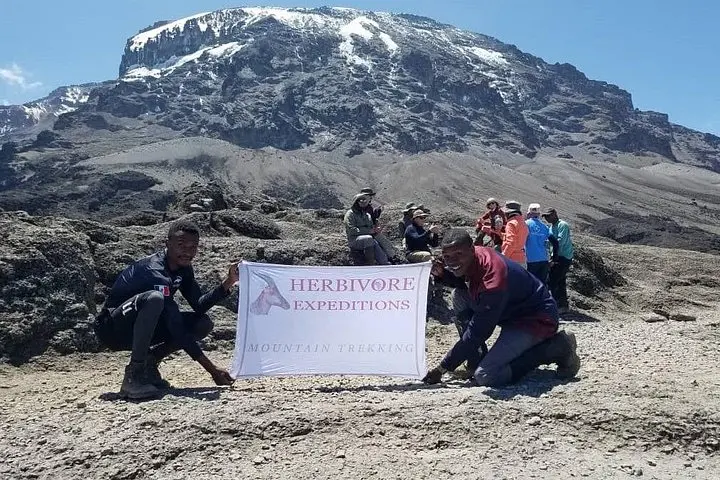
Operated by Herbivore African Expeditions · Moshi, Kilimanjaro Region
Dawn at Marangu Gate feels like a soft promise: mist drips from broad-leafed trees, porters stoke tiny fires, and the first steps of a six-day climb to Africa’s roof begin under a dripping rainforest canopy. The Marangu Route, often called the Coca‑Cola Route, is the island of relative comfort on Kilimanjaro — marked trails, communal huts, and a gradual profile that gives your lungs time to adjust while the mountain reveals itself in stages.
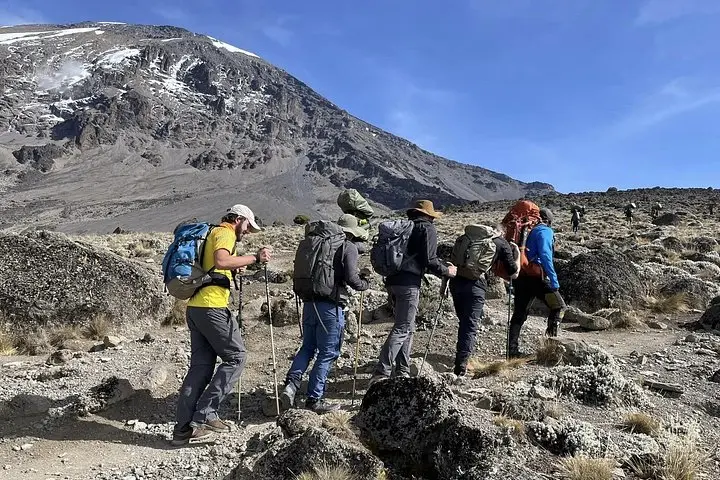
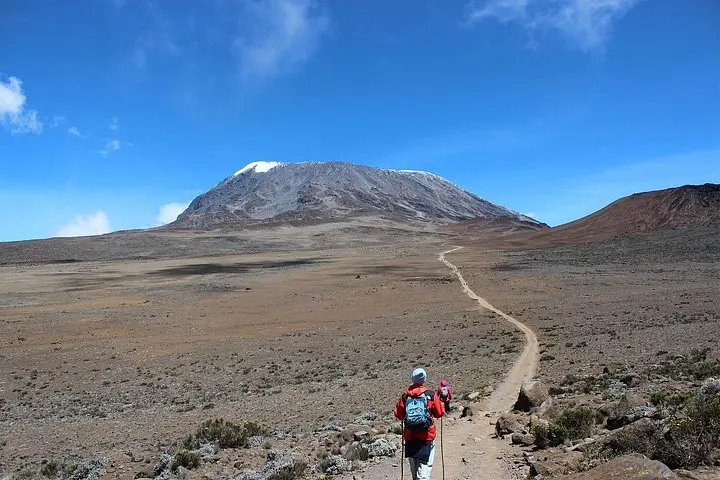
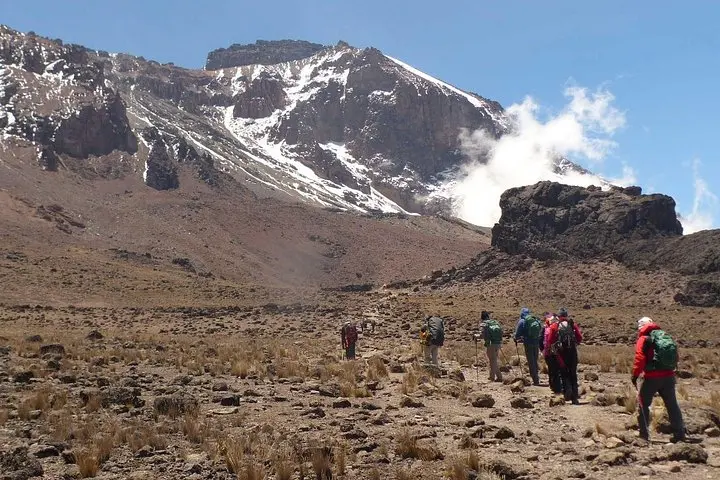
The route reads like a geological and ecological cross-section. You move from montane rainforest alive with blue monkeys and orchids up into heather and moorland, past giant lobelias and groundsels formed for the thin air, across a stark alpine desert saddle, then onto glacial moraine and the crater rim where Gilman’s Point sits before Uhuru Peak at 5,895 meters. The climb is as much a lesson in high‑altitude ecology and East African natural history as it is a physical challenge.
Marangu’s huts—Mandara, Horombo and Kibo—reflect a colonial-era infrastructure adapted for modern trekking: basic bunks, shared mess halls, and the company of experienced Tanzanian guides and porters who carry gear, cook meals, and read the mountain as a local map. Cultural exchanges happen in small ways: the cadence of Swahili greetings at breakfast, the way guides credit the weather to shifting winds coming down from the glacier, and the pride in delivering climbers to the summit.
Practicality shapes the climb. Expect daily ascents of 4–7 hours on varied terrain and a summit day that usually runs 12–16 hours round trip from Kibo Hut. Elevation gain is significant—1,860m at Marangu Gate to 5,895m at Uhuru Peak—so hydration, slow pacing, and the itinerary’s dedicated acclimatization day (Zebra Rocks or Mawenzi Ridge) are the real keys to success. Permits are issued at Marangu Gate and carried as part of your paperwork; rangers check them at stations along the way.
Timing matters: wake for a midnight summit push to reach the crater rim as dawn paints the glaciers; descend steadily afterward to conserve knees and energy. Hut accommodations remove the weight of heavy camping gear, but bring a warm sleeping bag rated for sub‑zero nights and layered clothing for the alpine desert.
This route suits motivated first‑time high‑altitude trekkers who prepare for steep hours and respect acclimatization. The reward is elemental—standing on Uhuru Peak with a view that stretches across the plains toward Kenya, feeling the mountain’s slow, uncompromising presence beneath your boots.
No formal experience is required, but previous multi‑day hikes and cardio training improve comfort and summit odds.
Huts provide shared dormitory bunks and mess halls; expect communal sleeping arrangements and basic facilities.
A Kilimanjaro climbing permit is issued at Marangu Gate by park authorities and must be carried; bring passport details and visa if required.
Acute Mountain Sickness is a real risk; the itinerary’s gradual profile and acclimatization day reduce risk but monitor symptoms and follow guides’ advice.
Tipping is customary for guides and porters—plan a gratuity budget in Tanzanian shillings and tip based on performance and group size.
Guides will prioritize safety; non‑summitters are assisted with descent plans and care—most itineraries include contingency support.
Herbivore African Expeditions operates guided outdoor trips and adventures with an emphasis on safety, stewardship, and memorable experiences.
Dawn at Marangu Gate feels like a soft promise: mist drips from broad-leafed trees, porters stoke tiny fires, and the first steps of a six-day climb to Africa’s roof begin under a dripping rainforest canopy. The Marangu Route, often called the Coca‑Cola Route, is the island of relative comfort on Kilimanjaro — marked trails, communal huts, and a gradual profile that gives your lungs time to adjust while the mountain reveals itself in stages.
Dawn at Marangu Gate feels like a soft promise: mist drips from broad-leafed trees, porters stoke tiny fires, and the first steps of a six-day climb to Africa’s roof begin under a dripping rainforest canopy. The Marangu Route, often called the Coca‑Cola Route, is the island of relative comfort on Kilimanjaro — marked trails, communal huts, and a gradual profile that gives your lungs time to adjust while the mountain reveals itself in stages.
The route reads like a geological and ecological cross-section. You move from montane rainforest alive with blue monkeys and orchids up into heather and moorland, past giant lobelias and groundsels formed for the thin air, across a stark alpine desert saddle, then onto glacial moraine and the crater rim where Gilman’s Point sits before Uhuru Peak at 5,895 meters. The climb is as much a lesson in high‑altitude ecology and East African natural history as it is a physical challenge.
Marangu’s huts—Mandara, Horombo and Kibo—reflect a colonial-era infrastructure adapted for modern trekking: basic bunks, shared mess halls, and the company of experienced Tanzanian guides and porters who carry gear, cook meals, and read the mountain as a local map. Cultural exchanges happen in small ways: the cadence of Swahili greetings at breakfast, the way guides credit the weather to shifting winds coming down from the glacier, and the pride in delivering climbers to the summit.
Practicality shapes the climb. Expect daily ascents of 4–7 hours on varied terrain and a summit day that usually runs 12–16 hours round trip from Kibo Hut. Elevation gain is significant—1,860m at Marangu Gate to 5,895m at Uhuru Peak—so hydration, slow pacing, and the itinerary’s dedicated acclimatization day (Zebra Rocks or Mawenzi Ridge) are the real keys to success. Permits are issued at Marangu Gate and carried as part of your paperwork; rangers check them at stations along the way.
Timing matters: wake for a midnight summit push to reach the crater rim as dawn paints the glaciers; descend steadily afterward to conserve knees and energy. Hut accommodations remove the weight of heavy camping gear, but bring a warm sleeping bag rated for sub‑zero nights and layered clothing for the alpine desert.
This route suits motivated first‑time high‑altitude trekkers who prepare for steep hours and respect acclimatization. The reward is elemental—standing on Uhuru Peak with a view that stretches across the plains toward Kenya, feeling the mountain’s slow, uncompromising presence beneath your boots.