THE ADVENTURE COLLECTIVE® · Independent discovery and booking for outdoor travel

Six days on the Machame route compresses Kilimanjaro’s wild habitats and hard hours into a tight, altitude‑driven ascent. Expect steep days, a midnight summit push, expert guides and unforgettable sunrise from Stella Point.
Six days on the Machame route compresses Kilimanjaro’s wild habitats and hard hours into a tight, altitude‑driven ascent. Expect steep days, a midnight summit push, expert guides and unforgettable sunrise from Stella Point.
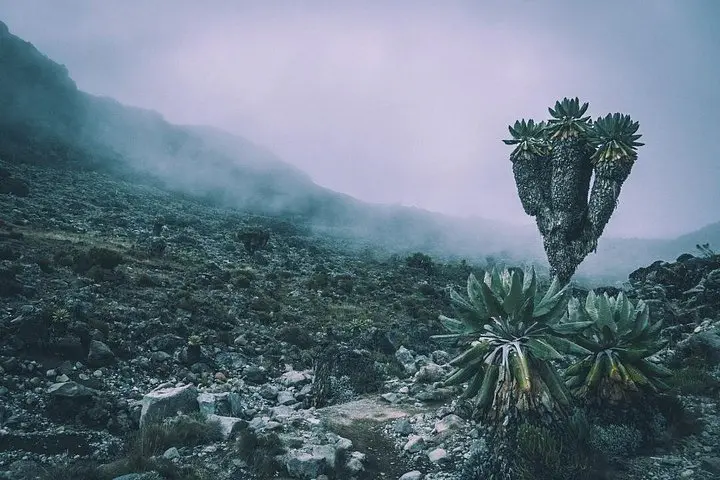
By the time the van turns off the tarmac and onto the red ruts toward Machame Gate, the air has already changed — greener, heavier, tasting faintly of wet earth. On day one you step from forest into an upward path that tightens like a drawn breath; mossy trunks press close, ferns slap your shins, and the trail rises fast from 5,400 ft to 9,400 ft. Over the next six days the mountain will pull you through five distinct habitats — rain forest, moorland, semi‑desert, alpine desert and the final arctic expanse of Kibo — each one taking the pace of your breath and the shape of your steps.
Verified experiences and guided adventures in the surrounding area.
Operated by Moorland Safari and Trekking · Moshi, Kilimanjaro Region
By the time the van turns off the tarmac and onto the red ruts toward Machame Gate, the air has already changed — greener, heavier, tasting faintly of wet earth. On day one you step from forest into an upward path that tightens like a drawn breath; mossy trunks press close, ferns slap your shins, and the trail rises fast from 5,400 ft to 9,400 ft. Over the next six days the mountain will pull you through five distinct habitats — rain forest, moorland, semi‑desert, alpine desert and the final arctic expanse of Kibo — each one taking the pace of your breath and the shape of your steps.
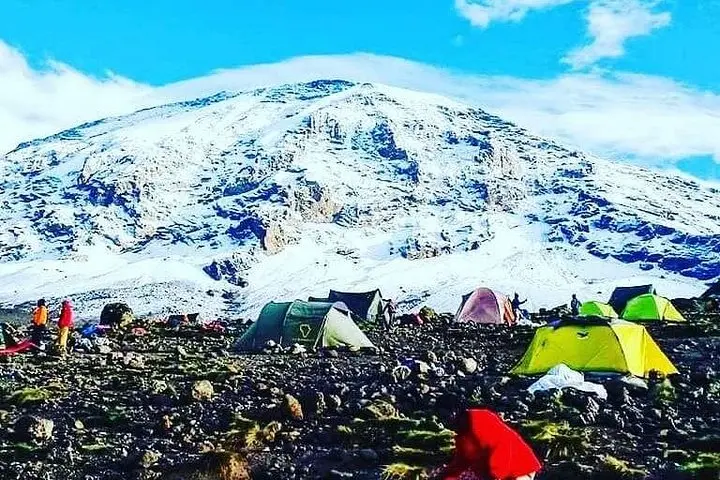
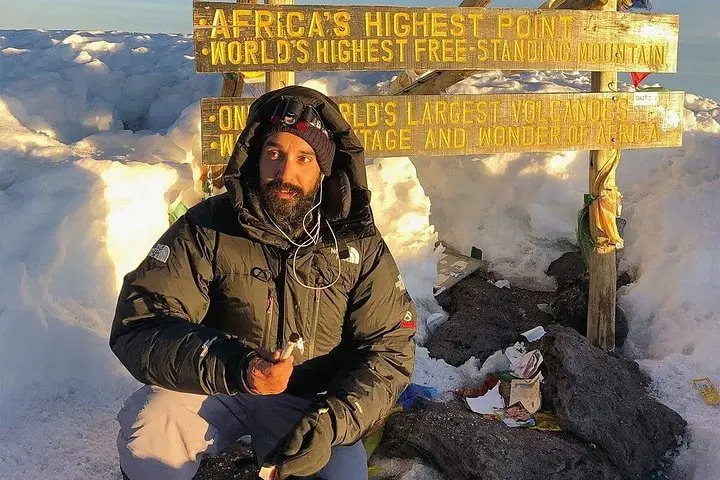
Kilimanjaro is three volcanic cones in a long geological argument: Shira, Mawenzi and Kibo, the sleeping giant crowned by glaciers that have been thinning for a century. The Machame route threads the mountain’s southern flanks, swinging west across the Shira Plateau, looping past the serrated Lava Tower (the “Shark’s Tooth”) for acclimatization, and climbing the iconic Barranco Wall before the long approach to Barafu Camp. The summit — Uhuru Peak at 19,345 ft — sits on Kibo’s crater rim, and on summit morning you’ll climb in the dark, following headlamps through loose scree until the sun breaks over Stella Point.
The Chagga people have farmed the lower slopes for generations; you’ll pass hamlets and coffee terraces on the drive from Moshi, and local guides and porters are the reason multi‑day Kilimanjaro trekking works — they carry tents, cook hot meals, and move the rhythm of the day forward. Conservation efforts on Kilimanjaro focus on protecting fragile alpine vegetation and managing water and waste on busy routes — choose operators who follow park rules and provide proper sanitation.
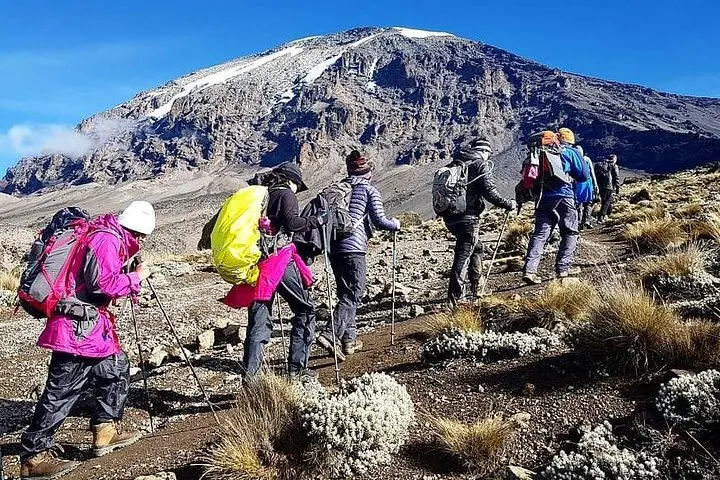
Practically: expect 6 days of trekking with daily elevation changes that peak on day five with a midnight start for a 7–8 hour ascent to the summit and a long descent to Mweka. Distances range from ~5–11 km per day but factor in slow, altitude‑adjusted pace; day four and five are the hardest with 8–10 hour approach days and minimal sleep. Use gaiters and poles for muddy forest and loose gravel downhill, and bring layered clothing for rapid temperature swings. Hydration, slow pacing, and honest self‑assessment of acclimatization trump speed — many groups schedule the Lava Tower day specifically to let the body adapt.
If you have medical conditions, are pregnant, or have spinal issues this itinerary is not suitable. Book with an experienced operator who provides sleeping tents, hot meals, and an organized porter and guide team; tip porters and guides well. With preparation — steady training hikes, layered gear, and respect for altitude — the Machame route is a compact, high‑intensity way to stand on Africa’s roof and watch the continent unfurl below.
Daily hikes vary: expect 4–10 km per day but long duration due to terrain and altitude—typical daily hiking time ranges 4–10 hours.
No technical mountaineering is required—this is high‑altitude trekking, not rock or ice climbing—but you should be comfortable on loose scree and steep slopes.
You start around midnight for a 7–8 hour ascent to Uhuru Peak via Stella Point, then descend 12+ km to Mweka; allow for 19–24 hours of moving with very limited sleep.
Acute Mountain Sickness is possible; the itinerary includes acclimatization stops (Lava Tower, Barranco) but monitor symptoms and inform guides—descending is the primary treatment.
Tour includes camping on the mountain with provided tents and hot meals; operators typically provide sleeping mats but not personal sleeping bags unless specified.
Physically fit beginners can attempt it with proper training and experienced guides, but be realistic about the demanding summit night and high elevations.
Moorland Safari and Trekking operates guided outdoor trips and adventures with an emphasis on safety, stewardship, and memorable experiences.
By the time the van turns off the tarmac and onto the red ruts toward Machame Gate, the air has already changed — greener, heavier, tasting faintly of wet earth. On day one you step from forest into an upward path that tightens like a drawn breath; mossy trunks press close, ferns slap your shins, and the trail rises fast from 5,400 ft to 9,400 ft. Over the next six days the mountain will pull you through five distinct habitats — rain forest, moorland, semi‑desert, alpine desert and the final arctic expanse of Kibo — each one taking the pace of your breath and the shape of your steps.
By the time the van turns off the tarmac and onto the red ruts toward Machame Gate, the air has already changed — greener, heavier, tasting faintly of wet earth. On day one you step from forest into an upward path that tightens like a drawn breath; mossy trunks press close, ferns slap your shins, and the trail rises fast from 5,400 ft to 9,400 ft. Over the next six days the mountain will pull you through five distinct habitats — rain forest, moorland, semi‑desert, alpine desert and the final arctic expanse of Kibo — each one taking the pace of your breath and the shape of your steps.
Kilimanjaro is three volcanic cones in a long geological argument: Shira, Mawenzi and Kibo, the sleeping giant crowned by glaciers that have been thinning for a century. The Machame route threads the mountain’s southern flanks, swinging west across the Shira Plateau, looping past the serrated Lava Tower (the “Shark’s Tooth”) for acclimatization, and climbing the iconic Barranco Wall before the long approach to Barafu Camp. The summit — Uhuru Peak at 19,345 ft — sits on Kibo’s crater rim, and on summit morning you’ll climb in the dark, following headlamps through loose scree until the sun breaks over Stella Point.
The Chagga people have farmed the lower slopes for generations; you’ll pass hamlets and coffee terraces on the drive from Moshi, and local guides and porters are the reason multi‑day Kilimanjaro trekking works — they carry tents, cook hot meals, and move the rhythm of the day forward. Conservation efforts on Kilimanjaro focus on protecting fragile alpine vegetation and managing water and waste on busy routes — choose operators who follow park rules and provide proper sanitation.
Practically: expect 6 days of trekking with daily elevation changes that peak on day five with a midnight start for a 7–8 hour ascent to the summit and a long descent to Mweka. Distances range from ~5–11 km per day but factor in slow, altitude‑adjusted pace; day four and five are the hardest with 8–10 hour approach days and minimal sleep. Use gaiters and poles for muddy forest and loose gravel downhill, and bring layered clothing for rapid temperature swings. Hydration, slow pacing, and honest self‑assessment of acclimatization trump speed — many groups schedule the Lava Tower day specifically to let the body adapt.
If you have medical conditions, are pregnant, or have spinal issues this itinerary is not suitable. Book with an experienced operator who provides sleeping tents, hot meals, and an organized porter and guide team; tip porters and guides well. With preparation — steady training hikes, layered gear, and respect for altitude — the Machame route is a compact, high‑intensity way to stand on Africa’s roof and watch the continent unfurl below.