THE ADVENTURE COLLECTIVE® · Independent discovery and booking for outdoor travel

Move from steaming rainforest to wind-burned, high-altitude desert on the Machame Route — a 6-day private climb that stages acclimatization for the best shot at Uhuru Peak. This guide lays out what you'll see, technical demands, and the practical prep that matters.
Move from steaming rainforest to wind-burned, high-altitude desert on the Machame Route — a 6-day private climb that stages acclimatization for the best shot at Uhuru Peak. This guide lays out what you'll see, technical demands, and the practical prep that matters.
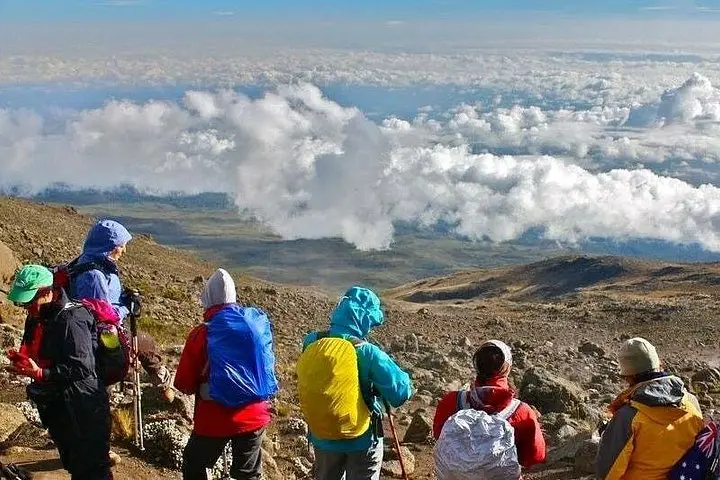
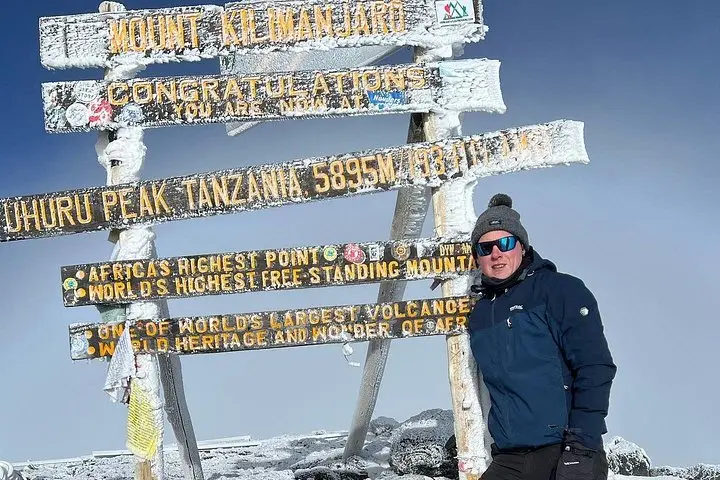
Night on Kilimanjaro has a different gravity. You step out of a lowland Moshi hotel into a crisp pre-dawn hush and the mountain already feels like a living thing: fog fingers the forest below, wind testing the tents higher on the ridge, and the trail ahead narrows into a worn ribbon underfoot. The Machame Route—known locally as the Whisky Route—pulls you up through dense rainforest into wind-swept moorland, across the Shira Plateau, and beneath the ragged ice of Kibo before the final push to Uhuru Peak at 5,895 m.
Verified experiences and guided adventures in the surrounding area.
Operated by furahia Africa · Moshi, Kilimanjaro Region
Night on Kilimanjaro has a different gravity. You step out of a lowland Moshi hotel into a crisp pre-dawn hush and the mountain already feels like a living thing: fog fingers the forest below, wind testing the tents higher on the ridge, and the trail ahead narrows into a worn ribbon underfoot. The Machame Route—known locally as the Whisky Route—pulls you up through dense rainforest into wind-swept moorland, across the Shira Plateau, and beneath the ragged ice of Kibo before the final push to Uhuru Peak at 5,895 m.
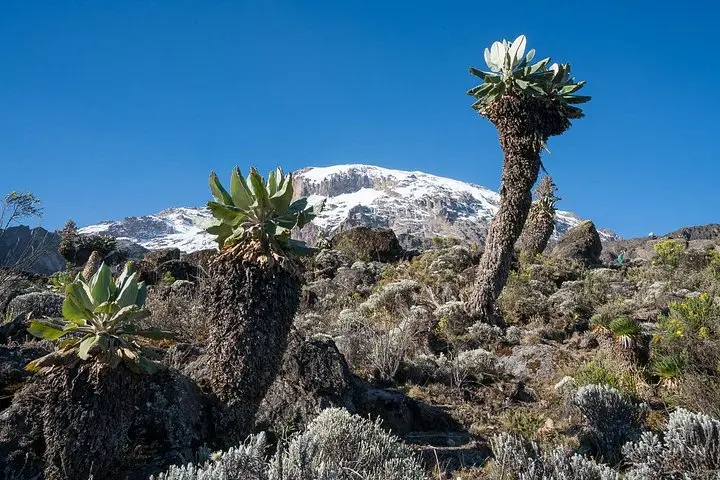
The route reads like a geological field trip. Kilimanjaro is a stratovolcano built from successive eruptions; the lower slopes hold rich volcanic soils that support Afromontane forest, then give way to Erica heaths and alpine desert. The Machame path traverses that vertical ecology in roughly 60 km over six days with a cumulative climb of about 4,250 m. You’ll gain big chunks of elevation most days—expect 800–1,200 m climbs—so the itinerary stages acclimatization deliberately: a lava tower at 4,650 m, a rest day feel on the Shira Plateau, and an acclimatizing descent on day three.
Culture and crew are part of the summit story. The Chagga people have long worked these slopes and modern climbing relies on local guides, cooks, and porters—teams whose skill can make or break a summit. Historically, Kilimanjaro drew explorers in the 19th century and was first fully climbed in 1889; today it’s protected as Kilimanjaro National Park, which regulates routes and fees.
Practical edge: treat this as a high-altitude trek, not a hike. Day 5 starts between midnight and 2 a.m. for the summit attempt; expect a steep, slow night ascent through scree to Stella Point then the final hour to Uhuru across possible snow. Footing changes from muddy rainforest trails to loose volcanic scree and icy rock near the top. Bring gaiters, trekking poles, layered insulation, and a 4-season sleeping bag. Hydration, slow pace, and the guide’s acclimatization plan are your most important tools.
The operator includes park fees, meals, experienced guides, porters, tents, and two nights hotel transfer in Moshi. Health restrictions apply: not recommended for pregnant travelers or those with serious cardiovascular issues, and a moderate to good fitness base is required. After the summit, the descent to Mweka Gate is steep and muddy—celebration at the hotel in Moshi is well-earned.
If you go, honor the mountain by packing out waste, tipping crew fairly, and booking operators who invest in porter welfare and park conservation. The glaciers may be retreating, but respectful, well-managed trips give Kilimanjaro a better chance to endure.
Machame is considered scenic and moderately steep with good acclimatization profile; it’s more strenuous than Marangu but has higher summit success than shorter routes because of better acclimatization.
No technical climbing skills or gear are required—the route is a non-technical trek though ice and snow near the summit warrant warm clothing and microspikes if conditions demand.
This tour includes park fees, meals on trek (breakfast/lunch/dinner), professional guides, porters, tents, two nights hotel (pre/post), and airport transfer as listed by the operator.
Acute mountain sickness is the primary risk; follow guide instructions, maintain hydration, slow pace, and report symptoms early—descent is the most effective treatment.
Dry seasons from late June–October and January–February offer the most stable weather and clearer summit windows.
Summit night can be 6–9 hours from Barafu to Uhuru and back to Mweka descent; it’s cold, slow, and strenuous with extended periods of steep scree and potential snow.
furahia Africa operates guided outdoor trips and adventures with an emphasis on safety, stewardship, and memorable experiences.
Night on Kilimanjaro has a different gravity. You step out of a lowland Moshi hotel into a crisp pre-dawn hush and the mountain already feels like a living thing: fog fingers the forest below, wind testing the tents higher on the ridge, and the trail ahead narrows into a worn ribbon underfoot. The Machame Route—known locally as the Whisky Route—pulls you up through dense rainforest into wind-swept moorland, across the Shira Plateau, and beneath the ragged ice of Kibo before the final push to Uhuru Peak at 5,895 m.
Night on Kilimanjaro has a different gravity. You step out of a lowland Moshi hotel into a crisp pre-dawn hush and the mountain already feels like a living thing: fog fingers the forest below, wind testing the tents higher on the ridge, and the trail ahead narrows into a worn ribbon underfoot. The Machame Route—known locally as the Whisky Route—pulls you up through dense rainforest into wind-swept moorland, across the Shira Plateau, and beneath the ragged ice of Kibo before the final push to Uhuru Peak at 5,895 m.
The route reads like a geological field trip. Kilimanjaro is a stratovolcano built from successive eruptions; the lower slopes hold rich volcanic soils that support Afromontane forest, then give way to Erica heaths and alpine desert. The Machame path traverses that vertical ecology in roughly 60 km over six days with a cumulative climb of about 4,250 m. You’ll gain big chunks of elevation most days—expect 800–1,200 m climbs—so the itinerary stages acclimatization deliberately: a lava tower at 4,650 m, a rest day feel on the Shira Plateau, and an acclimatizing descent on day three.
Culture and crew are part of the summit story. The Chagga people have long worked these slopes and modern climbing relies on local guides, cooks, and porters—teams whose skill can make or break a summit. Historically, Kilimanjaro drew explorers in the 19th century and was first fully climbed in 1889; today it’s protected as Kilimanjaro National Park, which regulates routes and fees.
Practical edge: treat this as a high-altitude trek, not a hike. Day 5 starts between midnight and 2 a.m. for the summit attempt; expect a steep, slow night ascent through scree to Stella Point then the final hour to Uhuru across possible snow. Footing changes from muddy rainforest trails to loose volcanic scree and icy rock near the top. Bring gaiters, trekking poles, layered insulation, and a 4-season sleeping bag. Hydration, slow pace, and the guide’s acclimatization plan are your most important tools.
The operator includes park fees, meals, experienced guides, porters, tents, and two nights hotel transfer in Moshi. Health restrictions apply: not recommended for pregnant travelers or those with serious cardiovascular issues, and a moderate to good fitness base is required. After the summit, the descent to Mweka Gate is steep and muddy—celebration at the hotel in Moshi is well-earned.
If you go, honor the mountain by packing out waste, tipping crew fairly, and booking operators who invest in porter welfare and park conservation. The glaciers may be retreating, but respectful, well-managed trips give Kilimanjaro a better chance to endure.