THE ADVENTURE COLLECTIVE® · Independent discovery and booking for outdoor travel

Ascend Kilimanjaro on the classic Marangu Route: hut-to-hut nights, high desert walking and a midnight summit push to Uhuru Peak. This six-day itinerary balances acclimatization and a social hut experience with a direct approach to the summit.
Ascend Kilimanjaro on the classic Marangu Route: hut-to-hut nights, high desert walking and a midnight summit push to Uhuru Peak. This six-day itinerary balances acclimatization and a social hut experience with a direct approach to the summit.
You step out of the vehicle before dawn and the road to Marangu Gate slips into wet, green forest; mist tangles in the branches and the trail immediately narrows. The first day climbs from montane forest into heather and moorland, where giant lobelias and groundsel lean into the wind and Kibo’s icy crown becomes a distant, growing presence.
Verified experiences and guided adventures in the surrounding area.
Operated by Kanje grand tours · Arusha, Kilimanjaro Region
You step out of the vehicle before dawn and the road to Marangu Gate slips into wet, green forest; mist tangles in the branches and the trail immediately narrows. The first day climbs from montane forest into heather and moorland, where giant lobelias and groundsel lean into the wind and Kibo’s icy crown becomes a distant, growing presence.
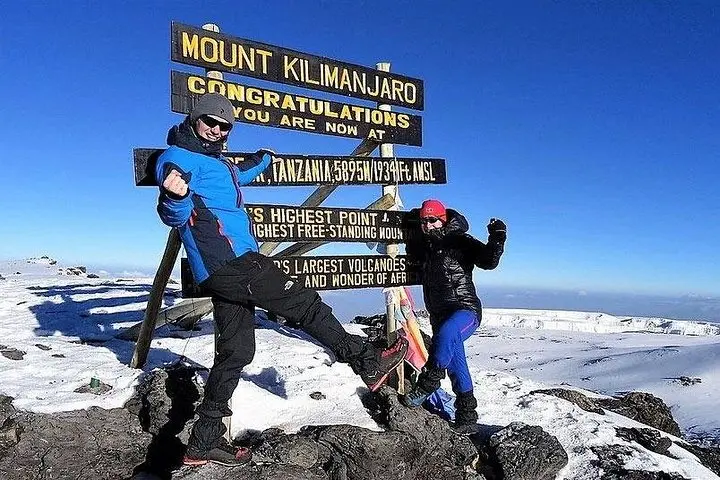
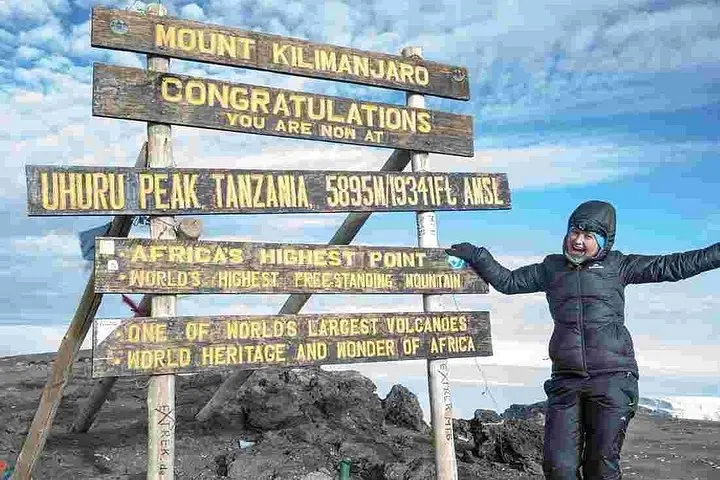
Kilimanjaro is a three-coned stratovolcano—Shira, Mawenzi and Kibo—whose summit (Uhuru Peak, 5,895 m/19,341 ft) still bears remnant glaciers. The Marangu route is the original “Coca-Cola” trail popularized by early explorers and the nearby Chagga communities, who long managed coffee and caravan paths on the lower slopes. Huts at Mandara, Horombo and Kibo offer communal bunks, basic latrines and solar lights; the social dining huts are a cultural touchpoint where guides and climbers trade stories after long days.
Expect steady altitude gain: Day 1 ~5 miles to ~8,858 ft, Day 2 ~7 miles to ~12,205 ft, an acclimatization day with short walks, a push to Kibo Hut at ~15,430 ft, then the midnight summit bid to Uhuru Peak before a long descent back to Marangu Gate. Weather shifts quickly—moist forest, windswept alpine desert and freezing summit nights—so layer and pace for altitude, not speed.
Practical essentials: register at the park gate, bring a warm down jacket, reliable boots and a hydration system, respect the hut etiquette and listen to your guide on pacing and AMS protocols. The trip rewards persistence with a sunrise that makes the summit feel earned rather than given.
No technical mountaineering skills are required on the Marangu route—this is a non-technical trek—but you must be prepared for high-altitude conditions and long days.
The clearest windows are June–October and late December–February; March–May and November face higher rainfall and muddier trails.
Huts are communal with bunk beds, sponge mattresses and basic latrines; running water is available at lower huts but becomes limited higher on the mountain.
Permits are required and usually included when booked through an operator—confirm that Kilimanjaro National Park fees, rescue insurance and guide services are covered before you book.
Kanje grand tours operates guided outdoor trips and adventures with an emphasis on safety, stewardship, and memorable experiences.
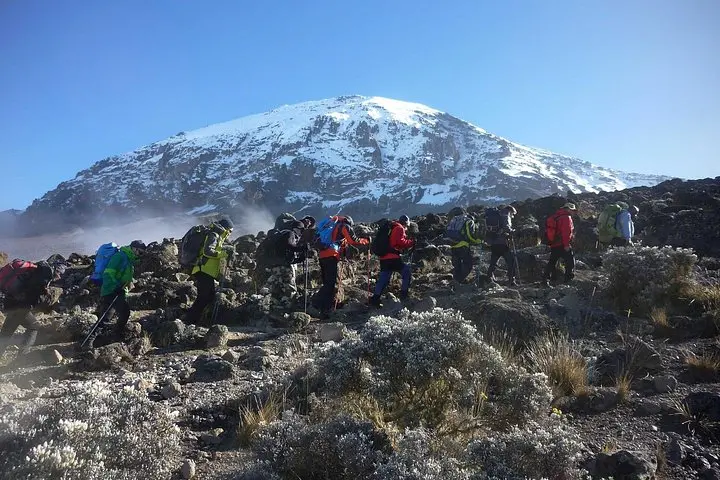
You step out of the vehicle before dawn and the road to Marangu Gate slips into wet, green forest; mist tangles in the branches and the trail immediately narrows. The first day climbs from montane forest into heather and moorland, where giant lobelias and groundsel lean into the wind and Kibo’s icy crown becomes a distant, growing presence.
You step out of the vehicle before dawn and the road to Marangu Gate slips into wet, green forest; mist tangles in the branches and the trail immediately narrows. The first day climbs from montane forest into heather and moorland, where giant lobelias and groundsel lean into the wind and Kibo’s icy crown becomes a distant, growing presence.
Kilimanjaro is a three-coned stratovolcano—Shira, Mawenzi and Kibo—whose summit (Uhuru Peak, 5,895 m/19,341 ft) still bears remnant glaciers. The Marangu route is the original “Coca-Cola” trail popularized by early explorers and the nearby Chagga communities, who long managed coffee and caravan paths on the lower slopes. Huts at Mandara, Horombo and Kibo offer communal bunks, basic latrines and solar lights; the social dining huts are a cultural touchpoint where guides and climbers trade stories after long days.
Expect steady altitude gain: Day 1 ~5 miles to ~8,858 ft, Day 2 ~7 miles to ~12,205 ft, an acclimatization day with short walks, a push to Kibo Hut at ~15,430 ft, then the midnight summit bid to Uhuru Peak before a long descent back to Marangu Gate. Weather shifts quickly—moist forest, windswept alpine desert and freezing summit nights—so layer and pace for altitude, not speed.
Practical essentials: register at the park gate, bring a warm down jacket, reliable boots and a hydration system, respect the hut etiquette and listen to your guide on pacing and AMS protocols. The trip rewards persistence with a sunrise that makes the summit feel earned rather than given.