THE ADVENTURE COLLECTIVE® · Independent discovery and booking for outdoor travel

Six days on the Marangu route offers hut-to-hut comfort and a high success rate for Kilimanjaro summits—rainforest walks, acclimatization at Zebra Rocks, and a grueling summit night to Uhuru Peak. Read on for what to expect, practical prep and key terrain notes.
Six days on the Marangu route offers hut-to-hut comfort and a high success rate for Kilimanjaro summits—rainforest walks, acclimatization at Zebra Rocks, and a grueling summit night to Uhuru Peak. Read on for what to expect, practical prep and key terrain notes.
The headlamp haloed a corridor of steaming breath as the crew packed oxygen bottles and last-minute layers. Above us, the black rim of Kibo was a faint promise; below, the lantern-lit huts on the Marangu route looked like constellations for a climbing village. On day one the trail takes you into a wet, green world—trees close in, leaves slap at your gait and the mountain seems to breathe with you. By day four the rainforest gives way to a brittle alpine desert that dares you forward; on summit night the wind has a voice, nudging you step by slow step toward Uhuru Peak.
Verified experiences and guided adventures in the surrounding area.
Operated by Tupae Adventures · Moshi, Kilimanjaro Region
The headlamp haloed a corridor of steaming breath as the crew packed oxygen bottles and last-minute layers. Above us, the black rim of Kibo was a faint promise; below, the lantern-lit huts on the Marangu route looked like constellations for a climbing village. On day one the trail takes you into a wet, green world—trees close in, leaves slap at your gait and the mountain seems to breathe with you. By day four the rainforest gives way to a brittle alpine desert that dares you forward; on summit night the wind has a voice, nudging you step by slow step toward Uhuru Peak.
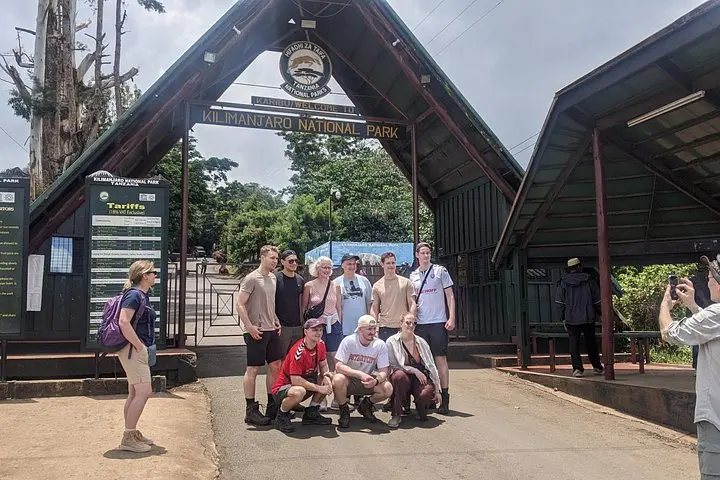
The Marangu route is Kilimanjaro’s oldest established path and the only hut-to-hut option, trading tents for communal dormitories and flush toilets powered by solar. Geologically, Kilimanjaro is a stratovolcano with three peaks—Shira, Mawenzi and Kibo—whose weathered slopes move from tropical rainforest through heath and moorland to alpine desert and the arctic summit. Culturally the mountain sits in Chagga country; villages on the lower slopes farm bananas and coffee, and porters and guides bring practical mountain knowledge passed down in generations.
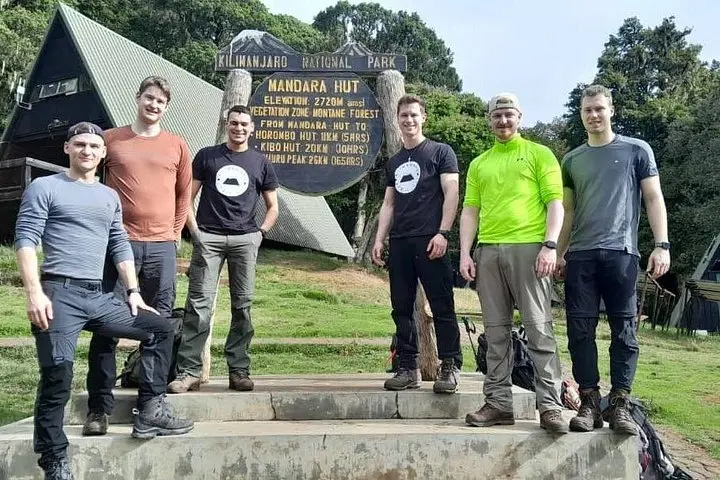
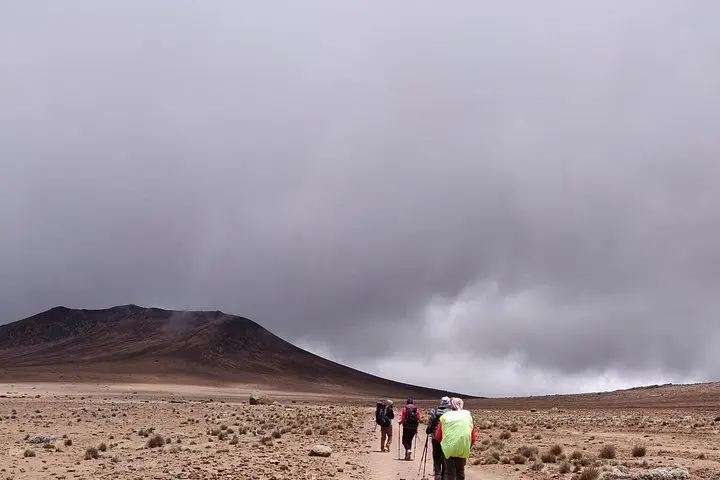
This 6‑day itinerary emphasizes acclimatization: Mandara Hut (2,700 m) to Horombo (3,720 m), a summit correction day to Zebra Rocks (~4,020 m), then on to Kibo Hut (4,720 m) and the late-night push to Uhuru Peak (5,895 m). Expect daily distances of 5–19 km and elevation gains of up to 1,175 m on summit day, with long descents that test knees and morale. Terrain shifts from mud-slick rainforest tracks and root ladders to tussock, loose volcanic scree and hard, wind-exposed ridgelines where the air is thin and the cold is insistent.
Practical edge: the climb is non-technical but high-altitude. Success hinges on pacing, hydration, and sleep. Eat steadily, sip frequently (aim 3–4 liters/day higher up), and use your acclimatization day fully—Zebra Rocks is where your body practices thin air while you still have a warm hut to return to. Dress in layers: the rainforest can be warm and wet by day, while summit night requires an expedition-level down jacket, insulated gloves and a warm hat. Footwear should be broken-in, with solid ankle support; trekking poles save knees on descents.
Logistics note: huts provide basic beds, solar lights and shared facilities; the Marangu route’s communal nature is sociable but means limited privacy. Respect porter welfare—pack light, tip fairly—and carry a small personal first-aid kit for blisters and altitude symptoms. If you prioritize higher summit probability with creature comforts, a 6-day Marangu schedule balances acclimatization with a realistic summit window. The mountain will test your lungs and patience, and if you listen—pace by slow, steady breath—you’ll find Uhuru Peak rewards persistence with a sunrise that feels earned rather than given.
No—Marangu is a non-technical trekking route that uses walking paths and dormitory huts; however, high-altitude fitness and acclimatization are essential.
Huts are basic dormitories with solar lighting, shared flush toilets and mattresses; bring warm sleeping layers and earplugs for communal spaces.
Six days on Marangu offers a relatively high success rate due to the built-in acclimatization day, but individual success depends on fitness, pacing and altitude response.
Check routine vaccinations and consult a travel clinic about altitude illness prevention; carry a basic first‑aid kit and any personal meds.
Porters typically carry up to the recommended weight limit (often 15–20 kg)—pack light and follow operator guidelines to support fair working conditions.
Dry seasons—January–March and June–October—offer more stable weather and clearer summit nights, improving summit chances.
Tupae Adventures operates guided outdoor trips and adventures with an emphasis on safety, stewardship, and memorable experiences.

The headlamp haloed a corridor of steaming breath as the crew packed oxygen bottles and last-minute layers. Above us, the black rim of Kibo was a faint promise; below, the lantern-lit huts on the Marangu route looked like constellations for a climbing village. On day one the trail takes you into a wet, green world—trees close in, leaves slap at your gait and the mountain seems to breathe with you. By day four the rainforest gives way to a brittle alpine desert that dares you forward; on summit night the wind has a voice, nudging you step by slow step toward Uhuru Peak.
The headlamp haloed a corridor of steaming breath as the crew packed oxygen bottles and last-minute layers. Above us, the black rim of Kibo was a faint promise; below, the lantern-lit huts on the Marangu route looked like constellations for a climbing village. On day one the trail takes you into a wet, green world—trees close in, leaves slap at your gait and the mountain seems to breathe with you. By day four the rainforest gives way to a brittle alpine desert that dares you forward; on summit night the wind has a voice, nudging you step by slow step toward Uhuru Peak.
The Marangu route is Kilimanjaro’s oldest established path and the only hut-to-hut option, trading tents for communal dormitories and flush toilets powered by solar. Geologically, Kilimanjaro is a stratovolcano with three peaks—Shira, Mawenzi and Kibo—whose weathered slopes move from tropical rainforest through heath and moorland to alpine desert and the arctic summit. Culturally the mountain sits in Chagga country; villages on the lower slopes farm bananas and coffee, and porters and guides bring practical mountain knowledge passed down in generations.
This 6‑day itinerary emphasizes acclimatization: Mandara Hut (2,700 m) to Horombo (3,720 m), a summit correction day to Zebra Rocks (~4,020 m), then on to Kibo Hut (4,720 m) and the late-night push to Uhuru Peak (5,895 m). Expect daily distances of 5–19 km and elevation gains of up to 1,175 m on summit day, with long descents that test knees and morale. Terrain shifts from mud-slick rainforest tracks and root ladders to tussock, loose volcanic scree and hard, wind-exposed ridgelines where the air is thin and the cold is insistent.
Practical edge: the climb is non-technical but high-altitude. Success hinges on pacing, hydration, and sleep. Eat steadily, sip frequently (aim 3–4 liters/day higher up), and use your acclimatization day fully—Zebra Rocks is where your body practices thin air while you still have a warm hut to return to. Dress in layers: the rainforest can be warm and wet by day, while summit night requires an expedition-level down jacket, insulated gloves and a warm hat. Footwear should be broken-in, with solid ankle support; trekking poles save knees on descents.
Logistics note: huts provide basic beds, solar lights and shared facilities; the Marangu route’s communal nature is sociable but means limited privacy. Respect porter welfare—pack light, tip fairly—and carry a small personal first-aid kit for blisters and altitude symptoms. If you prioritize higher summit probability with creature comforts, a 6-day Marangu schedule balances acclimatization with a realistic summit window. The mountain will test your lungs and patience, and if you listen—pace by slow, steady breath—you’ll find Uhuru Peak rewards persistence with a sunrise that feels earned rather than given.