THE ADVENTURE COLLECTIVE® · Independent discovery and booking for outdoor travel

A six-day ascent of Kilimanjaro via the historic Marangu Route that balances hut comfort with a serious summit push. Expect rainforest days, high-moorland traverses and a demanding midnight ascent to Uhuru Peak.
A six-day ascent of Kilimanjaro via the historic Marangu Route that balances hut comfort with a serious summit push. Expect rainforest days, high-moorland traverses and a demanding midnight ascent to Uhuru Peak.
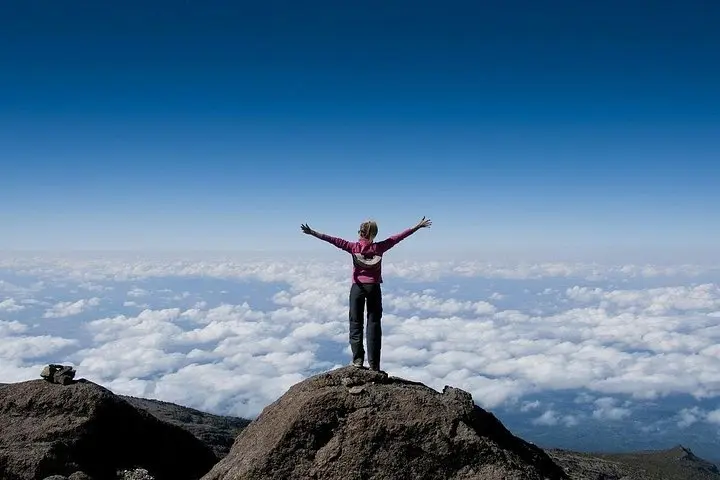
The first light slips over the crater rim and the cold bites like a question—one that the trail up Kilimanjaro answers with steep switchbacks, burnt-orange scree and a slow, stubborn push toward the sky. On the Marangu Route, hikers leave the humid, primate-haunted rainforest at Marangu Gate and climb through heather and moor to huts that have been sheltering climbers for generations. By midnight on summit night the mountain becomes a string of headlamps, a slow-motion parade up a volcanic slope where every step brings thinner air and a widening view.
Verified experiences and guided adventures in the surrounding area.
Operated by Intrepid Explorer Tanzania · Moshi, Kilimanjaro Region
The first light slips over the crater rim and the cold bites like a question—one that the trail up Kilimanjaro answers with steep switchbacks, burnt-orange scree and a slow, stubborn push toward the sky. On the Marangu Route, hikers leave the humid, primate-haunted rainforest at Marangu Gate and climb through heather and moor to huts that have been sheltering climbers for generations. By midnight on summit night the mountain becomes a string of headlamps, a slow-motion parade up a volcanic slope where every step brings thinner air and a widening view.
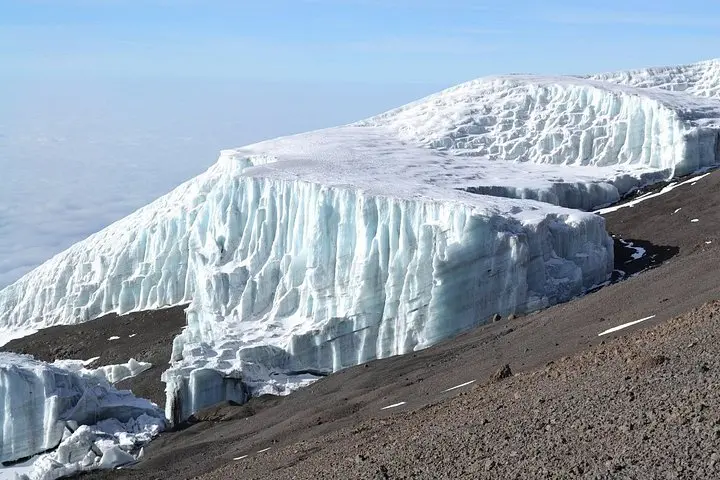
Marangu is the oldest established route on Kilimanjaro and long viewed as the most straightforward—so much so it earned the nickname the "Coca-Cola Route." It was among the first tracks used by the earliest European expeditions in the late 19th century; today the trail crosses distinct geological zones, from ancient montane forest rooted in volcanic soils to the jagged, ice-lined rim of Kibo. Local Chagga culture is never far off: porters, cooks and guides are mostly from communities on the southern flanks, and villages around Moshi have supplied mountain services for decades.
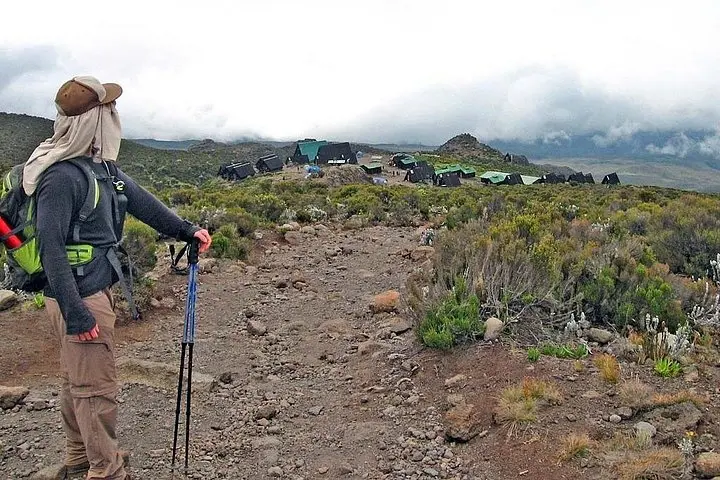
The itinerary moves deliberately: day one’s 5–6 hour stroll to Mandara Hut allows eyes to adjust to the forest canopy and to spot blue monkeys in the trees, while the long push to Horombo and then Kibo opens onto a high moorland painted with giant groundsels and lobelias. The summit day is long—expect 12–15 hours round trip from Kibo Hut to Uhuru Peak and back—and it requires mental pacing as much as physical endurance.
Practical guidance matters here. Hydration and steady calories win more summits than speed; carry and sip at least 3 liters per day and eat small, frequent snacks. Footwear should be a sturdy, broken-in pair of waterproof boots with good ankle support; the alpine desert above 4,500m is loose and deceptively steep. Acclimatization is non-negotiable—this itinerary intentionally includes an extra day at Horombo to help your body adjust. Bring a reliable headlamp and spare batteries for the midnight ascent, and layer aggressively: temperatures swing from sweaty in the forest to well below freezing on the rim.
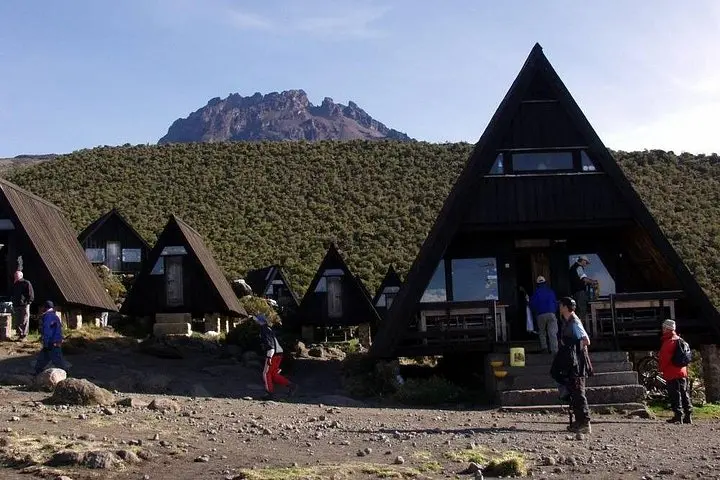
Logistics are straightforward but deserve attention: Marangu offers hut-style dormitories on the lower camps and tented or hut options higher up; the tour includes guides, porters, cooked meals, park fees and emergency oxygen. Respect the mountain—pack out what you bring, stay with your guide, and avoid unnecessary sprinting on summit night. When the sun finally floods the crater at Gillman’s Point and Uhuru Peak rises into color, the long, methodical effort of the Marangu Route pays off with one of Africa’s most elemental mornings.
No—Marangu is a non-technical trekking route; crampons or ropes are not needed, though warm clothing and hiking poles are essential.
Summit is the longest and hardest day—expect 12–15 hours including both ascent from Kibo and descent to Horombo; steady pacing is crucial.
Physically fit beginners can attempt it with proper acclimatization and guided support, but prior multi-day hiking experience is strongly recommended.
No special climbing permit beyond Kilimanjaro National Park fees, but ensure routine vaccinations are up to date and check visa requirements for Tanzania.
Huts offer dormitory-style sleeping with mattresses; they are not heated—bring a warm sleeping bag rated to at least -10°C for high camps.
Guides monitor symptoms and carry emergency oxygen; descent is the primary treatment—communicate symptoms early and follow guide advice.
Intrepid Explorer Tanzania operates guided outdoor trips and adventures with an emphasis on safety, stewardship, and memorable experiences.
The first light slips over the crater rim and the cold bites like a question—one that the trail up Kilimanjaro answers with steep switchbacks, burnt-orange scree and a slow, stubborn push toward the sky. On the Marangu Route, hikers leave the humid, primate-haunted rainforest at Marangu Gate and climb through heather and moor to huts that have been sheltering climbers for generations. By midnight on summit night the mountain becomes a string of headlamps, a slow-motion parade up a volcanic slope where every step brings thinner air and a widening view.
The first light slips over the crater rim and the cold bites like a question—one that the trail up Kilimanjaro answers with steep switchbacks, burnt-orange scree and a slow, stubborn push toward the sky. On the Marangu Route, hikers leave the humid, primate-haunted rainforest at Marangu Gate and climb through heather and moor to huts that have been sheltering climbers for generations. By midnight on summit night the mountain becomes a string of headlamps, a slow-motion parade up a volcanic slope where every step brings thinner air and a widening view.
Marangu is the oldest established route on Kilimanjaro and long viewed as the most straightforward—so much so it earned the nickname the "Coca-Cola Route." It was among the first tracks used by the earliest European expeditions in the late 19th century; today the trail crosses distinct geological zones, from ancient montane forest rooted in volcanic soils to the jagged, ice-lined rim of Kibo. Local Chagga culture is never far off: porters, cooks and guides are mostly from communities on the southern flanks, and villages around Moshi have supplied mountain services for decades.
The itinerary moves deliberately: day one’s 5–6 hour stroll to Mandara Hut allows eyes to adjust to the forest canopy and to spot blue monkeys in the trees, while the long push to Horombo and then Kibo opens onto a high moorland painted with giant groundsels and lobelias. The summit day is long—expect 12–15 hours round trip from Kibo Hut to Uhuru Peak and back—and it requires mental pacing as much as physical endurance.
Practical guidance matters here. Hydration and steady calories win more summits than speed; carry and sip at least 3 liters per day and eat small, frequent snacks. Footwear should be a sturdy, broken-in pair of waterproof boots with good ankle support; the alpine desert above 4,500m is loose and deceptively steep. Acclimatization is non-negotiable—this itinerary intentionally includes an extra day at Horombo to help your body adjust. Bring a reliable headlamp and spare batteries for the midnight ascent, and layer aggressively: temperatures swing from sweaty in the forest to well below freezing on the rim.
Logistics are straightforward but deserve attention: Marangu offers hut-style dormitories on the lower camps and tented or hut options higher up; the tour includes guides, porters, cooked meals, park fees and emergency oxygen. Respect the mountain—pack out what you bring, stay with your guide, and avoid unnecessary sprinting on summit night. When the sun finally floods the crater at Gillman’s Point and Uhuru Peak rises into color, the long, methodical effort of the Marangu Route pays off with one of Africa’s most elemental mornings.