THE ADVENTURE COLLECTIVE® · Independent discovery and booking for outdoor travel

Trace a six-day ascent from rainforest to the roof of Africa along the Marangu Route. This hut-to-hut trek balances social huts and steady gradients with an unforgiving summit push where altitude is the true test.
Trace a six-day ascent from rainforest to the roof of Africa along the Marangu Route. This hut-to-hut trek balances social huts and steady gradients with an unforgiving summit push where altitude is the true test.
Dawn on the lower slopes of Kilimanjaro smells of damp earth and tea bushes; the trail slips between giant ferns and moss-draped trees as porters and guides sort gear for the climb ahead.
Verified experiences and guided adventures in the surrounding area.
Operated by Kilinge Adventures · Moshi, Kilimanjaro Region
Dawn on the lower slopes of Kilimanjaro smells of damp earth and tea bushes; the trail slips between giant ferns and moss-draped trees as porters and guides sort gear for the climb ahead.
Over six days on the Marangu Route you travel from the rainforest at 1,800 m to the crater rim at nearly 5,700 m and finally Uhuru Peak at 5,895 m — a cumulative elevation gain of roughly 4,100 m. The route’s A-frame huts and gradual switchbacks make it popular: rainforest gives way to heath and moorland, then to the stark alpine desert of the Saddle before the icy, lunar crater rim.
Kilimanjaro’s geology is a composite of volcanic cones — Kibo, Mawenzi and Shira — built over a hotspot; glaciers once crowned the summit and still sculpt the crater rim. The route skirts sites important to Chagga culture, whose farms and terraced slopes step down toward Moshi, and the Maundi Crater viewpoint offers clear sightlines to Mawenzi on good days.
Practical edge: altitude, not technicality, is the chief challenge. Expect daily hikes of 4–8 hours, an overnight in mountain huts, and a midnight summit push that can take 6–8 hours round-trip from Kibo Hut to Uhuru and back to Horombo. Hydrate, pace your breathing on steep sections, and layer for rapidly dropping temperatures above 4,000 m. Sturdy waterproof boots, a warm down layer, headlamp and trekking poles are smart investments.
Logistics: most groups base in Moshi or Arusha, use guided operators for park permits and hut bookings, and plan buffer days before/after the climb for travel and acclimatization. Respect porter welfare and follow Leave No Trace practices on fragile high alpine terrain.
No technical climbing skills are required; the route is a strenuous hike. Prior multi-day trekking experience and good fitness improve your summit odds.
Marangu huts provide beds with mattresses and communal dining shelters but no consistent heating; layers and a warm sleeping bag are essential.
The summit reaches 5,895 m; the midnight push usually takes 6–8 hours to reach Uhuru Peak from Kibo Hut and 6–7 hours to descend to Horombo Hut.
You must have Kilimanjaro National Park permits and passport identification; guided operators typically handle bookings and porter allocations.
Kilinge Adventures operates guided outdoor trips and adventures with an emphasis on safety, stewardship, and memorable experiences.
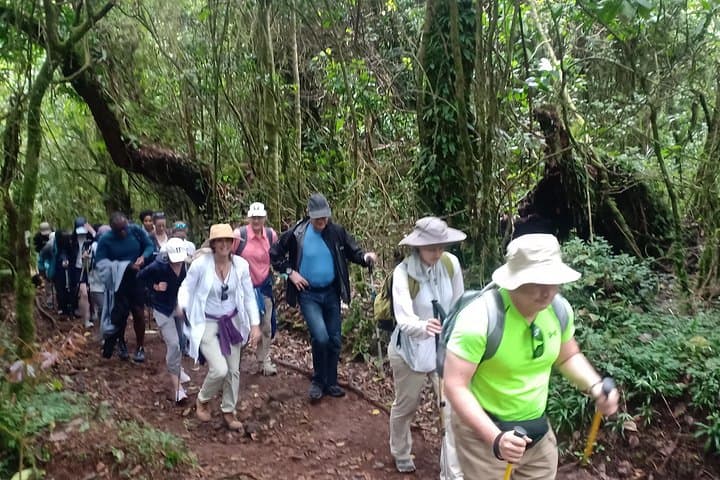
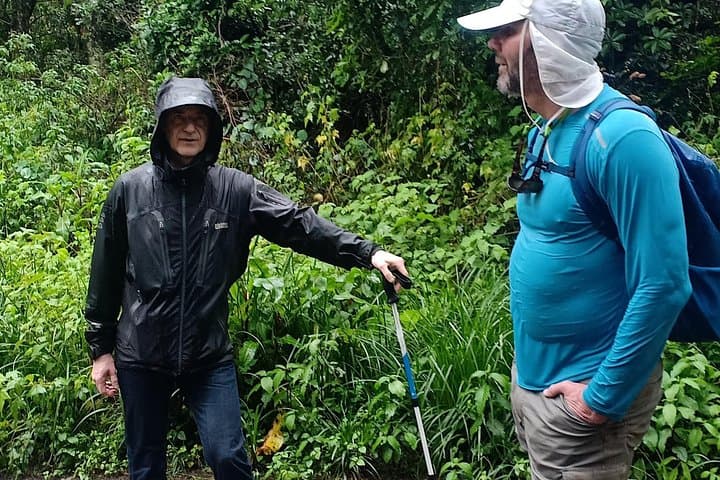
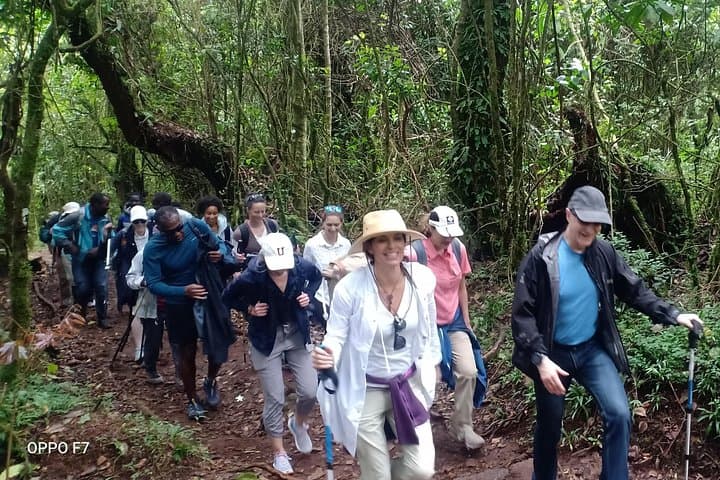
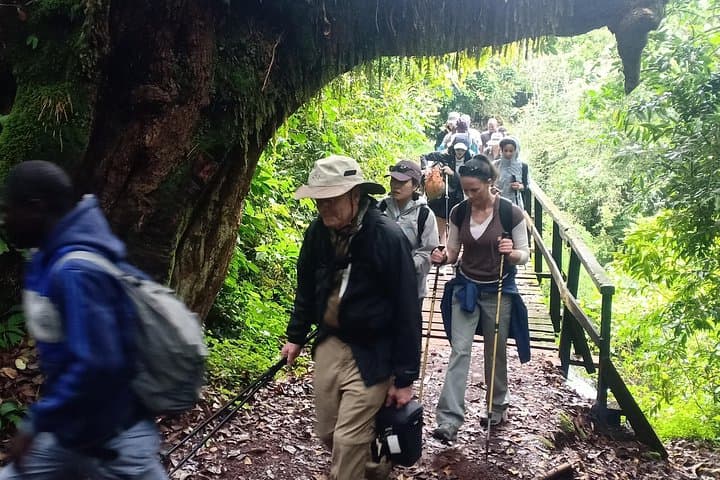
Dawn on the lower slopes of Kilimanjaro smells of damp earth and tea bushes; the trail slips between giant ferns and moss-draped trees as porters and guides sort gear for the climb ahead.
Dawn on the lower slopes of Kilimanjaro smells of damp earth and tea bushes; the trail slips between giant ferns and moss-draped trees as porters and guides sort gear for the climb ahead.
Over six days on the Marangu Route you travel from the rainforest at 1,800 m to the crater rim at nearly 5,700 m and finally Uhuru Peak at 5,895 m — a cumulative elevation gain of roughly 4,100 m. The route’s A-frame huts and gradual switchbacks make it popular: rainforest gives way to heath and moorland, then to the stark alpine desert of the Saddle before the icy, lunar crater rim.
Kilimanjaro’s geology is a composite of volcanic cones — Kibo, Mawenzi and Shira — built over a hotspot; glaciers once crowned the summit and still sculpt the crater rim. The route skirts sites important to Chagga culture, whose farms and terraced slopes step down toward Moshi, and the Maundi Crater viewpoint offers clear sightlines to Mawenzi on good days.
Practical edge: altitude, not technicality, is the chief challenge. Expect daily hikes of 4–8 hours, an overnight in mountain huts, and a midnight summit push that can take 6–8 hours round-trip from Kibo Hut to Uhuru and back to Horombo. Hydrate, pace your breathing on steep sections, and layer for rapidly dropping temperatures above 4,000 m. Sturdy waterproof boots, a warm down layer, headlamp and trekking poles are smart investments.
Logistics: most groups base in Moshi or Arusha, use guided operators for park permits and hut bookings, and plan buffer days before/after the climb for travel and acclimatization. Respect porter welfare and follow Leave No Trace practices on fragile high alpine terrain.