THE ADVENTURE COLLECTIVE® · Independent discovery and booking for outdoor travel

Short, hut-to-hut and steep on summit night, the Marangu (Coca-Cola) Route offers a classic 6-day Kilimanjaro climb with permanent huts and high traffic. Read on for terrain, acclimatization tips, and what to pack for summit night.
Short, hut-to-hut and steep on summit night, the Marangu (Coca-Cola) Route offers a classic 6-day Kilimanjaro climb with permanent huts and high traffic. Read on for terrain, acclimatization tips, and what to pack for summit night.
A gray pre-dawn wind slices across the saddle between Mawenzi and Kibo as climbers shoulder packs and test their breath at 4,700 meters. On the Marangu Route, hikers move in a steady, communal rhythm: hut-to-hut steps through rainforest moisture, heathland winds, and a final, relentless switchback of scree toward Gilman’s Point and Uhuru Peak.
Verified experiences and guided adventures in the surrounding area.
Operated by Safari G.O.A.T.S · Moshi, Kilimanjaro Region
A gray pre-dawn wind slices across the saddle between Mawenzi and Kibo as climbers shoulder packs and test their breath at 4,700 meters. On the Marangu Route, hikers move in a steady, communal rhythm: hut-to-hut steps through rainforest moisture, heathland winds, and a final, relentless switchback of scree toward Gilman’s Point and Uhuru Peak.
This is the oldest established path up Kilimanjaro, used by early European expeditions and long before that traversed by Chagga porters and traders. Geologically the mountain is a stratovolcano with three volcanic cones; Kibo holds the ice-capped summit and the crater rim that furnishes the last, exposed kilometers of the climb. Culturally the Kilimanjaro foothills are Chagga country—farm terraces, banana groves, and small villages that speak to a living mountain economy where guiding and porter work support whole families.
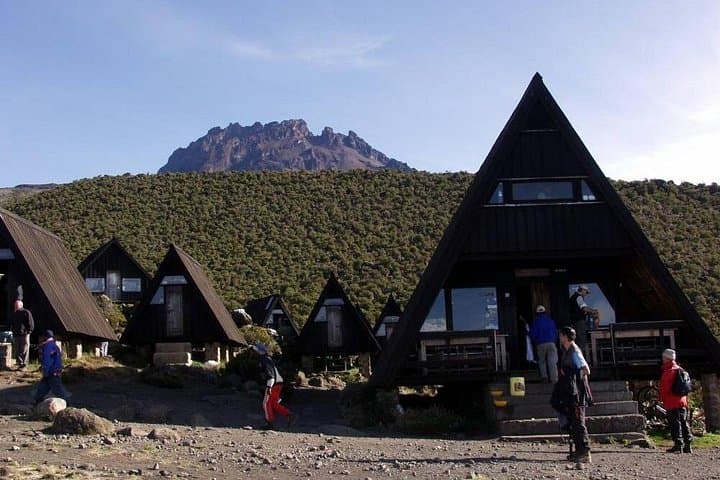
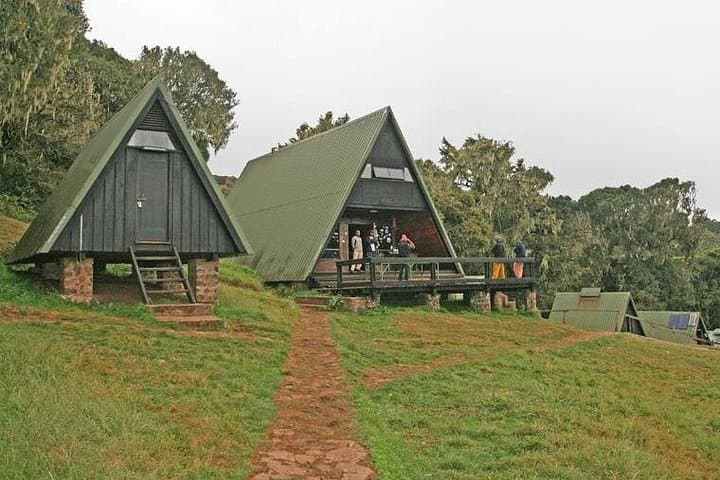
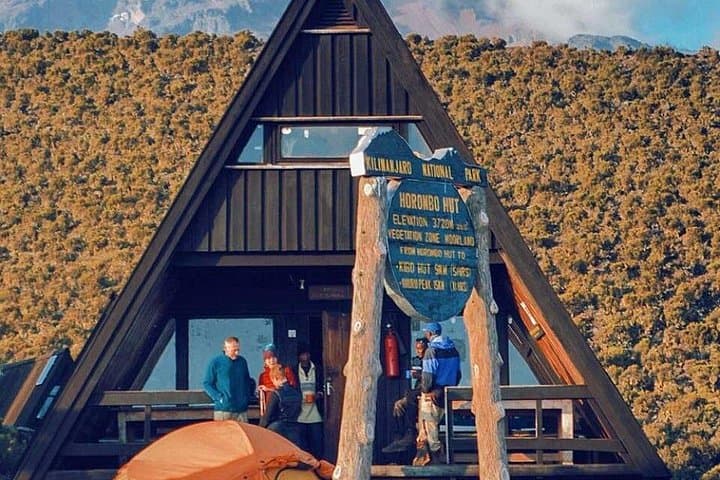
Expect the rainforest to challenge you for the first two days with mud and roots, then open moorland with giant lobelias, then a high-altitude desert of loose volcanic scree. Nights are spent in permanent mountain huts—basic, communal shelters that simplify logistics but offer less acclimatization time than longer routes.
Practically: plan for steep summit night conditions, rapid temperature swings, and high traffic on ascent/descent since this route shares the up-and-down path. Hydrate early and often, use gaiters and poles in muddier sections, and budget time to rest at Horombo for better acclimatization. Respect porter welfare, tip appropriately, and carry layers for sun, wind, and possible snow on the crater rim.
This itinerary lists all park fees and rescue fees as included, but confirm exact inclusions at booking to avoid unexpected costs.
Marangu is shorter with less acclimatization time, so success rates are generally lower than longer routes; adding an extra acclimatization day improves chances.
Huts offer communal bunks and basic amenities—warmer than camping but less private, with shared dining and sleeping spaces.
Tipping is expected and supports local livelihoods; plan a group tip distributed among guides, cooks, and porters and tip individually if you can.
Safari G.O.A.T.S operates guided outdoor trips and adventures with an emphasis on safety, stewardship, and memorable experiences.
A gray pre-dawn wind slices across the saddle between Mawenzi and Kibo as climbers shoulder packs and test their breath at 4,700 meters. On the Marangu Route, hikers move in a steady, communal rhythm: hut-to-hut steps through rainforest moisture, heathland winds, and a final, relentless switchback of scree toward Gilman’s Point and Uhuru Peak.
A gray pre-dawn wind slices across the saddle between Mawenzi and Kibo as climbers shoulder packs and test their breath at 4,700 meters. On the Marangu Route, hikers move in a steady, communal rhythm: hut-to-hut steps through rainforest moisture, heathland winds, and a final, relentless switchback of scree toward Gilman’s Point and Uhuru Peak.
This is the oldest established path up Kilimanjaro, used by early European expeditions and long before that traversed by Chagga porters and traders. Geologically the mountain is a stratovolcano with three volcanic cones; Kibo holds the ice-capped summit and the crater rim that furnishes the last, exposed kilometers of the climb. Culturally the Kilimanjaro foothills are Chagga country—farm terraces, banana groves, and small villages that speak to a living mountain economy where guiding and porter work support whole families.
Expect the rainforest to challenge you for the first two days with mud and roots, then open moorland with giant lobelias, then a high-altitude desert of loose volcanic scree. Nights are spent in permanent mountain huts—basic, communal shelters that simplify logistics but offer less acclimatization time than longer routes.
Practically: plan for steep summit night conditions, rapid temperature swings, and high traffic on ascent/descent since this route shares the up-and-down path. Hydrate early and often, use gaiters and poles in muddier sections, and budget time to rest at Horombo for better acclimatization. Respect porter welfare, tip appropriately, and carry layers for sun, wind, and possible snow on the crater rim.