THE ADVENTURE COLLECTIVE® · Independent discovery and booking for outdoor travel

The Marangu Route is a classic Kilimanjaro approach: hut stays, gradual grades, and a summit sunrise over African ice fields. This 6-day guided trek balances acclimatization with a direct route to Uhuru Peak.
The Marangu Route is a classic Kilimanjaro approach: hut stays, gradual grades, and a summit sunrise over African ice fields. This 6-day guided trek balances acclimatization with a direct route to Uhuru Peak.
A humid morning at Marangu Gate feels like an exhale—forest mist tangles in your hair, porters double-check straps, and the trail disappears into a green tunnel of moss and giant lobelias. The first day is soft and social: chatter and birdcalls, picnic lunch at Kisambioni, then the wooden A-frame of Mandara Hut where rain drums on the roof and the mountain begins to reveal itself in slices.
Verified experiences and guided adventures in the surrounding area.
Operated by Kilimanjaro 360 Expedition · Marangu, Kilimanjaro Region
A humid morning at Marangu Gate feels like an exhale—forest mist tangles in your hair, porters double-check straps, and the trail disappears into a green tunnel of moss and giant lobelias. The first day is soft and social: chatter and birdcalls, picnic lunch at Kisambioni, then the wooden A-frame of Mandara Hut where rain drums on the roof and the mountain begins to reveal itself in slices.
Walk three days and Kilimanjaro reveals its chapters—rainforest, heath and moorland, alpine desert, and the raw, glacial rim. The Marangu Route is the oldest established path, blazed by guides in the early 20th century and favored historically for its relatively gradual grades and hut-style accommodation. Geologically, Kilimanjaro is a massif of three volcanic cones—Shira, Mawenzi and Kibo—the last of which still bears the summit crater that climbers cross to reach Uhuru Peak at 5,895 m. Locally the Chagga people have farmed the lower slopes for centuries, their terraced fields and coffee farms framing Moshi below.
Culturally the ride to the mountain’s door is as important as the summit push. Guides and porters are not props; they are experienced, indispensable team members who read weather by cloud shelves and know the rhythms of altitude. Wildlife hangs on the fringes—black-and-white colobus and blue monkeys ghost through the forest—and plant life stages its own drama: verdant forest gives way to tussock grasses and the sculpted, lunar landscape of the Saddle.
Practical guidance begins with pace and patience. This itinerary spaces acclimatization across an extra summit day and an optional ridge hike to Mawenzi or Zebra Rock, improving summit odds. Expect the longest, hardest stretch on summit night: a midnight start from Kibo, a slog up scree and switchbacks to Gillman’s Point, and the final push to Uhuru as dawn slices the ice fields. Descents are quicker but harsh on knees; gravity becomes a constant companion.
Bring layered clothing for extremes—dawn at the summit can be decades colder than midday at Mandara. Hydration and calorie-dense snacks matter; the cooks on these treks keep a steady flow of hot food, but hikers need to manage electrolytes and small, frequent bites.
Logistics are straightforward: pickup from Moshi or Kilimanjaro Airport is typical, permits and park fees are included in most packages, and hut accommodation requires your own sleeping bag. The social finish at Marangu Gate—summit certificates and shared beers back in town—feels earned, but the real reward is the ridge-line silence just after sunrise when the continent stretches away below and the sky seems to hold its breath.
No technical climbing skills are needed; the route is non-technical but requires good fitness and prior multi-day hiking experience is strongly recommended.
Huts are A-frame wooden structures with bunk beds; bring your own sleeping bag and expect basic communal facilities.
Acute mountain sickness is possible; guides monitor symptoms, enforce rest, and adjust pace—proper acclimatization days and hydration reduce risk.
Two dry seasons—January–March and June–October—offer the most stable weather and clearer summit views.
Most packages include park fees, rescue fees, and gate transfers—confirm at booking and carry ID for registration at Marangu Gate.
Yes, with solid fitness preparation and adherence to guide instructions; the extra acclimatization day on this 6‑day itinerary improves success rates.
Kilimanjaro 360 Expedition operates guided outdoor trips and adventures with an emphasis on safety, stewardship, and memorable experiences.

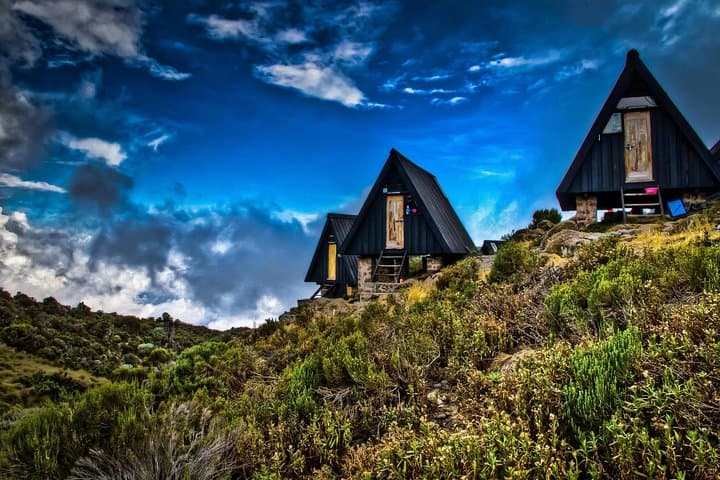


A humid morning at Marangu Gate feels like an exhale—forest mist tangles in your hair, porters double-check straps, and the trail disappears into a green tunnel of moss and giant lobelias. The first day is soft and social: chatter and birdcalls, picnic lunch at Kisambioni, then the wooden A-frame of Mandara Hut where rain drums on the roof and the mountain begins to reveal itself in slices.
A humid morning at Marangu Gate feels like an exhale—forest mist tangles in your hair, porters double-check straps, and the trail disappears into a green tunnel of moss and giant lobelias. The first day is soft and social: chatter and birdcalls, picnic lunch at Kisambioni, then the wooden A-frame of Mandara Hut where rain drums on the roof and the mountain begins to reveal itself in slices.
Walk three days and Kilimanjaro reveals its chapters—rainforest, heath and moorland, alpine desert, and the raw, glacial rim. The Marangu Route is the oldest established path, blazed by guides in the early 20th century and favored historically for its relatively gradual grades and hut-style accommodation. Geologically, Kilimanjaro is a massif of three volcanic cones—Shira, Mawenzi and Kibo—the last of which still bears the summit crater that climbers cross to reach Uhuru Peak at 5,895 m. Locally the Chagga people have farmed the lower slopes for centuries, their terraced fields and coffee farms framing Moshi below.
Culturally the ride to the mountain’s door is as important as the summit push. Guides and porters are not props; they are experienced, indispensable team members who read weather by cloud shelves and know the rhythms of altitude. Wildlife hangs on the fringes—black-and-white colobus and blue monkeys ghost through the forest—and plant life stages its own drama: verdant forest gives way to tussock grasses and the sculpted, lunar landscape of the Saddle.
Practical guidance begins with pace and patience. This itinerary spaces acclimatization across an extra summit day and an optional ridge hike to Mawenzi or Zebra Rock, improving summit odds. Expect the longest, hardest stretch on summit night: a midnight start from Kibo, a slog up scree and switchbacks to Gillman’s Point, and the final push to Uhuru as dawn slices the ice fields. Descents are quicker but harsh on knees; gravity becomes a constant companion.
Bring layered clothing for extremes—dawn at the summit can be decades colder than midday at Mandara. Hydration and calorie-dense snacks matter; the cooks on these treks keep a steady flow of hot food, but hikers need to manage electrolytes and small, frequent bites.
Logistics are straightforward: pickup from Moshi or Kilimanjaro Airport is typical, permits and park fees are included in most packages, and hut accommodation requires your own sleeping bag. The social finish at Marangu Gate—summit certificates and shared beers back in town—feels earned, but the real reward is the ridge-line silence just after sunrise when the continent stretches away below and the sky seems to hold its breath.