THE ADVENTURE COLLECTIVE® · Independent discovery and booking for outdoor travel
Witnessing the Great Wildebeest Migration in the Masai Mara is both a spectacle and a study in patient observation. This six-day safari pairs intensive game drives with cultural and lakeside stops for a full East African circuit.
Witnessing the Great Wildebeest Migration in the Masai Mara is both a spectacle and a study in patient observation. This six-day safari pairs intensive game drives with cultural and lakeside stops for a full East African circuit.
Dawn breaks over a flat, grass-choked horizon and the air smells of dust and diesel: the Mara awakes and the migration moves. Vehicles fan out across rolling plains, drivers hunched over binoculars as a riverbank swells with dark shapes. Expect close, cinematic wildlife encounters—lions lounging on termite mounds, herds of zebra and wildebeest threading toward the Mara River for a crossing that can last minutes or hours.
Verified experiences and guided adventures in the surrounding area.
Operated by Gracepatt Ecotours Kenya · Narok, Narok County
Dawn breaks over a flat, grass-choked horizon and the air smells of dust and diesel: the Mara awakes and the migration moves. Vehicles fan out across rolling plains, drivers hunched over binoculars as a riverbank swells with dark shapes. Expect close, cinematic wildlife encounters—lions lounging on termite mounds, herds of zebra and wildebeest threading toward the Mara River for a crossing that can last minutes or hours.
The Maasai Mara occupies the western edge of the East African Rift, a landscape carved by tectonic forces and drained by seasonal rivers. Human history here is recent and living: Maasai communities maintain grazing rights and cultural ties to the land, while 20th-century conservation efforts created the reserve to protect migratory corridors. Geologically, the reserve sits around 1,400–1,800 m above sea level on fertile volcanic soils that feed the grasslands.
Practically, the itinerary runs six days with roughly a 5–6 hour overland transfer from Nairobi (≈270 km). Expect a mix of early morning and late-afternoon game drives—typical game-drive windows are 3–6 hours—on dirt tracks across mostly flat, grassy terrain. Bring sun protection, a telephoto lens for river crossings, and a light daypack. Vehicles are purpose-built for photography but require patience: sightings depend on seasonal movement (mid-June to October is peak migration)
Camps range from tented lodges to fixed-bed safari camps; many offer hot showers and guided drives. Respect vehicle rules, keep distance from wildlife, and prepare for long days observing behavior rather than constant action. The Mara is an exercise in slow reward—watch, wait, and the landscape will deliver.
Peak viewing in the Masai Mara is typically mid‑June through October when herds cross from the Serengeti; exact timing varies each year depending on rains.
Yes—many operators welcome all ages, but children must remain seated and supervised; longer drives and bumpy roads may be challenging for some older guests.
Balloon safaris are usually optional and arranged locally; they offer unmatched aerial views but add cost and require an early start and light fitness for landing.
Consult a travel clinic for current requirements—yellow fever vaccination is often advised for some travelers, and malaria prophylaxis is recommended for the Mara region.
Gracepatt Ecotours Kenya operates guided outdoor trips and adventures with an emphasis on safety, stewardship, and memorable experiences.
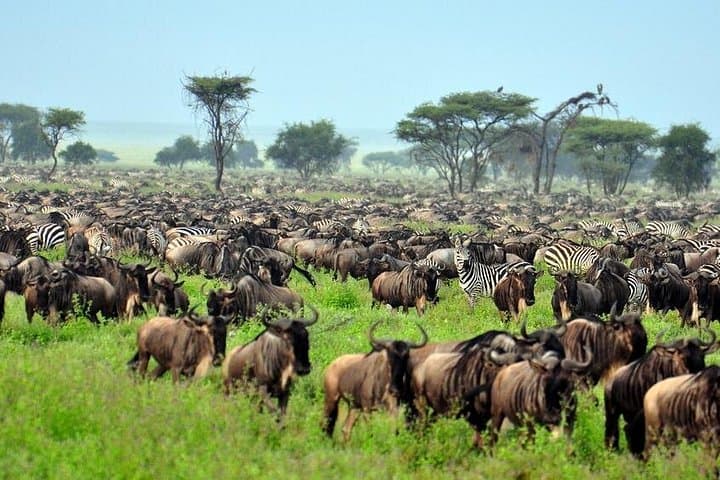
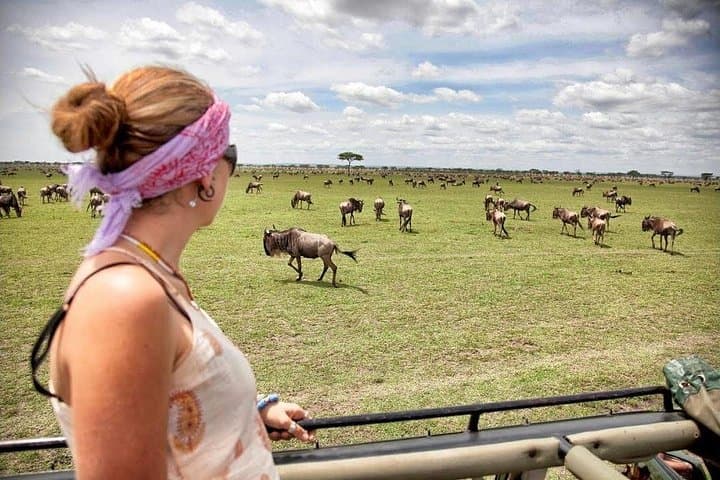
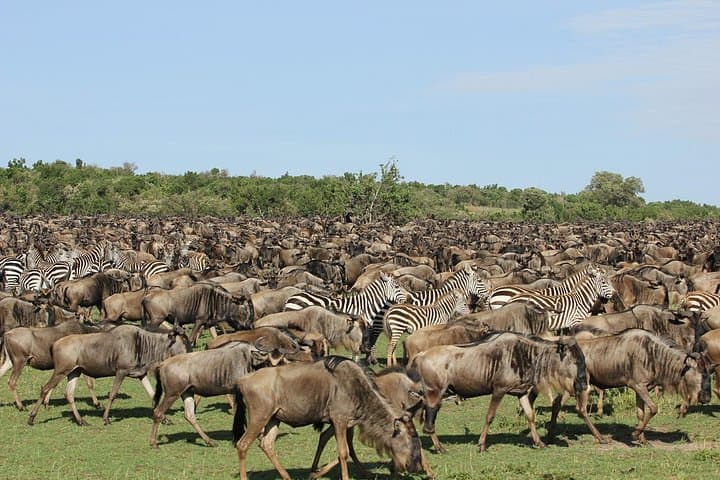
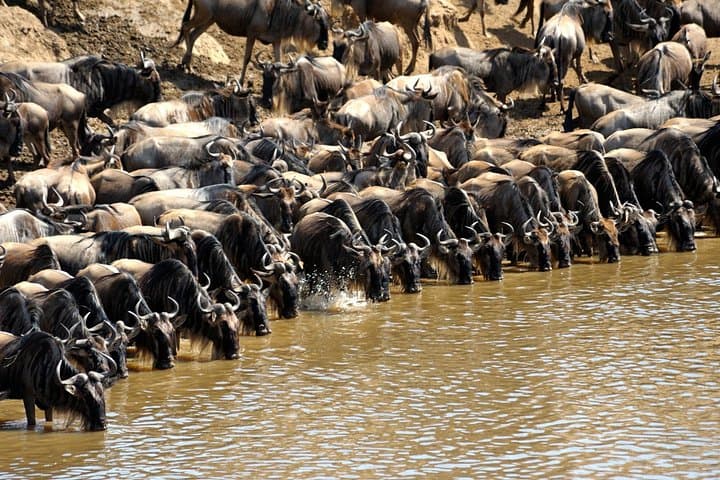
Dawn breaks over a flat, grass-choked horizon and the air smells of dust and diesel: the Mara awakes and the migration moves. Vehicles fan out across rolling plains, drivers hunched over binoculars as a riverbank swells with dark shapes. Expect close, cinematic wildlife encounters—lions lounging on termite mounds, herds of zebra and wildebeest threading toward the Mara River for a crossing that can last minutes or hours.
Dawn breaks over a flat, grass-choked horizon and the air smells of dust and diesel: the Mara awakes and the migration moves. Vehicles fan out across rolling plains, drivers hunched over binoculars as a riverbank swells with dark shapes. Expect close, cinematic wildlife encounters—lions lounging on termite mounds, herds of zebra and wildebeest threading toward the Mara River for a crossing that can last minutes or hours.
The Maasai Mara occupies the western edge of the East African Rift, a landscape carved by tectonic forces and drained by seasonal rivers. Human history here is recent and living: Maasai communities maintain grazing rights and cultural ties to the land, while 20th-century conservation efforts created the reserve to protect migratory corridors. Geologically, the reserve sits around 1,400–1,800 m above sea level on fertile volcanic soils that feed the grasslands.
Practically, the itinerary runs six days with roughly a 5–6 hour overland transfer from Nairobi (≈270 km). Expect a mix of early morning and late-afternoon game drives—typical game-drive windows are 3–6 hours—on dirt tracks across mostly flat, grassy terrain. Bring sun protection, a telephoto lens for river crossings, and a light daypack. Vehicles are purpose-built for photography but require patience: sightings depend on seasonal movement (mid-June to October is peak migration)
Camps range from tented lodges to fixed-bed safari camps; many offer hot showers and guided drives. Respect vehicle rules, keep distance from wildlife, and prepare for long days observing behavior rather than constant action. The Mara is an exercise in slow reward—watch, wait, and the landscape will deliver.
