THE ADVENTURE COLLECTIVE® · Independent discovery and booking for outdoor travel

Tackle Mount Kenya’s Point Lenana on a six-day trek that threads forest, moorland, and scree. This route pairs Sirimon’s high ridges with Chogoria’s verdant descent for a varied, acclimatized summit push.
Tackle Mount Kenya’s Point Lenana on a six-day trek that threads forest, moorland, and scree. This route pairs Sirimon’s high ridges with Chogoria’s verdant descent for a varied, acclimatized summit push.
A cold headlamp beam slices the 3 a.m. dark as a small line of trekkers makes for Point Lenana. The trail first slips through moss-draped montane forest, then opens to heather and moorland, finally climbing over stony scree to catch a sunrise that floods the glacier-scarred ridges with gold. This is Mount Kenya: raw, high, and close to the equator.
Verified experiences and guided adventures in the surrounding area.
Operated by Africa Tours · Nanyuki, Laikipia County
A cold headlamp beam slices the 3 a.m. dark as a small line of trekkers makes for Point Lenana. The trail first slips through moss-draped montane forest, then opens to heather and moorland, finally climbing over stony scree to catch a sunrise that floods the glacier-scarred ridges with gold. This is Mount Kenya: raw, high, and close to the equator.
Geology and human history shape the route. Mount Kenya is the eroded core of an ancient volcano; its peaks and tarns are carved by Pleistocene glaciers. Halford Mackinder’s 1899 ascent put these ridges on the map, and local Kikuyu communities have long regarded the mountain as sacred—places to approach with respect.
The trek combines Sirimon’s dry, high ridges with Chogoria’s dramatic descent through forests and waterfalls, offering varied microclimates and steady acclimatization. Expect long hiking days—several above 3,000–4,200 m—and exposed sections of scree approaching Lenana (approx. 4,985 m).
Practical guidance: plan for early starts, layered insulation for pre-dawn cold, and steady pacing to beat altitude effects. Use a licensed guide and porters where available; camps like Old Moses and Shipton are established stops with bunkhouse-style facilities. Hydrate, eat regularly, and listen to signs of AMS—headache, nausea, or breathlessness—descending immediately if symptoms worsen.
Timing matters: aim for the dry months to reduce trail slipperiness and maximize visibility. Leave no trace, stick to marked tracks, and pack a lightweight warm layer for summit dawn—the wind will test any optimism.
Nearby base services in Nanyuki provide last-minute gear, vehicle access, and cultural context before you climb.
No; Point Lenana is a non-technical trekking summit. Rope and technical gear are not required, though good fitness and careful footing on scree are important.
The dry months—roughly June to October and January to February—offer more stable weather and clearer summit visibility than the long and short rainy seasons.
Licensed guides and porters are strongly recommended for navigation, acclimatization management, and carrying heavy loads; many camps operate through local crew.
Altitude is a real risk above 3,000 m. The itinerary includes acclimatization days—watch for headaches, nausea, or breathlessness and descend immediately if symptoms worsen.
Africa Tours operates guided outdoor trips and adventures with an emphasis on safety, stewardship, and memorable experiences.
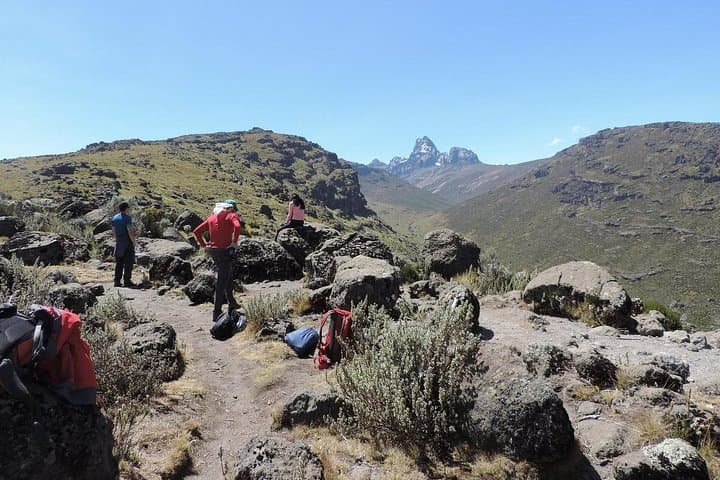


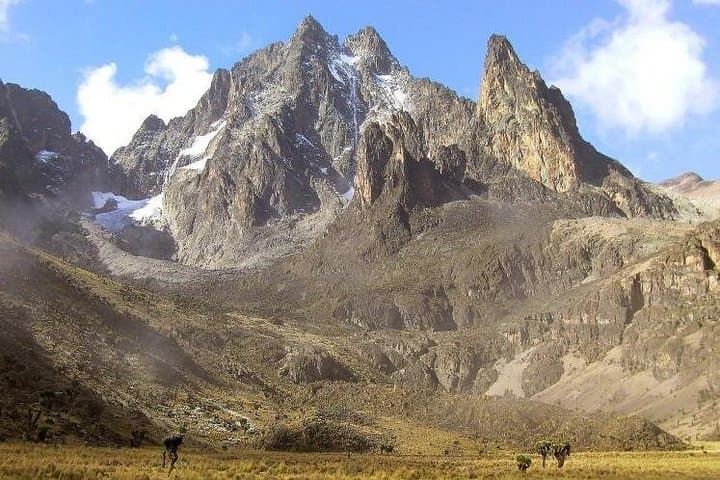
A cold headlamp beam slices the 3 a.m. dark as a small line of trekkers makes for Point Lenana. The trail first slips through moss-draped montane forest, then opens to heather and moorland, finally climbing over stony scree to catch a sunrise that floods the glacier-scarred ridges with gold. This is Mount Kenya: raw, high, and close to the equator.
A cold headlamp beam slices the 3 a.m. dark as a small line of trekkers makes for Point Lenana. The trail first slips through moss-draped montane forest, then opens to heather and moorland, finally climbing over stony scree to catch a sunrise that floods the glacier-scarred ridges with gold. This is Mount Kenya: raw, high, and close to the equator.
Geology and human history shape the route. Mount Kenya is the eroded core of an ancient volcano; its peaks and tarns are carved by Pleistocene glaciers. Halford Mackinder’s 1899 ascent put these ridges on the map, and local Kikuyu communities have long regarded the mountain as sacred—places to approach with respect.
The trek combines Sirimon’s dry, high ridges with Chogoria’s dramatic descent through forests and waterfalls, offering varied microclimates and steady acclimatization. Expect long hiking days—several above 3,000–4,200 m—and exposed sections of scree approaching Lenana (approx. 4,985 m).
Practical guidance: plan for early starts, layered insulation for pre-dawn cold, and steady pacing to beat altitude effects. Use a licensed guide and porters where available; camps like Old Moses and Shipton are established stops with bunkhouse-style facilities. Hydrate, eat regularly, and listen to signs of AMS—headache, nausea, or breathlessness—descending immediately if symptoms worsen.
Timing matters: aim for the dry months to reduce trail slipperiness and maximize visibility. Leave no trace, stick to marked tracks, and pack a lightweight warm layer for summit dawn—the wind will test any optimism.
Nearby base services in Nanyuki provide last-minute gear, vehicle access, and cultural context before you climb.