THE ADVENTURE COLLECTIVE® · Independent discovery and booking for outdoor travel

Move from Phnom Penh’s riverside boulevards to the temple forests of Angkor on a private six-day tour. Early mornings at Angkor Wat, jungle-framed ruins at Ta Prohm and a short hike to Kbal Spean deliver history, geology and hands-on cultural encounters.
Move from Phnom Penh’s riverside boulevards to the temple forests of Angkor on a private six-day tour. Early mornings at Angkor Wat, jungle-framed ruins at Ta Prohm and a short hike to Kbal Spean deliver history, geology and hands-on cultural encounters.
You arrive in Phnom Penh as the late morning sun paints colonial facades and tuk-tuks thread along the riverfront; the city offers a brisk urban overture before the jungle takes over near Siem Reap.
Verified experiences and guided adventures in the surrounding area.
Operated by Asia Travel Links · Siem Reap, Siem Reap Province
You arrive in Phnom Penh as the late morning sun paints colonial facades and tuk-tuks thread along the riverfront; the city offers a brisk urban overture before the jungle takes over near Siem Reap.
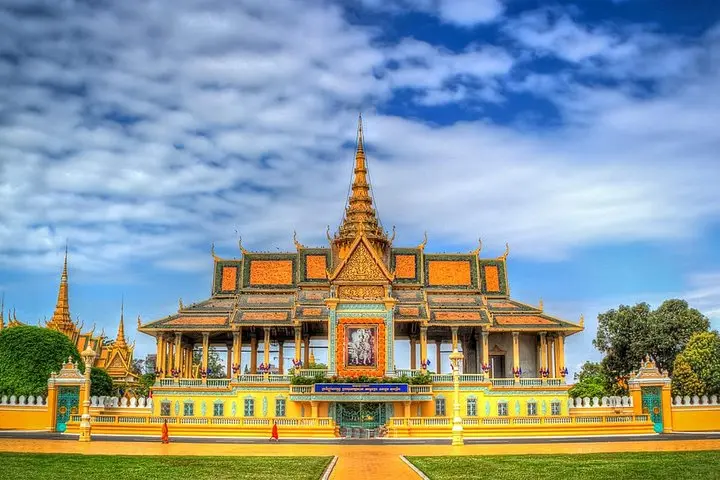
Over six days this itinerary moves from Phnom Penh’s Royal Palace and the sobering Tuol Sleng Genocide Museum to the vast Angkor complex — Angkor Wat, Angkor Thom and the carved faces of the Bayon. Geologically Angkor sits on low, seasonally saturated plains fed by the Tonle Sap system; the temples are sandstone and laterite, their blocks quarried and fitted by Khmer engineers between the 9th and 13th centuries. Ta Prohm shows how the jungle presses back — roots prying through lintels — while Kbal Spean requires a short forest approach to see the River of a Thousand Lingams carved into bedrock.
Culturally the route threads Khmer royalty, Hindu-Buddhist iconography, and modern history; evenings in Siem Reap let you sample night markets and silk-weaving villages like Puok. The tour is private, travels in an air-conditioned vehicle, and includes select meals, entrance fees as noted, and 3-star hotel nights.
Practical guidance: plan sunrise or early-morning temple runs to avoid heat and crowds; wear sturdy walking shoes for uneven stones and short hikes (Kbal Spean has rocky, sometimes slippery stream crossings). Carry refillable water, sun protection and a lightweight rain layer in wet season. Expect full days of walking and standing; photographers should keep extra batteries and a small tripod for low-light bas-reliefs and sunrise silhouettes.
The tour notes that entrance fees are included as mentioned in the program; confirm whether multi-day Angkor pass types (1/3/7 day) are covered when you book.
The itinerary uses an internal flight or express bus option and provides air-conditioned vehicle transfers for local sightseeing.
The tour is labeled suitable for all fitness levels, but many temple zones have uneven steps and rough ground; it is not recommended for travelers with serious spinal or heart conditions.
The dry season (November–April) offers cooler mornings and easier walking; the wet season (May–October) brings lush scenery but afternoon rains and muddier trails.
Asia Travel Links operates guided outdoor trips and adventures with an emphasis on safety, stewardship, and memorable experiences.
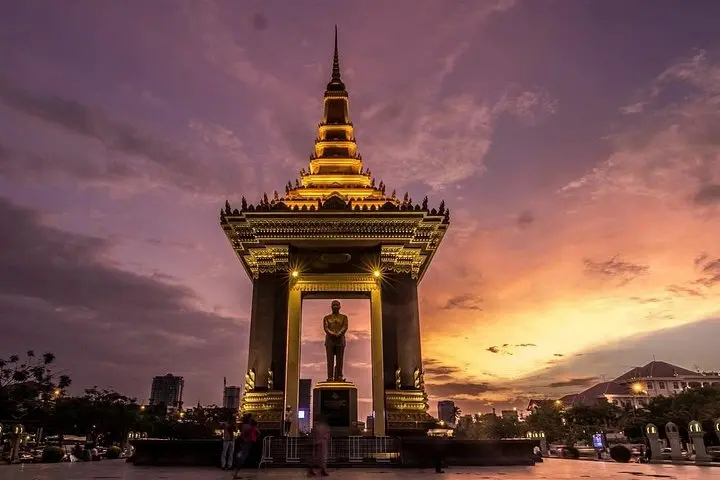
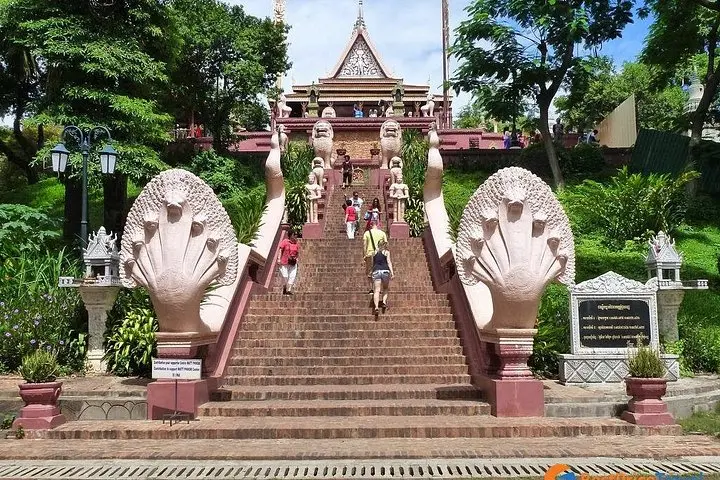
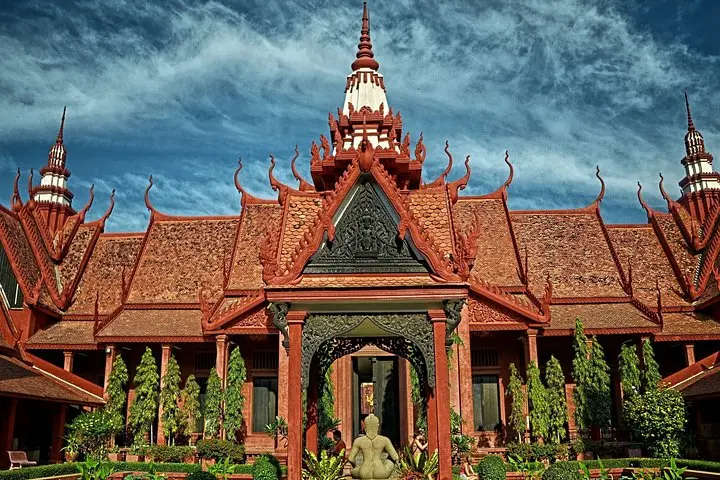
You arrive in Phnom Penh as the late morning sun paints colonial facades and tuk-tuks thread along the riverfront; the city offers a brisk urban overture before the jungle takes over near Siem Reap.
You arrive in Phnom Penh as the late morning sun paints colonial facades and tuk-tuks thread along the riverfront; the city offers a brisk urban overture before the jungle takes over near Siem Reap.
Over six days this itinerary moves from Phnom Penh’s Royal Palace and the sobering Tuol Sleng Genocide Museum to the vast Angkor complex — Angkor Wat, Angkor Thom and the carved faces of the Bayon. Geologically Angkor sits on low, seasonally saturated plains fed by the Tonle Sap system; the temples are sandstone and laterite, their blocks quarried and fitted by Khmer engineers between the 9th and 13th centuries. Ta Prohm shows how the jungle presses back — roots prying through lintels — while Kbal Spean requires a short forest approach to see the River of a Thousand Lingams carved into bedrock.
Culturally the route threads Khmer royalty, Hindu-Buddhist iconography, and modern history; evenings in Siem Reap let you sample night markets and silk-weaving villages like Puok. The tour is private, travels in an air-conditioned vehicle, and includes select meals, entrance fees as noted, and 3-star hotel nights.
Practical guidance: plan sunrise or early-morning temple runs to avoid heat and crowds; wear sturdy walking shoes for uneven stones and short hikes (Kbal Spean has rocky, sometimes slippery stream crossings). Carry refillable water, sun protection and a lightweight rain layer in wet season. Expect full days of walking and standing; photographers should keep extra batteries and a small tripod for low-light bas-reliefs and sunrise silhouettes.