THE ADVENTURE COLLECTIVE® · Independent discovery and booking for outdoor travel

A compact six-day private itinerary that threads La Paz, Sucre, Potosí, Uyuni, Lake Titicaca and Tiwanaku — ideal for travelers who want high-altitude landscapes, colonial streets and the otherworldly Salar de Uyuni in one trip.
A compact six-day private itinerary that threads La Paz, Sucre, Potosí, Uyuni, Lake Titicaca and Tiwanaku — ideal for travelers who want high-altitude landscapes, colonial streets and the otherworldly Salar de Uyuni in one trip.
The sun rises over La Paz and the city’s steep streets glint with a nervous light; the Andes press close, breathing cool, thin air. On this six-day private loop travelers move from high-altitude markets and cable cars in La Paz to the salt-sculpted plains of Salar de Uyuni, then down to the blue plains of Lake Titicaca and the archaeological stones of Tiwanaku. Each stop changes scale — from narrow colonial alleys in Sucre to an endless white that flattens perspective — but the route holds a steady, rugged rhythm.
Verified experiences and guided adventures in the surrounding area.
Operated by Mundicontact Expeditions · La Paz, La Paz
The sun rises over La Paz and the city’s steep streets glint with a nervous light; the Andes press close, breathing cool, thin air. On this six-day private loop travelers move from high-altitude markets and cable cars in La Paz to the salt-sculpted plains of Salar de Uyuni, then down to the blue plains of Lake Titicaca and the archaeological stones of Tiwanaku. Each stop changes scale — from narrow colonial alleys in Sucre to an endless white that flattens perspective — but the route holds a steady, rugged rhythm.
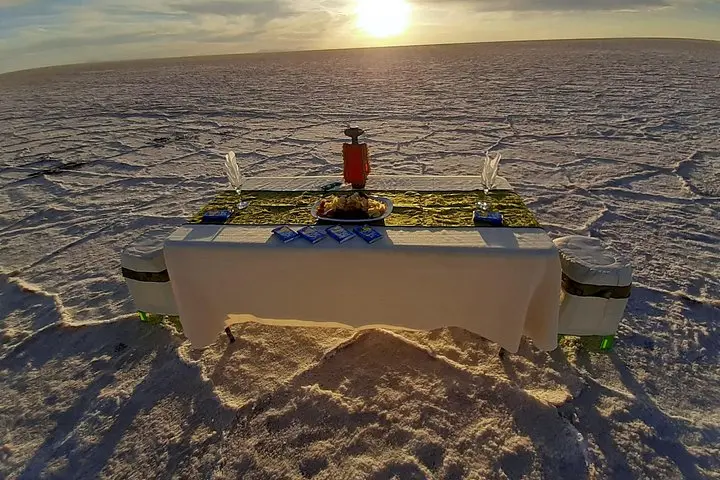
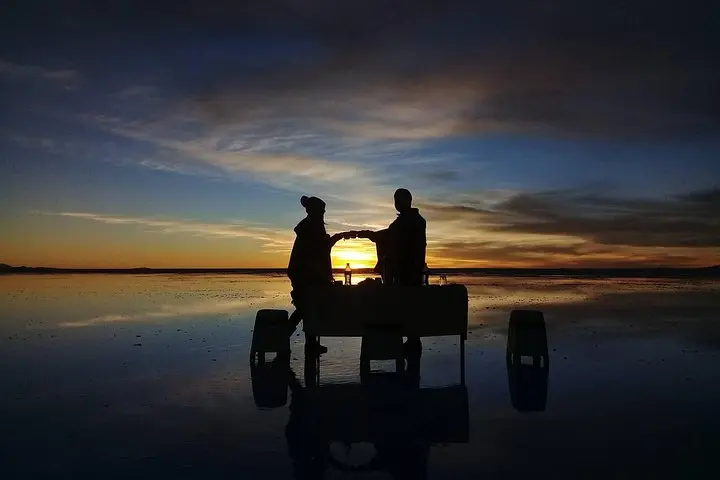
Bolivia’s history is written in silver and stone: Potosí’s colonial mines fueled an empire, Tiwanaku predates the Inca with monumental stonework, and Uyuni’s salt crust covers pale lakes and fossilized volcanic islands. Geologically the altiplano is high, cold and arid; Salar de Uyuni sits around 3,656 m and reflects sky like a mirror after rain, while Lake Titicaca rests near 3,812 m and pushes life into unique island cultures.
Practically, expect early starts, a mix of short flights and longer drives (Potosí to Uyuni ~4 hours), and altitude shifts that require pacing. Guides typically include oxygen and acclimatization time; footwear should handle dusty tracks and salt crust. Plan to hydrate, layer for strong sun and cold nights, and carry cash for small local purchases. The route is transport-heavy but rich in varied landscapes — a compact, well-paced introduction to Bolivia’s high-country extremes.
Yes — many sites are above 3,500 m. Take it slow on arrival, stay hydrated, avoid alcohol, and use oxygen provided by guides if you feel unwell.
Yes — this itinerary includes domestic flights between key points (e.g., La Paz↔Sucre, Uyuni↔La Paz) as listed in the tour inclusions.
The tour includes 5 nights in 3–5 star hotels, with one night at the salt hotel near Uyuni as noted in the itinerary.
Infants and small children can join (stroller accessible and infant seats available), but the high altitude and long drives may be challenging for very young children.
Mundicontact Expeditions operates guided outdoor trips and adventures with an emphasis on safety, stewardship, and memorable experiences.
The sun rises over La Paz and the city’s steep streets glint with a nervous light; the Andes press close, breathing cool, thin air. On this six-day private loop travelers move from high-altitude markets and cable cars in La Paz to the salt-sculpted plains of Salar de Uyuni, then down to the blue plains of Lake Titicaca and the archaeological stones of Tiwanaku. Each stop changes scale — from narrow colonial alleys in Sucre to an endless white that flattens perspective — but the route holds a steady, rugged rhythm.
The sun rises over La Paz and the city’s steep streets glint with a nervous light; the Andes press close, breathing cool, thin air. On this six-day private loop travelers move from high-altitude markets and cable cars in La Paz to the salt-sculpted plains of Salar de Uyuni, then down to the blue plains of Lake Titicaca and the archaeological stones of Tiwanaku. Each stop changes scale — from narrow colonial alleys in Sucre to an endless white that flattens perspective — but the route holds a steady, rugged rhythm.
Bolivia’s history is written in silver and stone: Potosí’s colonial mines fueled an empire, Tiwanaku predates the Inca with monumental stonework, and Uyuni’s salt crust covers pale lakes and fossilized volcanic islands. Geologically the altiplano is high, cold and arid; Salar de Uyuni sits around 3,656 m and reflects sky like a mirror after rain, while Lake Titicaca rests near 3,812 m and pushes life into unique island cultures.
Practically, expect early starts, a mix of short flights and longer drives (Potosí to Uyuni ~4 hours), and altitude shifts that require pacing. Guides typically include oxygen and acclimatization time; footwear should handle dusty tracks and salt crust. Plan to hydrate, layer for strong sun and cold nights, and carry cash for small local purchases. The route is transport-heavy but rich in varied landscapes — a compact, well-paced introduction to Bolivia’s high-country extremes.