THE ADVENTURE COLLECTIVE® · Independent discovery and booking for outdoor travel

Cross borders, float on the Dead Sea, and walk through rock-carved cities on this private six-day Jordan tour from Jerusalem. From Petra’s Siq to Wadi Rum’s red dunes, the itinerary pairs logistical ease — private transport and guides — with deep cultural highlights.
Cross borders, float on the Dead Sea, and walk through rock-carved cities on this private six-day Jordan tour from Jerusalem. From Petra’s Siq to Wadi Rum’s red dunes, the itinerary pairs logistical ease — private transport and guides — with deep cultural highlights.
You meet your driver before dawn in Jerusalem, passports in hand, the air carrying a cool, clear hush. The van hums south to the Allenby/King Hussein crossing, where formalities unravel like a slow machine; once through, the landscape inverts — limestone hills give way to ochre desert and the road unfurls toward Amman.
Verified experiences and guided adventures in the surrounding area.
Operated by VIP Jordan Limo · Petra, Ma'an Governorate
You meet your driver before dawn in Jerusalem, passports in hand, the air carrying a cool, clear hush. The van hums south to the Allenby/King Hussein crossing, where formalities unravel like a slow machine; once through, the landscape inverts — limestone hills give way to ochre desert and the road unfurls toward Amman.
This six-day private tour reads like a compact primer on Jordan’s high points: the baptized waters at Bethany Beyond the Jordan, the mosaic map of Madaba, the Greco-Roman columns of Jerash, the carved facades of Petra, the otherworldly sandstone of Wadi Rum, the coral gardens off Aqaba, and finally the buoyant calm of the Dead Sea.
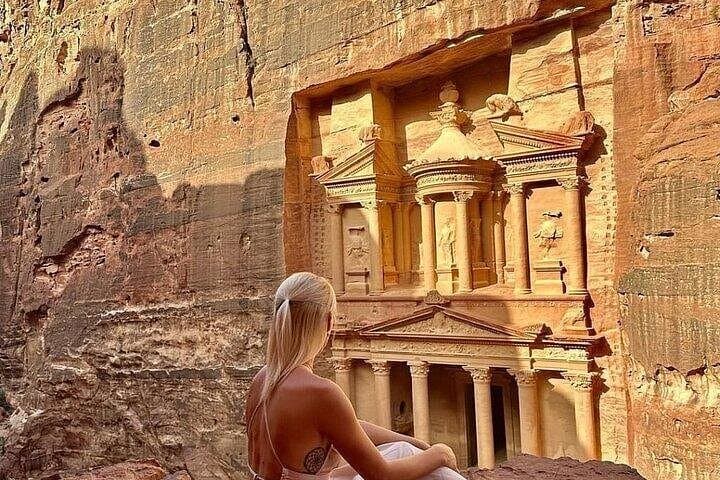
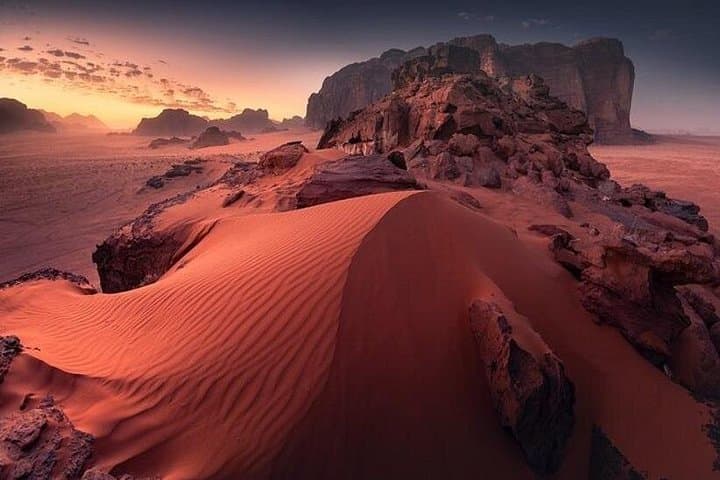
Geology and history collide on this route. Petra sits at roughly 800–1,000 meters elevation, carved into Jurassic sandstone that shifts from deep rust to pale pink as the sun moves. Wadi Rum’s granite and sandstone towers, some rising above 1,700 meters, have been wind-sculpted over millions of years into arches and ridgelines. The Dead Sea rests at about −430 meters, the planet’s lowest dry-land point, where mineral-rich waters force you to float and an ancient shoreline records millennia of shifting climates.
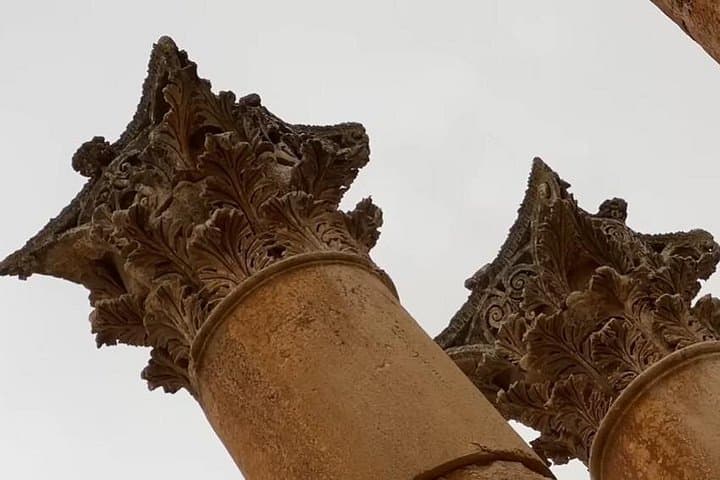
Cultural notes matter here: Jerash’s colonnades display Roman urban planning; Ajloun Castle points to Ayyubid defensive strategies; Madaba’s 6th-century mosaic map is a local claim to early cartographic fame. Bedouin communities still guide Wadi Rum safaris and host camp dinners; their stories are part of the desert’s social fabric.
Practical planning is straightforward but specific. Buy a Jordan Pass in advance to cover major site fees and simplify visa formalities. Expect several long driving stretches — Amman to Petra is roughly 3–4 hours (200–230 km), Petra to Wadi Rum about 1.5–2 hours, and Aqaba to the Dead Sea closer to 4–5 hours. Pack sturdy shoes for Petra’s uneven steps and Wadi Rum’s rock and sand, and bring layers — desert days heat quickly while nights at camp can drop sharply.
Logistics around border crossing: plan for an hour or two for passport control at Allenby/King Hussein; bring printed copies of confirmations and a working WhatsApp number for your local guide. If you want extra flourishes — a hot-air balloon over Petra at dawn or a snorkeling session off Aqaba — schedule and budget them in; they’re optional but popular.
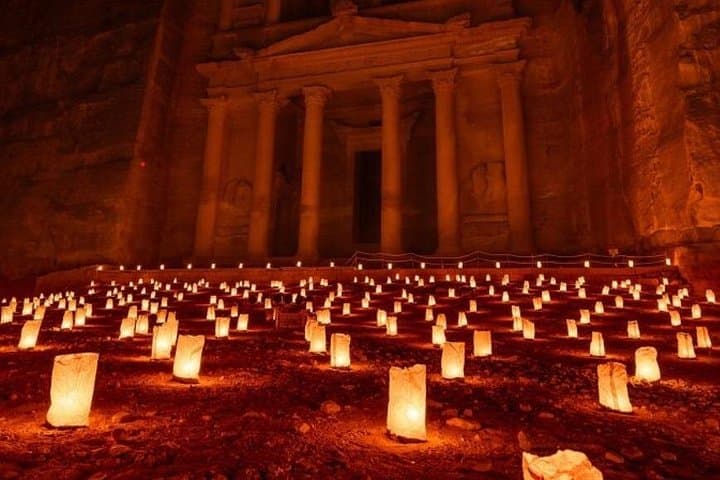
On this trip, nature pushes and invites: the Siq channels you toward the Treasury like a funnel; the Red Sea’s currents let you drift among coral; the Dead Sea forces a quiet surrender. For travelers who want history, landscape, and practical comfort blended with local guidance, this private six-day loop delivers a tightly paced, deeply memorable survey of Jordan’s essentials.
Many nationalities require a visa; purchasing the Jordan Pass beforehand can cover the visa fee and entry charges — check jordanpass.jo for eligibility and details.
Allow 1–3 hours for passport control and customs depending on queues and documentation — your driver will assist but plan extra time into your schedule.
Entrance fees are typically covered by the Jordan Pass; otherwise, fees vary by site and are not automatically included unless specified in your booking.
Yes — the tour notes indicate easy physical requirements and offers accessible options, but Petra involves uneven walking; plan for slower pacing if needed.
Jordanian dinar (JOD) is standard; small tips for drivers, guides, and camp staff are customary — about 1–3 JOD per person for short services, more for multi-day assistance.
Yes — hot-air balloons (often near Petra or Wadi Rum) and diving/snorkeling in Aqaba are optional extras; book early as slots fill during high season.
VIP Jordan Limo operates guided outdoor trips and adventures with an emphasis on safety, stewardship, and memorable experiences.
You meet your driver before dawn in Jerusalem, passports in hand, the air carrying a cool, clear hush. The van hums south to the Allenby/King Hussein crossing, where formalities unravel like a slow machine; once through, the landscape inverts — limestone hills give way to ochre desert and the road unfurls toward Amman.
You meet your driver before dawn in Jerusalem, passports in hand, the air carrying a cool, clear hush. The van hums south to the Allenby/King Hussein crossing, where formalities unravel like a slow machine; once through, the landscape inverts — limestone hills give way to ochre desert and the road unfurls toward Amman.
This six-day private tour reads like a compact primer on Jordan’s high points: the baptized waters at Bethany Beyond the Jordan, the mosaic map of Madaba, the Greco-Roman columns of Jerash, the carved facades of Petra, the otherworldly sandstone of Wadi Rum, the coral gardens off Aqaba, and finally the buoyant calm of the Dead Sea.
Geology and history collide on this route. Petra sits at roughly 800–1,000 meters elevation, carved into Jurassic sandstone that shifts from deep rust to pale pink as the sun moves. Wadi Rum’s granite and sandstone towers, some rising above 1,700 meters, have been wind-sculpted over millions of years into arches and ridgelines. The Dead Sea rests at about −430 meters, the planet’s lowest dry-land point, where mineral-rich waters force you to float and an ancient shoreline records millennia of shifting climates.
Cultural notes matter here: Jerash’s colonnades display Roman urban planning; Ajloun Castle points to Ayyubid defensive strategies; Madaba’s 6th-century mosaic map is a local claim to early cartographic fame. Bedouin communities still guide Wadi Rum safaris and host camp dinners; their stories are part of the desert’s social fabric.
Practical planning is straightforward but specific. Buy a Jordan Pass in advance to cover major site fees and simplify visa formalities. Expect several long driving stretches — Amman to Petra is roughly 3–4 hours (200–230 km), Petra to Wadi Rum about 1.5–2 hours, and Aqaba to the Dead Sea closer to 4–5 hours. Pack sturdy shoes for Petra’s uneven steps and Wadi Rum’s rock and sand, and bring layers — desert days heat quickly while nights at camp can drop sharply.
Logistics around border crossing: plan for an hour or two for passport control at Allenby/King Hussein; bring printed copies of confirmations and a working WhatsApp number for your local guide. If you want extra flourishes — a hot-air balloon over Petra at dawn or a snorkeling session off Aqaba — schedule and budget them in; they’re optional but popular.
On this trip, nature pushes and invites: the Siq channels you toward the Treasury like a funnel; the Red Sea’s currents let you drift among coral; the Dead Sea forces a quiet surrender. For travelers who want history, landscape, and practical comfort blended with local guidance, this private six-day loop delivers a tightly paced, deeply memorable survey of Jordan’s essentials.